
Before Memmo my notes were scattered across PDFs. Now a workspace pulls everything into one place — I see exactly what's still left to study.
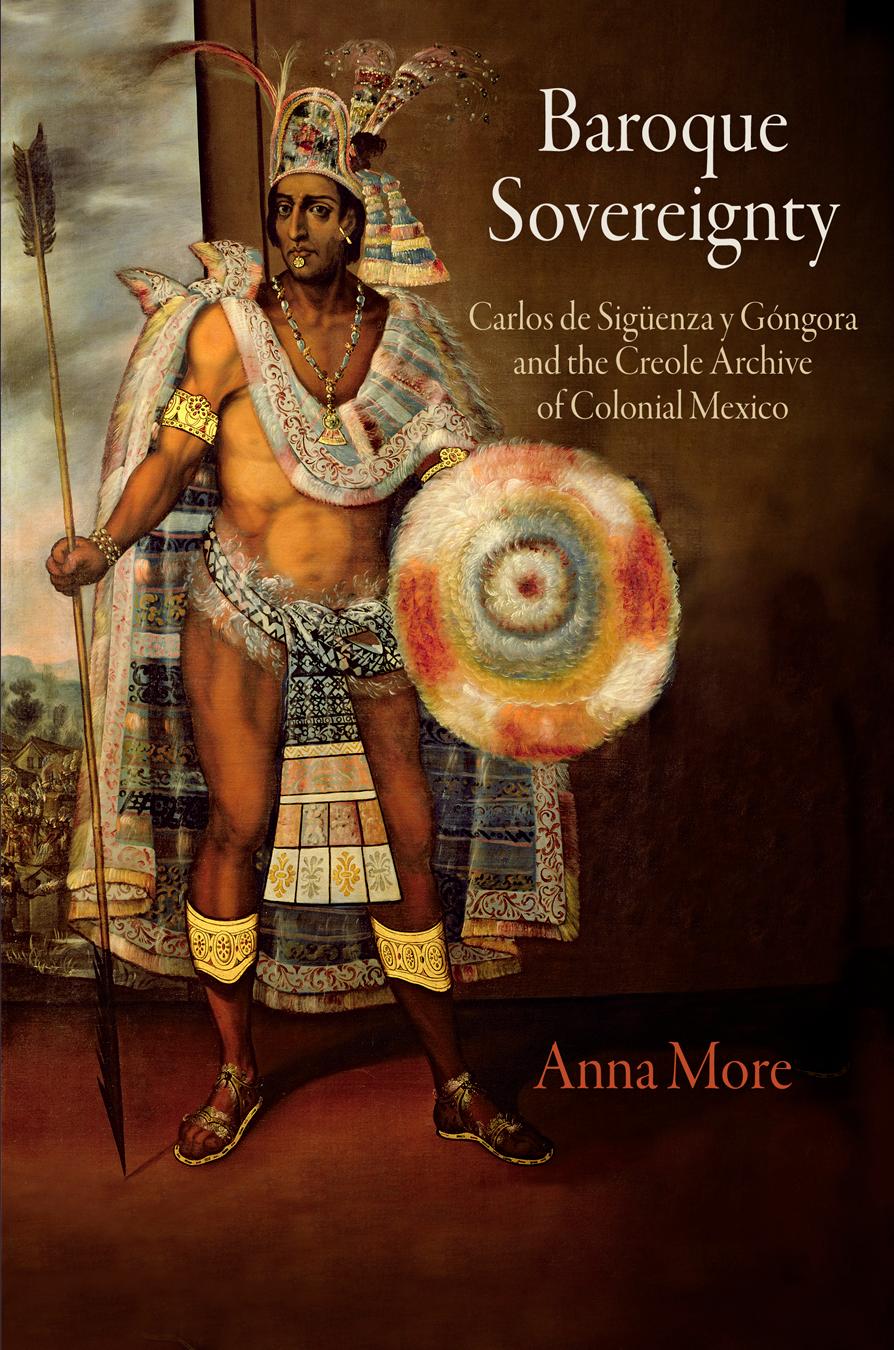
In the seventeenth century, even as the Spanish Habsburg monarchy entered its irreversible decline, the capital of its most important overseas territory was flourishing. Nexus of both Atlantic and Pacific trade routes and home to an ethnically diverse population, Mexico City produced a distinctive Baroque culture that combined local and European influences. In this context, the American-born descendants of European immigrants—or creoles, as they called themselves—began to envision a new society beyond the terms of Spanish imperialism, and the writings of the Mexican polymath Carlos de Sigüenza y Góngora (1645-1700) were instrumental in this process. Mathematician, antiquarian, poet, and secular priest, Sigüenza authored works on such topics as the 1680 comet, the defense of New Spain, pre-Columbian history, and the massive 1692 Mexico City riot. He wrote all of these, in his words, "out of love for my patria."
Through readings of Sigüenza y Góngora's diverse works, Baroque Sovereignty locates the colonial Baroque at the crossroads of a conflicted Spanish imperial rule and the political imaginary of an emergent local elite. Arguing that Spanish imperialism was founded on an ideal of Christian conversion no longer applicable at the end of the seventeenth century, More discovers in Sigüenza y Góngora's works an alternative basis for local governance. The creole archive, understood as both the collection of local artifacts and their interpretation, solved the intractable problem of Spanish imperial sovereignty by establishing a material genealogy and authority for New Spain's creole elite. In an analysis that contributes substantially to early modern colonial studies and theories of memory and knowledge, More posits the centrality of the creole archive for understanding how a local political imaginary emerged from the ruins of Spanish imperialism.
Before Memmo my notes were scattered across PDFs. Now a workspace pulls everything into one place — I see exactly what's still left to study.
Memmo's summaries are gold before exams. I don't have to re-read 800 pages two weeks before — just the important parts.
The AI chat has saved me the night before an exam more than once. I just keep asking until I get it — no waiting on a study group to reply.
The quizzes hit exactly what I need to know. Memmo tracks what I get stuck on — so I only practice what's worth it.
Flashcards with spaced repetition are magic. Memmo knows when I'm about to forget something and brings it back.
The AI podcasts are my favorite. I listen on my way to school and get a recap without sitting at a computer.

Handbok i kvalitativa metoder
281 kr

Hållbar utveckling: en introduktion för ingenjörer och andra problemlösare
334 kr

Brymans Samhällsvetenskapliga metoder
390 kr

Projektledning
491 kr

Den orättvisa hälsan: om socioekonomiska skillnader i hälsa och livslängd
326 kr

Vetenskapsteori för nybörjare
196 kr

Organizational Leadership
429 kr

På väg mot läraryrket
172 kr

Det sociala livet i skolan: Socialpsykologiska perspektiv
253 kr

Betygsättningens didaktik
151 kr

Personality
402 kr

Studying Leadership
404 kr

Managing Innovation
477 kr

Introduktion till samhällsvetenskaplig metod
347 kr

The Psychology of Sex and Gender
698 kr

Evidens och kunskap för socialt arbete
207 kr

Introduction to Leadership
605 kr