
Before Memmo my notes were scattered across PDFs. Now a workspace pulls everything into one place — I see exactly what's still left to study.
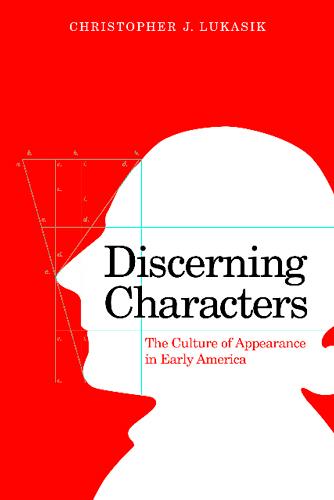
In this path-breaking study of the intersections between visual and literary culture, Christopher J. Lukasik explores how early Americans grappled with the relationship between appearance and social distinction in the decades between the American Revolution and the Civil War.
Through a wide range of evidence, including canonical and obscure novels, newspapers, periodicals, scientific and medical treatises, and plays as well as conduct manuals, portraits, silhouettes, and engravings, Discerning Characters charts the transition from the eighteenth century's emphasis on performance and manners to the search for a more reliable form of corporeal legibility in the wake of the Revolution. The emergence of physiognomy, which sought to understand a person's character based on apparently unchanging facial features, facilitated a larger shift in perception about the meanings of physical appearance and its relationship to social distinction.
The ensuing struggle between the face as a pliable medium of cultural performance and as rigid evidence of social standing, Lukasik argues, was at the center of the post-Revolutionary novel, which imagined physiognomic distinction as providing stability during a time of cultural division and political turmoil. As Lukasik shows, this tension between a model of character grounded in the fluid performances of the self and one grounded in the permanent features of the face would continue to shape not only the representation of social distinction within the novel but, more broadly, the practices of literary production and reception in nineteenth-century America across a wide range of media.
The result is a new interdisciplinary interpretation of the rise of the novel in America that reconsiders the political and social aims of the genre during the fifty years following the Revolution. In so doing, Discerning Characters powerfully rethinks how we have read—and continue to read—both novels and each other.
Before Memmo my notes were scattered across PDFs. Now a workspace pulls everything into one place — I see exactly what's still left to study.
Memmo's summaries are gold before exams. I don't have to re-read 800 pages two weeks before — just the important parts.
The AI chat has saved me the night before an exam more than once. I just keep asking until I get it — no waiting on a study group to reply.
The quizzes hit exactly what I need to know. Memmo tracks what I get stuck on — so I only practice what's worth it.
Flashcards with spaced repetition are magic. Memmo knows when I'm about to forget something and brings it back.
The AI podcasts are my favorite. I listen on my way to school and get a recap without sitting at a computer.

Handbok i kvalitativa metoder
281 kr

Hållbar utveckling: en introduktion för ingenjörer och andra problemlösare
334 kr

Brymans Samhällsvetenskapliga metoder
390 kr

Projektledning
491 kr

Den orättvisa hälsan: om socioekonomiska skillnader i hälsa och livslängd
326 kr

Organizational Leadership
429 kr

Vetenskapsteori för nybörjare
196 kr

På väg mot läraryrket
172 kr

Det sociala livet i skolan: Socialpsykologiska perspektiv
253 kr

Betygsättningens didaktik
151 kr

Personality
402 kr

Studying Leadership
404 kr

Managing Innovation
477 kr

Introduktion till samhällsvetenskaplig metod
347 kr

The Psychology of Sex and Gender
698 kr

Evidens och kunskap för socialt arbete
207 kr

Introduction to Leadership
605 kr