
Before Memmo my notes were scattered across PDFs. Now a workspace pulls everything into one place — I see exactly what's still left to study.
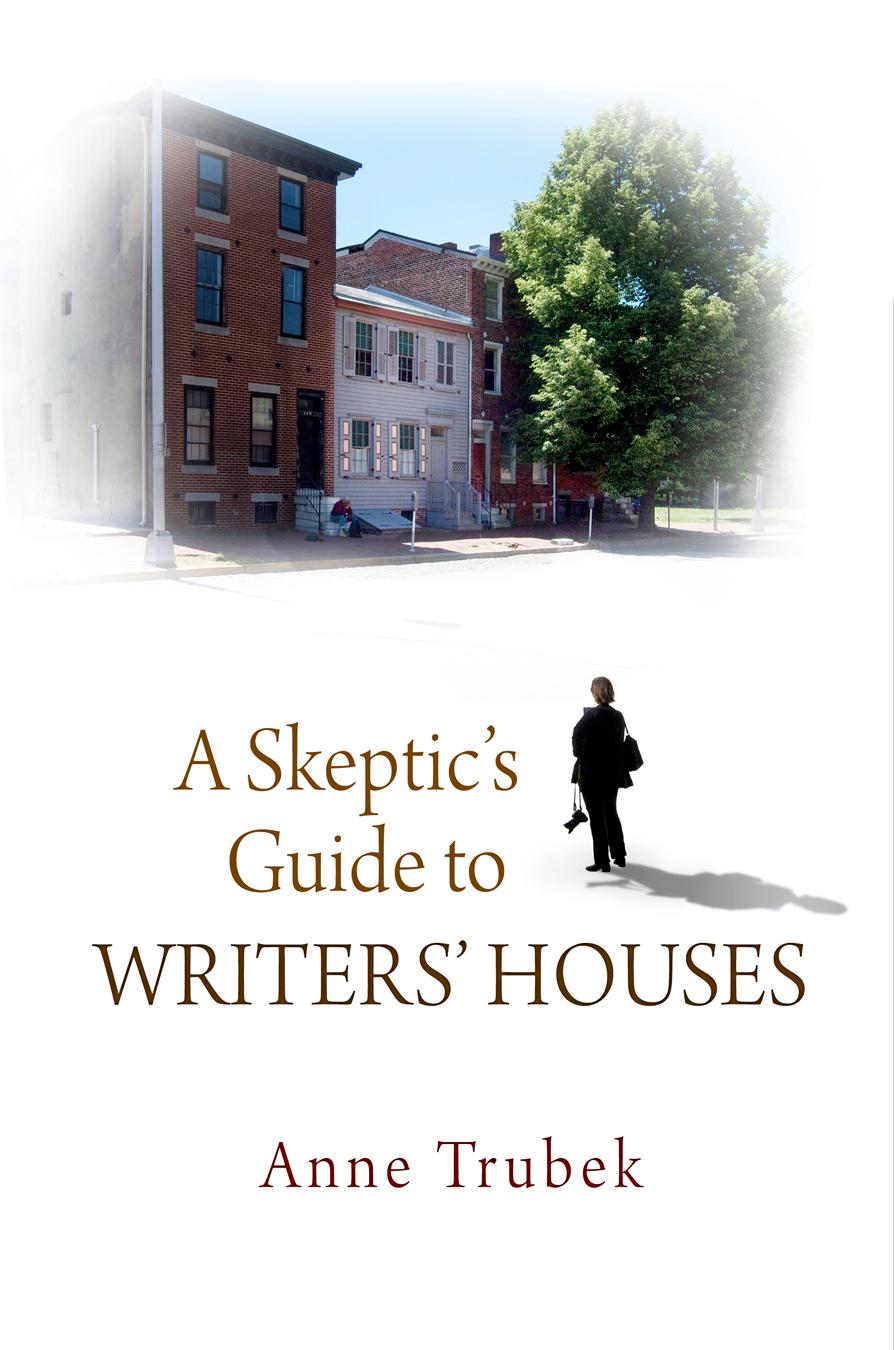
There are many ways to show our devotion to an author besides reading his or her works. Graves make for popular pilgrimage sites, but far more popular are writers' house museums. What is it we hope to accomplish by trekking to the home of a dead author? We may go in search of the point of inspiration, eager to stand on the very spot where our favorite literary characters first came to life—and find ourselves instead in the house where the author himself was conceived, or where she drew her last breath. Perhaps it is a place through which our writer passed only briefly, or maybe it really was a longtime home—now thoroughly remade as a decorator's show-house.
In A Skeptic's Guide to Writers' Houses Anne Trubek takes a vexed, often funny, and always thoughtful tour of a goodly number of house museums across the nation. In Key West she visits the shamelessly ersatz shrine to a hard-living Ernest Hemingway, while meditating on his lost Cuban farm and the sterile Idaho house in which he committed suicide. In Hannibal, Missouri, she walks the fuzzy line between fact and fiction, as she visits the home of the young Samuel Clemens—and the purported haunts of Tom Sawyer, Becky Thatcher, and Injun' Joe. She hits literary pay-dirt in Concord, Massachusetts, the nineteenth-century mecca that gave home to Hawthorne, Emerson, and Thoreau—and yet could not accommodate a surprisingly complex Louisa May Alcott. She takes us along the trail of residences that Edgar Allan Poe left behind in the wake of his many failures and to the burned-out shell of a California house with which Jack London staked his claim on posterity. In Dayton, Ohio, a charismatic guide brings Paul Laurence Dunbar to compelling life for those few visitors willing to listen; in Cleveland, Trubek finds a moving remembrance of Charles Chesnutt in a house that no longer stands.
Why is it that we visit writers' houses? Although admittedly skeptical about the stories these buildings tell us about their former inhabitants, Anne Trubek carries us along as she falls at least a little bit in love with each stop on her itinerary and finds in each some truth about literature, history, and contemporary America.
Before Memmo my notes were scattered across PDFs. Now a workspace pulls everything into one place — I see exactly what's still left to study.
Memmo's summaries are gold before exams. I don't have to re-read 800 pages two weeks before — just the important parts.
The AI chat has saved me the night before an exam more than once. I just keep asking until I get it — no waiting on a study group to reply.
The quizzes hit exactly what I need to know. Memmo tracks what I get stuck on — so I only practice what's worth it.
Flashcards with spaced repetition are magic. Memmo knows when I'm about to forget something and brings it back.
The AI podcasts are my favorite. I listen on my way to school and get a recap without sitting at a computer.

Handbok i kvalitativa metoder
281 kr

Hållbar utveckling: en introduktion för ingenjörer och andra problemlösare
334 kr

Brymans Samhällsvetenskapliga metoder
390 kr

Projektledning
491 kr

Den orättvisa hälsan: om socioekonomiska skillnader i hälsa och livslängd
326 kr

Vetenskapsteori för nybörjare
196 kr

Organizational Leadership
429 kr

På väg mot läraryrket
172 kr

Det sociala livet i skolan: Socialpsykologiska perspektiv
253 kr

Betygsättningens didaktik
151 kr

Personality
402 kr

Studying Leadership
404 kr

Managing Innovation
477 kr

Introduktion till samhällsvetenskaplig metod
347 kr

The Psychology of Sex and Gender
698 kr

Evidens och kunskap för socialt arbete
207 kr

Introduction to Leadership
605 kr