
Before Memmo my notes were scattered across PDFs. Now a workspace pulls everything into one place — I see exactly what's still left to study.
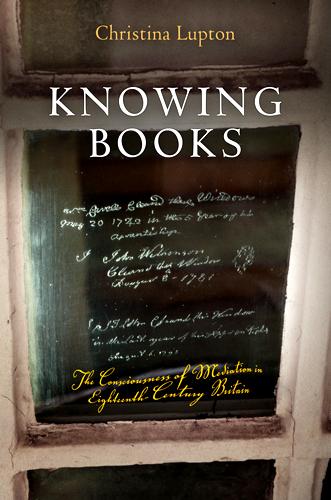
The eighteenth century has long been associated with realism and objective description, modes of representation that deemphasize writing. But in the middle decades of the century, Christina Lupton observes, authors described with surprising candor the material and economic facets of their own texts' production. In Knowing Books Lupton examines a variety of eighteenth-century sources, including sermons, graffiti, philosophical texts, and magazines, which illustrate the range and character of mid-century experiments with words announcing their status as physical objects. Books that "know" their own presence on the page and in the reader's hand become, in Lupton's account, tantalizing objects whose entertainment value competes with that of realist narrative.
Knowing Books introduces these mid-eighteenth-century works as part of a long history of self-conscious texts being greeted as fashionable objects. Poststructuralist and Marxist approaches to literature celebrate the consciousness of writing and economic production as belonging to revolutionary understandings of the world, but authors of the period under Lupton's gaze expose the facts of mediation without being revolutionary. On the contrary, their explication of economic and material processes shores up their claim to material autonomy and economic success. Lupton uses media theory and close reading to suggest the desire of eighteenth-century readers to attribute sentience to technologies and objects that entertain them.
Rather than a historical study of print technology, Knowing Books offers a humanist interpretation of the will to cede agency to media. This horizon of theoretical engagement makes Knowing Books at once an account of the least studied decades of the eighteenth century and a work of relevance for those interested in new attitudes toward media in the twenty-first.
Before Memmo my notes were scattered across PDFs. Now a workspace pulls everything into one place — I see exactly what's still left to study.
Memmo's summaries are gold before exams. I don't have to re-read 800 pages two weeks before — just the important parts.
The AI chat has saved me the night before an exam more than once. I just keep asking until I get it — no waiting on a study group to reply.
The quizzes hit exactly what I need to know. Memmo tracks what I get stuck on — so I only practice what's worth it.
Flashcards with spaced repetition are magic. Memmo knows when I'm about to forget something and brings it back.
The AI podcasts are my favorite. I listen on my way to school and get a recap without sitting at a computer.

Handbok i kvalitativa metoder
281 kr

Hållbar utveckling: en introduktion för ingenjörer och andra problemlösare
334 kr

Brymans Samhällsvetenskapliga metoder
390 kr

Projektledning
491 kr

Den orättvisa hälsan: om socioekonomiska skillnader i hälsa och livslängd
326 kr

Vetenskapsteori för nybörjare
196 kr

Organizational Leadership
429 kr

På väg mot läraryrket
172 kr

Det sociala livet i skolan: Socialpsykologiska perspektiv
253 kr

Betygsättningens didaktik
151 kr

Personality
402 kr

Studying Leadership
404 kr

Managing Innovation
477 kr

Introduktion till samhällsvetenskaplig metod
347 kr

The Psychology of Sex and Gender
698 kr

Evidens och kunskap för socialt arbete
207 kr

Introduction to Leadership
605 kr