
Before Memmo my notes were scattered across PDFs. Now a workspace pulls everything into one place — I see exactly what's still left to study.
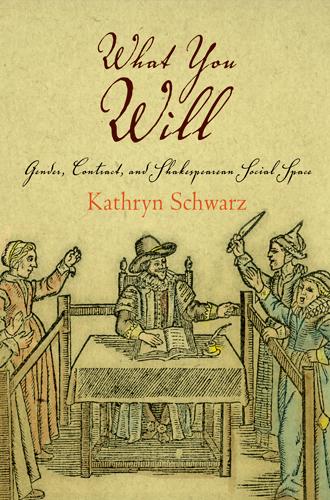
In What You Will Kathryn Schwarz traces a curious pattern in sixteenth- and seventeenth-century representations of femininity: women pose a threat when they conform too willingly to social conventions. Exemplary texts describe chaste women who kill their rapists, constant wives who make marriage a debilitating obligation, and devoted mothers who destroy the fitness of children. These cautionary tales draw attention to the more ordinary, necessary choices that take prescribed roles as a mandate for purposeful acts. For early modern narratives, writes Schwarz, intentional compliance poses a complex problem: it sustains crucial tenets of order and continuity but unsettles the hierarchical premises from which those tenets derive. Feminine will appears as a volatile force within heterosociality, lending contingent security to a system that depends less on enforced obedience than on contract and consent.
The book begins with an examination of early modern disciplines that treat will as an aspect of the individual psyche, of rhetoric, and of sexual and gendered identities. Drawing on these readings, Schwarz turns to Shakespearean works in which feminine characters articulate and manage the values that define them, revealing the vital force of conventional acts. Her analysis engages with recent research that has challenged the premise of feminine subordination, both by identifying alternative positions and by illuminating resistance within repressive structures. Schwarz builds on this awareness of disparate modes and sites of action in formulating the book's central questions: With what agency, and to what effect, do feminine subjects inhabit the conventions of femininity? In what sense are authenticity and masquerade inseparable aspects of social performance? How might coercive systems produce effective actors? What possibilities emerge from the paradox of prescribed choice? Her conclusions have implications not only for early modern scholarship but also for histories of gender and sexuality, queer studies, and theories of the relationship between subjectivity and ideological constraint.
Before Memmo my notes were scattered across PDFs. Now a workspace pulls everything into one place — I see exactly what's still left to study.
Memmo's summaries are gold before exams. I don't have to re-read 800 pages two weeks before — just the important parts.
The AI chat has saved me the night before an exam more than once. I just keep asking until I get it — no waiting on a study group to reply.
The quizzes hit exactly what I need to know. Memmo tracks what I get stuck on — so I only practice what's worth it.
Flashcards with spaced repetition are magic. Memmo knows when I'm about to forget something and brings it back.
The AI podcasts are my favorite. I listen on my way to school and get a recap without sitting at a computer.

Handbok i kvalitativa metoder
281 kr

Hållbar utveckling: en introduktion för ingenjörer och andra problemlösare
334 kr

Brymans Samhällsvetenskapliga metoder
390 kr

Projektledning
491 kr

Den orättvisa hälsan: om socioekonomiska skillnader i hälsa och livslängd
326 kr

Organizational Leadership
429 kr

Vetenskapsteori för nybörjare
196 kr

På väg mot läraryrket
172 kr

Det sociala livet i skolan: Socialpsykologiska perspektiv
253 kr

Betygsättningens didaktik
151 kr

Personality
402 kr

Studying Leadership
404 kr

Managing Innovation
477 kr

Introduktion till samhällsvetenskaplig metod
347 kr

The Psychology of Sex and Gender
698 kr

Evidens och kunskap för socialt arbete
207 kr

Introduction to Leadership
605 kr