
Before Memmo my notes were scattered across PDFs. Now a workspace pulls everything into one place — I see exactly what's still left to study.
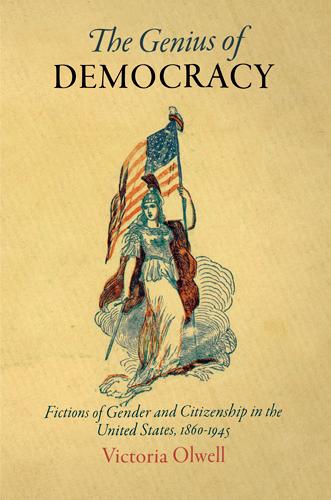
In the late nineteenth- and early twentieth-century United States, ideas of genius did more than define artistic and intellectual originality. They also provided a means for conceptualizing women's participation in a democracy that marginalized them. Widely distributed across print media but reaching their fullest development in literary fiction, tropes of female genius figured types of subjectivity and forms of collective experience that were capable of overcoming the existing constraints on political life. The connections between genius, gender, and citizenship were important not only to contests over such practical goals as women's suffrage but also to those over national membership, cultural identity, and means of political transformation more generally.
In The Genius of Democracy Victoria Olwell uncovers the political uses of genius, challenging our dominant narratives of gendered citizenship. She shows how American fiction catalyzed political models of female genius, especially in the work of Louisa May Alcott, Henry James, Mary Hunter Austin, Jessie Fauset, and Gertrude Stein. From an American Romanticism that saw genius as the ability to mediate individual desire and collective purpose to later scientific paradigms that understood it as a pathological individual deviation that nevertheless produced cultural progress, ideas of genius provided a rich language for contests over women's citizenship. Feminist narratives of female genius projected desires for a modern public life open to new participants and new kinds of collaboration, even as philosophical and scientific ideas of intelligence and creativity could often disclose troubling and more regressive dimensions. Elucidating how ideas of genius facilitated debates about political agency, gendered identity, the nature of consciousness, intellectual property, race, and national culture, Olwell reveals oppositional ways of imagining women's citizenship, ways that were critical of the conceptual limits of American democracy as usual.
Before Memmo my notes were scattered across PDFs. Now a workspace pulls everything into one place — I see exactly what's still left to study.
Memmo's summaries are gold before exams. I don't have to re-read 800 pages two weeks before — just the important parts.
The AI chat has saved me the night before an exam more than once. I just keep asking until I get it — no waiting on a study group to reply.
The quizzes hit exactly what I need to know. Memmo tracks what I get stuck on — so I only practice what's worth it.
Flashcards with spaced repetition are magic. Memmo knows when I'm about to forget something and brings it back.
The AI podcasts are my favorite. I listen on my way to school and get a recap without sitting at a computer.

Handbok i kvalitativa metoder
281 kr

Hållbar utveckling: en introduktion för ingenjörer och andra problemlösare
334 kr

Brymans Samhällsvetenskapliga metoder
390 kr

Projektledning
491 kr

Den orättvisa hälsan: om socioekonomiska skillnader i hälsa och livslängd
326 kr

Vetenskapsteori för nybörjare
196 kr

Organizational Leadership
429 kr

På väg mot läraryrket
172 kr

Det sociala livet i skolan: Socialpsykologiska perspektiv
253 kr

Betygsättningens didaktik
151 kr

Personality
402 kr

Studying Leadership
404 kr

Managing Innovation
477 kr

Introduktion till samhällsvetenskaplig metod
347 kr

The Psychology of Sex and Gender
698 kr

Evidens och kunskap för socialt arbete
207 kr

Introduction to Leadership
605 kr