
Before Memmo my notes were scattered across PDFs. Now a workspace pulls everything into one place — I see exactly what's still left to study.
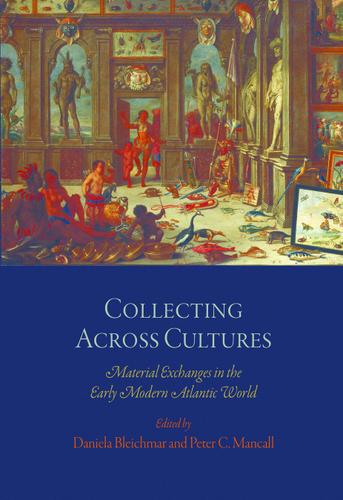
In the early modern age more people traveled farther than at any earlier time in human history. Many returned home with stories of distant lands and at least some of the objects they collected during their journeys. And those who did not travel eagerly acquired wondrous materials that arrived from faraway places. Objects traveled various routes—personal, imperial, missionary, or trade—and moved not only across space but also across cultures.
Histories of the early modern global culture of collecting have focused for the most part on European Wunderkammern, or "cabinets of curiosities." But the passion for acquiring unfamiliar items rippled across many lands. The court in Java marveled at, collected, and displayed myriad goods brought through its halls. African princes traded captured members of other African groups so they could get the newest kinds of cloth produced in Europe. Native Americans sought colored glass beads made in Europe, often trading them to other indigenous groups. Items changed hands and crossed cultural boundaries frequently, often gaining new and valuable meanings in the process. An object that might have seemed mundane in some cultures could become a target of veneration in another.
The fourteen essays in Collecting Across Cultures represent work by an international group of historians, art historians, and historians of science. Each author explores a specific aspect of the cross-cultural history of collecting and display from the dawn of the sixteenth century to the early decades of the nineteenth century. As the essays attest, an examination of early modern collecting in cross-cultural contexts sheds light on the creative and complicated ways in which objects in collections served to create knowledge—some factual, some fictional—about distant peoples in an increasingly transnational world.
Before Memmo my notes were scattered across PDFs. Now a workspace pulls everything into one place — I see exactly what's still left to study.
Memmo's summaries are gold before exams. I don't have to re-read 800 pages two weeks before — just the important parts.
The AI chat has saved me the night before an exam more than once. I just keep asking until I get it — no waiting on a study group to reply.
The quizzes hit exactly what I need to know. Memmo tracks what I get stuck on — so I only practice what's worth it.
Flashcards with spaced repetition are magic. Memmo knows when I'm about to forget something and brings it back.
The AI podcasts are my favorite. I listen on my way to school and get a recap without sitting at a computer.

Handbok i kvalitativa metoder
281 kr

Hållbar utveckling: en introduktion för ingenjörer och andra problemlösare
334 kr

Brymans Samhällsvetenskapliga metoder
390 kr

Projektledning
491 kr

Den orättvisa hälsan: om socioekonomiska skillnader i hälsa och livslängd
326 kr

Vetenskapsteori för nybörjare
196 kr

Organizational Leadership
429 kr

På väg mot läraryrket
172 kr

Det sociala livet i skolan: Socialpsykologiska perspektiv
253 kr

Betygsättningens didaktik
151 kr

Personality
402 kr

Studying Leadership
404 kr

Managing Innovation
477 kr

Introduktion till samhällsvetenskaplig metod
347 kr

The Psychology of Sex and Gender
698 kr

Evidens och kunskap för socialt arbete
207 kr

Introduction to Leadership
605 kr