
Before Memmo my notes were scattered across PDFs. Now a workspace pulls everything into one place — I see exactly what's still left to study.
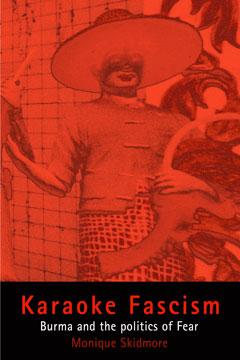
To come to Burma, one of the few places where despotism still dominates, is to take both a physical and an emotional journey and, like most Burmese, to become caught up in the daily management of fear. Based on Monique Skidmore's experiences living in the capital city of Rangoon, Karaoke Fascism is the first ethnography of fear in Burma and provides a sobering look at the psychological strategies employed by the Burmese people in order to survive under a military dictatorship that seeks to invade and dominate every aspect of life.
Skidmore looks at the psychology and politics of fear under the SLORC and SPDC regimes. Encompassing the period of antijunta student street protests, her work describes a project of authoritarian modernity, where Burmese people are conscripted as army porters and must attend mass rallies, chant slogans, construct roads, and engage in other forms of forced labor. In a harrowing portrayal of life deep within an authoritarian state, recovering heroin addicts, psychiatric patients, girl prostitutes, and poor and vulnerable women in forcibly relocated townships speak about fear, hope, and their ongoing resistance to four decades of oppression.
"Karaoke fascism" is a term the author uses to describe the layers of conformity that Burmese people present to each other and, more important, to the military regime. This complex veneer rests on resistance, collaboration, and complicity, and describes not only the Burmese form of oppression but also the Burmese response to a life of domination. Providing an inside look at the madness and the militarization of the city, Skidmore argues that the weight of fear, the anxiety of constant vulnerability, and the numbing demands of the State upon individuals force Burmese people to cast themselves as automata; they deliberately present lifeless hollow bodies for the State's use, while their minds reach out into the cosmos for an array of alternate realities. Skidmore raises ethical and methodological questions about conducting research on fear when doing so evokes the very emotion in question, in both researcher and informant.
Before Memmo my notes were scattered across PDFs. Now a workspace pulls everything into one place — I see exactly what's still left to study.
Memmo's summaries are gold before exams. I don't have to re-read 800 pages two weeks before — just the important parts.
The AI chat has saved me the night before an exam more than once. I just keep asking until I get it — no waiting on a study group to reply.
The quizzes hit exactly what I need to know. Memmo tracks what I get stuck on — so I only practice what's worth it.
Flashcards with spaced repetition are magic. Memmo knows when I'm about to forget something and brings it back.
The AI podcasts are my favorite. I listen on my way to school and get a recap without sitting at a computer.

Handbok i kvalitativa metoder
281 kr

Hållbar utveckling: en introduktion för ingenjörer och andra problemlösare
334 kr

Brymans Samhällsvetenskapliga metoder
390 kr

Projektledning
491 kr

Den orättvisa hälsan: om socioekonomiska skillnader i hälsa och livslängd
326 kr

Vetenskapsteori för nybörjare
196 kr

Organizational Leadership
429 kr

På väg mot läraryrket
172 kr

Det sociala livet i skolan: Socialpsykologiska perspektiv
253 kr

Betygsättningens didaktik
151 kr

Personality
402 kr

Studying Leadership
404 kr

Managing Innovation
477 kr

Introduktion till samhällsvetenskaplig metod
347 kr

The Psychology of Sex and Gender
698 kr

Evidens och kunskap för socialt arbete
207 kr

Introduction to Leadership
605 kr