
Before Memmo my notes were scattered across PDFs. Now a workspace pulls everything into one place — I see exactly what's still left to study.
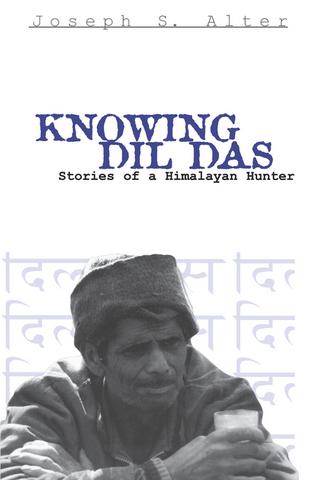
Dil Das was a poor farmer—an untouchable—living near Mussoorie, a colonial hill station in the Himalayas. As a boy he became acquainted with a number of American missionary children attending a boarding school in town and, over the years, developed close friendships with them and, eventually, with their sons. The basis for these friendships was a common passion for hunting. This passion and the friendships it made possible came to dominate Dil Das's life.
When Joseph S. Alter, one of the boys who had hunted with Dil Das, became an adult and a scholar, he set out to write the life history of Dil Das as a way of exploring Garhwali peasant culture. But Alter found his friend uninterested in talking about traditional ethnographic subjects, such as community life, family, or work. Instead, Dil Das spoke almost exclusively about hunting with his American friends—telling endless tales about friendship and hunting that seemed to have nothing to do with peasant culture.
When Dil Das died in 1986, Alter put the project away. Years later, he began rereading Dil Das's stories, this time from a completely new perspective. Instead of looking for information about peasant culture, he was able to see that Dil Das was talking against culture. From this viewpoint Dil Das's narrative made sense for precisely those reasons that had earlier seemed to render it useless—his apparent indifference toward details of everyday life, his obsession with hunting, and, above all, his celebration of friendship.
To a degree in fact, but most significantly in Dil Das's memory, hunting served to merge his and the missionary boys' identities and, thereby, to supersede and render irrelevant all differences of class, caste, and nationality. For Dil Das the intimate experience of hunting together radically decentered the prevailing structure of power and enabled him to redefine himself outside the framework of normal social classification.
Thus, Knowing Dil Das is not about peasant culture but about the limits of culture and history. And it is about the moral ambiguity of writing and living in a field of power where, despite intimacy, self and other are unequal.
Before Memmo my notes were scattered across PDFs. Now a workspace pulls everything into one place — I see exactly what's still left to study.
Memmo's summaries are gold before exams. I don't have to re-read 800 pages two weeks before — just the important parts.
The AI chat has saved me the night before an exam more than once. I just keep asking until I get it — no waiting on a study group to reply.
The quizzes hit exactly what I need to know. Memmo tracks what I get stuck on — so I only practice what's worth it.
Flashcards with spaced repetition are magic. Memmo knows when I'm about to forget something and brings it back.
The AI podcasts are my favorite. I listen on my way to school and get a recap without sitting at a computer.

Handbok i kvalitativa metoder
281 kr

Hållbar utveckling: en introduktion för ingenjörer och andra problemlösare
334 kr

Brymans Samhällsvetenskapliga metoder
390 kr

Projektledning
491 kr

Den orättvisa hälsan: om socioekonomiska skillnader i hälsa och livslängd
326 kr

Vetenskapsteori för nybörjare
196 kr

Organizational Leadership
429 kr

På väg mot läraryrket
172 kr

Det sociala livet i skolan: Socialpsykologiska perspektiv
253 kr

Betygsättningens didaktik
151 kr

Personality
402 kr

Studying Leadership
404 kr

Managing Innovation
477 kr

Introduktion till samhällsvetenskaplig metod
347 kr

The Psychology of Sex and Gender
698 kr

Evidens och kunskap för socialt arbete
207 kr

Introduction to Leadership
605 kr