
Before Memmo my notes were scattered across PDFs. Now a workspace pulls everything into one place — I see exactly what's still left to study.
Selected by Choice magazine as an Outstanding Academic Title
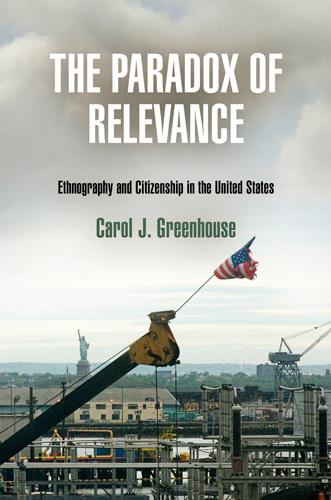
Between 1990 and 1996, the U.S. Congress passed market-based reforms in the areas of civil rights, welfare, and immigration in a series of major legislative initiatives. These were announced as curbs on excessive rights and as correctives to a culture of dependency among the urban poor—stock images of racial and cultural minorities that circulated well beyond Congress. But those images did not circulate unchallenged, even after congressional opposition failed. In The Paradox of Relevance, Carol J. Greenhouse provides a political and literary history of the anthropology of U.S. cities in the 1990s, where—below the radar—New Deal liberalism, with its iconic bond between society and security, continued to thrive.
The Paradox of Relevance opens in the midst of anthropology's so-called postmodern crisis and the appeal to relevance as a basis for reconciliation and renewal. The search for relevance leads outward to the major federal legislation of the 1990s and the galvanic political tensions between rights- and market-based reforms. Anthropologists' efforts to inform those debates through "relevant" ethnography were highly patterned, revealing the imprint of political tensions in shaping their works' central questions and themes, as well as their organization, narrative techniques, and descriptive practices. In that sense, federal discourse dominates the works' demonstrations of ethnography's relevance; however, the authors simultaneously resist that dominance through innovations in their own literariness—in particular, drawing on diasporic fiction and sociolegal studies where these articulate more agentive meanings of identity and difference. The paradox of relevance emerges with the realization that in the context of the times, affirming the relevance of ethnography as value-neutral science required the textual practices of advocacy and art.
Before Memmo my notes were scattered across PDFs. Now a workspace pulls everything into one place — I see exactly what's still left to study.
Memmo's summaries are gold before exams. I don't have to re-read 800 pages two weeks before — just the important parts.
The AI chat has saved me the night before an exam more than once. I just keep asking until I get it — no waiting on a study group to reply.
The quizzes hit exactly what I need to know. Memmo tracks what I get stuck on — so I only practice what's worth it.
Flashcards with spaced repetition are magic. Memmo knows when I'm about to forget something and brings it back.
The AI podcasts are my favorite. I listen on my way to school and get a recap without sitting at a computer.

Handbok i kvalitativa metoder
281 kr

Hållbar utveckling: en introduktion för ingenjörer och andra problemlösare
334 kr

Brymans Samhällsvetenskapliga metoder
390 kr

Projektledning
491 kr

Den orättvisa hälsan: om socioekonomiska skillnader i hälsa och livslängd
326 kr

Vetenskapsteori för nybörjare
196 kr

Organizational Leadership
429 kr

På väg mot läraryrket
172 kr

Det sociala livet i skolan: Socialpsykologiska perspektiv
253 kr

Betygsättningens didaktik
151 kr

Personality
402 kr

Studying Leadership
404 kr

Managing Innovation
477 kr

Introduktion till samhällsvetenskaplig metod
347 kr

The Psychology of Sex and Gender
698 kr

Evidens och kunskap för socialt arbete
207 kr

Introduction to Leadership
605 kr