
Before Memmo my notes were scattered across PDFs. Now a workspace pulls everything into one place — I see exactly what's still left to study.
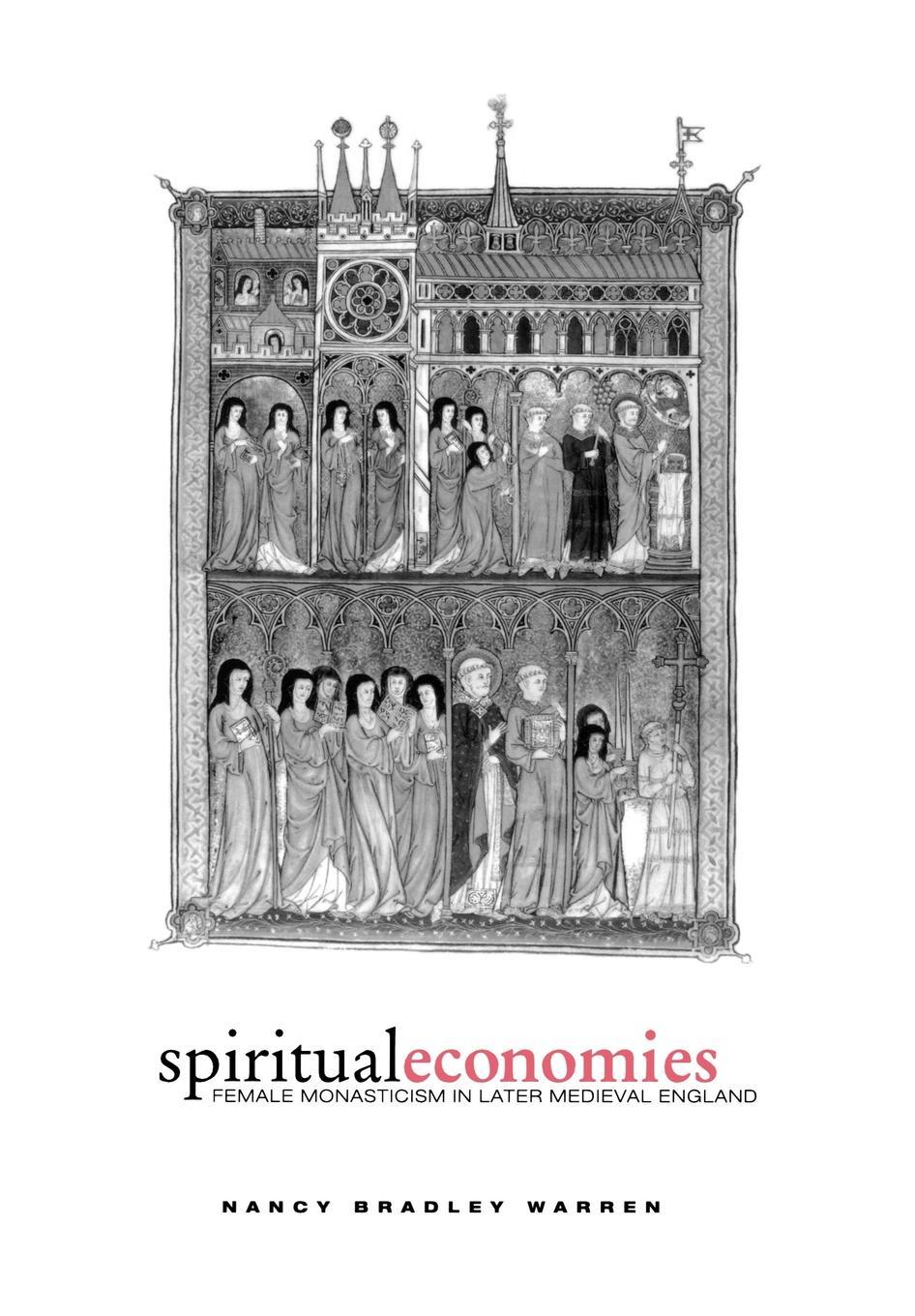
From its creation in the early fourteenth century to its dissolution in the sixteenth, the nunnery at Dartford was among the richest in England. Although obliged to support not only its own community but also a priory of Dominican friars at King's Langley, Dartford prospered. Records attest to the business skill of the Dartford nuns, as they managed the house's numerous holdings of land and property, together with the rents and services owed them. That the Dartford nuns were capable businesswomen is not surprising, since the house was also a center of female education.
For Nancy Bradley Warren, the story of Dartford exemplifies the vibrancy of nuns' material and spiritual lives in later medieval England. Revising the long-held view that fourteenth- and fifteenth-century English nunneries were impoverished both financially and religiously, Warren clarifies that the women in female monastic communities like Dartford were not woefully incompetent at managing their affairs. Instead, she reveals the complex role of female monasticism in diverse systems of production and exchange. Like the nuns at Dartford, women religious in late medieval England were enmeshed in material, symbolic, political, and spiritual economies that were at times in harmony and at other times in conflict with each other.
Building on emerging cross-disciplinary trends in feminist scholarship on medieval religion, Warren extends ongoing debates about textual and economic constructions of women's identities to the rarely considered evidence of monastic theory and practice. To this end, Spiritual Economies emphasizes that the cloister was not impermeable. As worldly forces such as economic trends and political conflicts affected life in the nunneries, so too did religious practices have political impact. In breaking down the convent wall, Warren also succeeds in breaching the boundaries separating the material and the symbolic, the religious and the secular, the literary and the historical. She turns to a wide range of sources—from legislative texts, court records, and financial accounts to devotional treatises and political propaganda—to explore the centrality of female monasticism to the flowering of female spirituality and to the later Middle Ages at large.
Before Memmo my notes were scattered across PDFs. Now a workspace pulls everything into one place — I see exactly what's still left to study.
Memmo's summaries are gold before exams. I don't have to re-read 800 pages two weeks before — just the important parts.
The AI chat has saved me the night before an exam more than once. I just keep asking until I get it — no waiting on a study group to reply.
The quizzes hit exactly what I need to know. Memmo tracks what I get stuck on — so I only practice what's worth it.
Flashcards with spaced repetition are magic. Memmo knows when I'm about to forget something and brings it back.
The AI podcasts are my favorite. I listen on my way to school and get a recap without sitting at a computer.

Handbok i kvalitativa metoder
281 kr

Hållbar utveckling: en introduktion för ingenjörer och andra problemlösare
334 kr

Brymans Samhällsvetenskapliga metoder
390 kr

Projektledning
491 kr

Den orättvisa hälsan: om socioekonomiska skillnader i hälsa och livslängd
326 kr

Vetenskapsteori för nybörjare
196 kr

Organizational Leadership
429 kr

På väg mot läraryrket
172 kr

Det sociala livet i skolan: Socialpsykologiska perspektiv
253 kr

Betygsättningens didaktik
151 kr

Personality
402 kr

Studying Leadership
404 kr

Managing Innovation
477 kr

Introduktion till samhällsvetenskaplig metod
347 kr

The Psychology of Sex and Gender
698 kr

Evidens och kunskap för socialt arbete
207 kr

Introduction to Leadership
605 kr