
Before Memmo my notes were scattered across PDFs. Now a workspace pulls everything into one place — I see exactly what's still left to study.
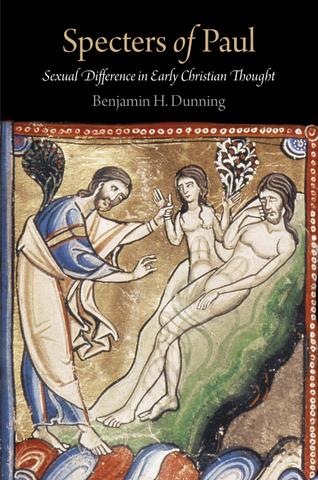
The first Christians operated with a hierarchical model of sexual difference common to the ancient Mediterranean, with women considered to be lesser versions of men. Yet sexual difference was not completely stable as a conceptual category across the spectrum of formative Christian thinking. Rather, early Christians found ways to exercise theological creativity and to think differently from one another as they probed the enigma of sexually differentiated bodies.
In Specters of Paul, Benjamin H. Dunning explores this variety in second- and third-century Christian thought with particular attention to the ways the legacy of the apostle Paul fueled, shaped, and also constrained approaches to the issue. Paul articulates his vision of what it means to be human primarily by situating human beings between two poles: creation (Adam) and resurrection (Christ). But within this framework, where does one place the figure of Eve—and the difference that her female body represents?
Dunning demonstrates that this dilemma impacted a range of Christian thinkers in the centuries immediately following the apostle, including Clement of Alexandria, Irenaeus of Lyons, Tertullian of Carthage, and authors from the Nag Hammadi corpus. While each of these thinkers attempts to give the difference of the feminine a coherent place within a Pauline typological framework, Dunning shows that they all fail to deliver fully on the coherence that they promise. Instead, sexual difference haunts the Pauline discourse of identity and sameness as the difference that can be neither fully assimilated nor fully ejected—a conclusion with important implications not only for early Christian history but also for feminist and queer philosophy and theology.
Before Memmo my notes were scattered across PDFs. Now a workspace pulls everything into one place — I see exactly what's still left to study.
Memmo's summaries are gold before exams. I don't have to re-read 800 pages two weeks before — just the important parts.
The AI chat has saved me the night before an exam more than once. I just keep asking until I get it — no waiting on a study group to reply.
The quizzes hit exactly what I need to know. Memmo tracks what I get stuck on — so I only practice what's worth it.
Flashcards with spaced repetition are magic. Memmo knows when I'm about to forget something and brings it back.
The AI podcasts are my favorite. I listen on my way to school and get a recap without sitting at a computer.

Handbok i kvalitativa metoder
281 kr

Hållbar utveckling: en introduktion för ingenjörer och andra problemlösare
334 kr

Brymans Samhällsvetenskapliga metoder
390 kr

Projektledning
491 kr

Den orättvisa hälsan: om socioekonomiska skillnader i hälsa och livslängd
326 kr

Vetenskapsteori för nybörjare
196 kr

Organizational Leadership
429 kr

På väg mot läraryrket
172 kr

Det sociala livet i skolan: Socialpsykologiska perspektiv
253 kr

Betygsättningens didaktik
151 kr

Personality
402 kr

Studying Leadership
404 kr

Managing Innovation
477 kr

Introduktion till samhällsvetenskaplig metod
347 kr

The Psychology of Sex and Gender
698 kr

Evidens och kunskap för socialt arbete
207 kr

Introduction to Leadership
605 kr