
Before Memmo my notes were scattered across PDFs. Now a workspace pulls everything into one place — I see exactly what's still left to study.
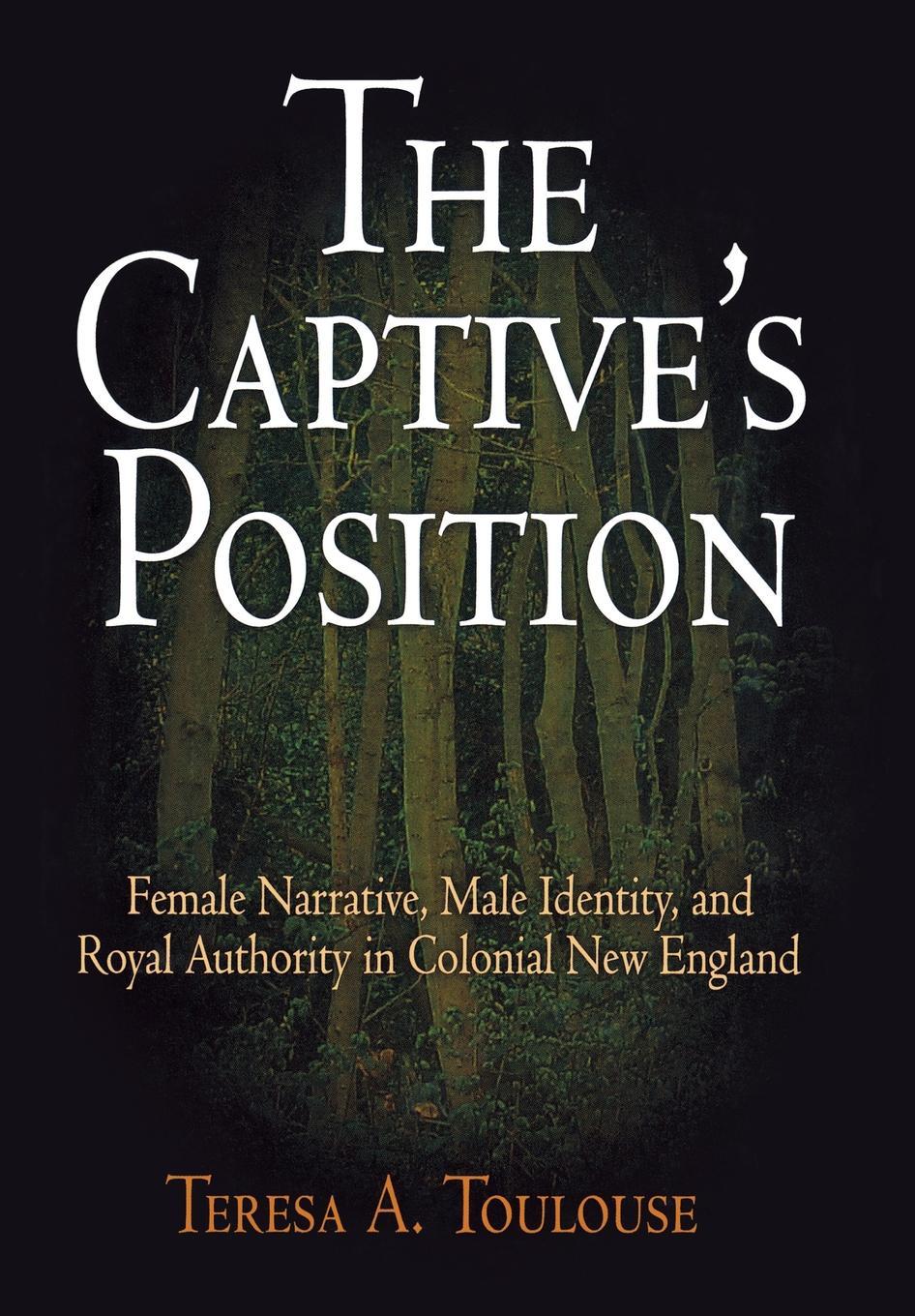
Why do narratives of Indian captivity emerge in New England between 1682 and 1707 and why are these texts, so centrally concerned with women's experience, supported and even written by a powerful group of Puritan ministers? In The Captive's Position, Teresa Toulouse argues for a new interpretation of the captivity narrative—one that takes into account the profound shifts in political and social authority and legitimacy that occurred in New England at the end of the seventeenth century.
While North American narratives of Indian captivity had been written before this period by French priests and other European adventurers, those stories had focused largely on Catholic conversions and martyrdoms or male strategies for survival among the Indians. In contrast, the New England texts represented a colonial Protestant woman who was separated brutally from her family but who demonstrated qualities of religious acceptance, humility, and obedience until she was eventually returned to her own community. Toulouse explores how the female captive's position came to resonate so powerfully for traditional male elites in the second and third generation of the Massachusetts colony. Threatened by ongoing wars with Indians and French as well as by a range of royal English interventions in New England political and cultural life, figures such as Increase Mather, Cotton Mather, and John Williams perceived themselves to be equally challenged by religious and social conflicts within New England. By responding to and employing popular representations of female captivity, they were enabled to express their ambivalence toward the world of their fathers and toward imperial expansion and thereby to negotiate their own complicated sense of personal and cultural identity.
Examining the captivity narratives of Mary Rowlandson, Hannah Dustan, Hannah Swarton, and John Williams (who comes to stand in for the female captive), Toulouse asserts the need to read these gendered texts as cultural products that variably engage, shape, and confound colonial attitudes toward both Europe and the local scene in Massachusetts. In doing so, The Captive's Position offers a new story of the rise and breakdown of orthodox Puritan captivities and a meditation on the relationship between dreams of authority and historical change.
Before Memmo my notes were scattered across PDFs. Now a workspace pulls everything into one place — I see exactly what's still left to study.
Memmo's summaries are gold before exams. I don't have to re-read 800 pages two weeks before — just the important parts.
The AI chat has saved me the night before an exam more than once. I just keep asking until I get it — no waiting on a study group to reply.
The quizzes hit exactly what I need to know. Memmo tracks what I get stuck on — so I only practice what's worth it.
Flashcards with spaced repetition are magic. Memmo knows when I'm about to forget something and brings it back.
The AI podcasts are my favorite. I listen on my way to school and get a recap without sitting at a computer.

Handbok i kvalitativa metoder
281 kr

Hållbar utveckling: en introduktion för ingenjörer och andra problemlösare
334 kr

Brymans Samhällsvetenskapliga metoder
390 kr

Projektledning
491 kr

Den orättvisa hälsan: om socioekonomiska skillnader i hälsa och livslängd
326 kr

Organizational Leadership
429 kr

Vetenskapsteori för nybörjare
196 kr

På väg mot läraryrket
172 kr

Det sociala livet i skolan: Socialpsykologiska perspektiv
253 kr

Betygsättningens didaktik
151 kr

Personality
402 kr

Studying Leadership
404 kr

Managing Innovation
477 kr

Introduktion till samhällsvetenskaplig metod
347 kr

The Psychology of Sex and Gender
698 kr

Evidens och kunskap för socialt arbete
207 kr

Introduction to Leadership
605 kr