
Before Memmo my notes were scattered across PDFs. Now a workspace pulls everything into one place — I see exactly what's still left to study.
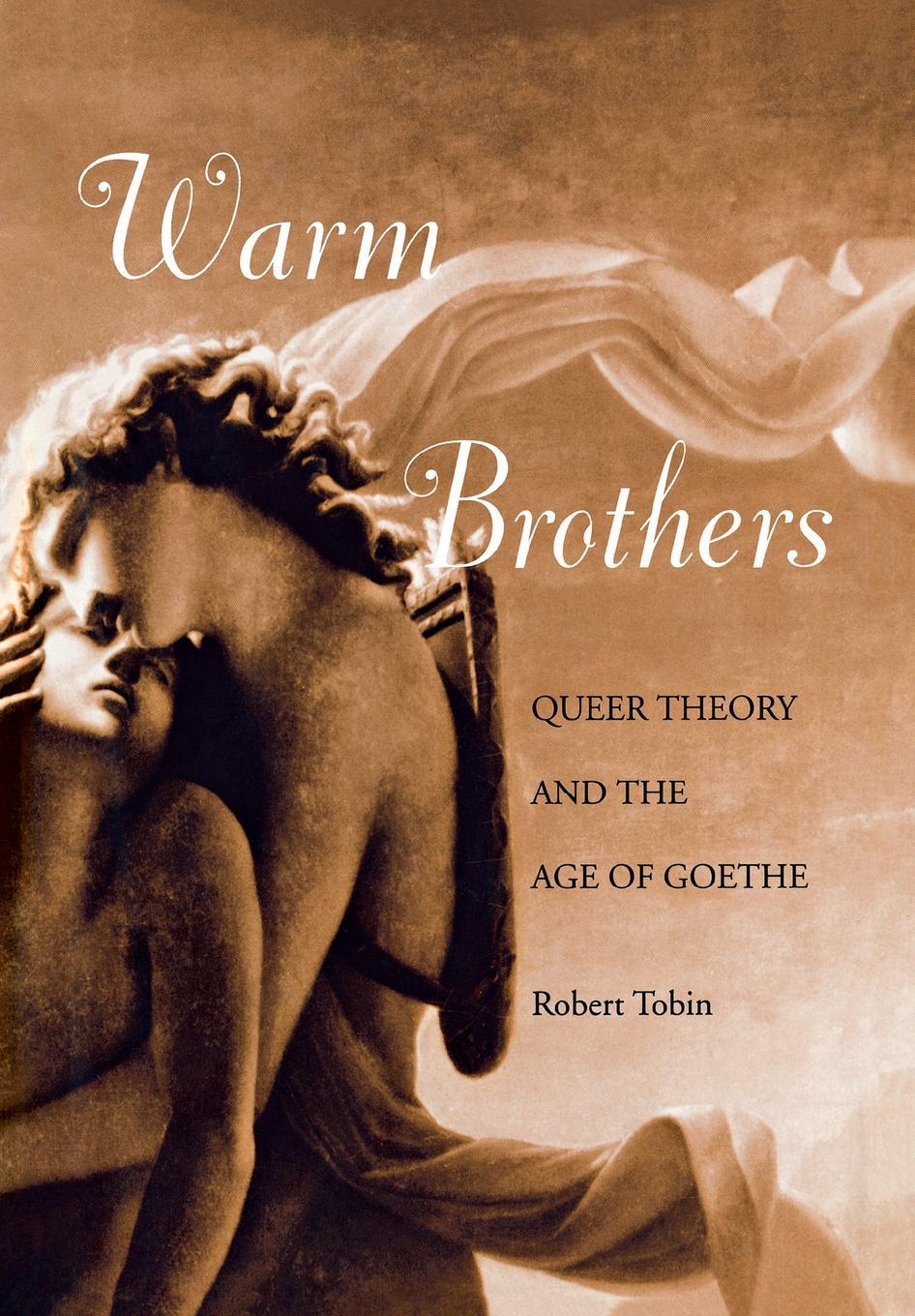
In eighteenth-century Germany, the aesthetician Friedrich Wilhelm Basileus Ramdohr could write of the phenomenon of men who evoke sexual desire in other men; Johann Joachim Winckelmann could place admiration of male beauty at the center of his art criticism; and admirers and detractors alike of Frederick the Great, King of Prussia, felt constrained to comment upon the ruler's obvious preference for men over women. In German cities of the period, men identified as "warm brothers" wore broad pigtails powdered in the back, and developed a particular discourse of friendship, classicism, Orientalism, and fashion.
There is much evidence, Robert D. Tobin contends, that something was happening in the semantic field around male-male desire in late eighteenth-century Germany, and that certain signs were coalescing around "a queer proto-identity." Today, we might consider a canonical author of the period such as Jean Paul a homosexual; we would probably not so identify Goethe or Schiller. But for Tobin, queer subtexts are found in the writings of all three and many others.
Warm Brothers analyzes classical German writers through the lens of queer theory. Beginning with sodomitical subcultures in eighteenth-century Germany, it examines the traces of an emergent homosexuality and shows the importance of the eighteenth century for the nineteenth-century sexologists who were to provide the framework for modern conceptualizations of sexuality. One of the first books to document male-male desire in eighteenth-century German literature and culture, Warm Brothers offers a much-needed reappraisal of the classical canon and the history of sexuality.
Before Memmo my notes were scattered across PDFs. Now a workspace pulls everything into one place — I see exactly what's still left to study.
Memmo's summaries are gold before exams. I don't have to re-read 800 pages two weeks before — just the important parts.
The AI chat has saved me the night before an exam more than once. I just keep asking until I get it — no waiting on a study group to reply.
The quizzes hit exactly what I need to know. Memmo tracks what I get stuck on — so I only practice what's worth it.
Flashcards with spaced repetition are magic. Memmo knows when I'm about to forget something and brings it back.
The AI podcasts are my favorite. I listen on my way to school and get a recap without sitting at a computer.

Handbok i kvalitativa metoder
281 kr

Hållbar utveckling: en introduktion för ingenjörer och andra problemlösare
334 kr

Brymans Samhällsvetenskapliga metoder
390 kr

Projektledning
491 kr

Den orättvisa hälsan: om socioekonomiska skillnader i hälsa och livslängd
326 kr

Organizational Leadership
429 kr

Vetenskapsteori för nybörjare
196 kr

På väg mot läraryrket
172 kr

Det sociala livet i skolan: Socialpsykologiska perspektiv
253 kr

Betygsättningens didaktik
151 kr

Personality
402 kr

Studying Leadership
404 kr

Managing Innovation
477 kr

Introduktion till samhällsvetenskaplig metod
347 kr

The Psychology of Sex and Gender
698 kr

Evidens och kunskap för socialt arbete
207 kr

Introduction to Leadership
605 kr