
Before Memmo my notes were scattered across PDFs. Now a workspace pulls everything into one place — I see exactly what's still left to study.
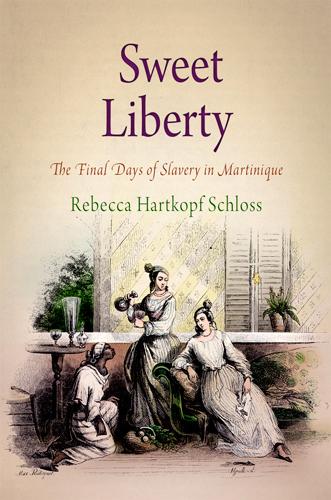
From its founding, Martinique played an integral role in France's Atlantic empire. Established in the mid-seventeenth century as a colonial outpost against Spanish and English dominance in the Caribbean, the island was transformed by the increase in European demand for sugar, coffee, and indigo. Like other colonial subjects, Martinicans met the labor needs of cash-crop cultivation by establishing plantations worked by enslaved Africans and by adopting the rigidly hierarchical social structure that accompanied chattel slavery. After Haiti gained its independence in 1804, Martinique's economic importance to the French empire increased. At the same time, questions arose, both in France and on the island, about the long-term viability of the plantation system, including debates about the ways colonists—especially enslaved Africans and free mixed-race individuals—fit into the French nation.
Sweet Liberty chronicles the history of Martinique from France's reacquisition of the island from the British in 1802 to the abolition of slavery in 1848. Focusing on the relationship between the island's widely diverse society and the various waves of French and British colonial administrations, Rebecca Hartkopf Schloss provides a compelling account of Martinique's social, political, and cultural dynamics during the final years of slavery in the French empire. Schloss explores how various groups—Creole and metropolitan elites, petits blancs, gens de couleur, and enslaved Africans—interacted with one another in a constantly shifting political environment and traces how these interactions influenced the colony's debates around identity, citizenship, and the boundaries of the French nation.
Based on extensive archival research in Europe and the Americas, Sweet Liberty is a groundbreaking study of a neglected region that traces how race, slavery, class, and gender shaped what it meant to be French on both sides of the Atlantic.
Before Memmo my notes were scattered across PDFs. Now a workspace pulls everything into one place — I see exactly what's still left to study.
Memmo's summaries are gold before exams. I don't have to re-read 800 pages two weeks before — just the important parts.
The AI chat has saved me the night before an exam more than once. I just keep asking until I get it — no waiting on a study group to reply.
The quizzes hit exactly what I need to know. Memmo tracks what I get stuck on — so I only practice what's worth it.
Flashcards with spaced repetition are magic. Memmo knows when I'm about to forget something and brings it back.
The AI podcasts are my favorite. I listen on my way to school and get a recap without sitting at a computer.

Handbok i kvalitativa metoder
281 kr

Hållbar utveckling: en introduktion för ingenjörer och andra problemlösare
334 kr

Brymans Samhällsvetenskapliga metoder
390 kr

Projektledning
491 kr

Den orättvisa hälsan: om socioekonomiska skillnader i hälsa och livslängd
326 kr

Organizational Leadership
429 kr

Vetenskapsteori för nybörjare
196 kr

På väg mot läraryrket
172 kr

Det sociala livet i skolan: Socialpsykologiska perspektiv
253 kr

Betygsättningens didaktik
151 kr

Personality
402 kr

Studying Leadership
404 kr

Managing Innovation
477 kr

Introduktion till samhällsvetenskaplig metod
347 kr

The Psychology of Sex and Gender
698 kr

Evidens och kunskap för socialt arbete
207 kr

Introduction to Leadership
605 kr