
Before Memmo my notes were scattered across PDFs. Now a workspace pulls everything into one place — I see exactly what's still left to study.
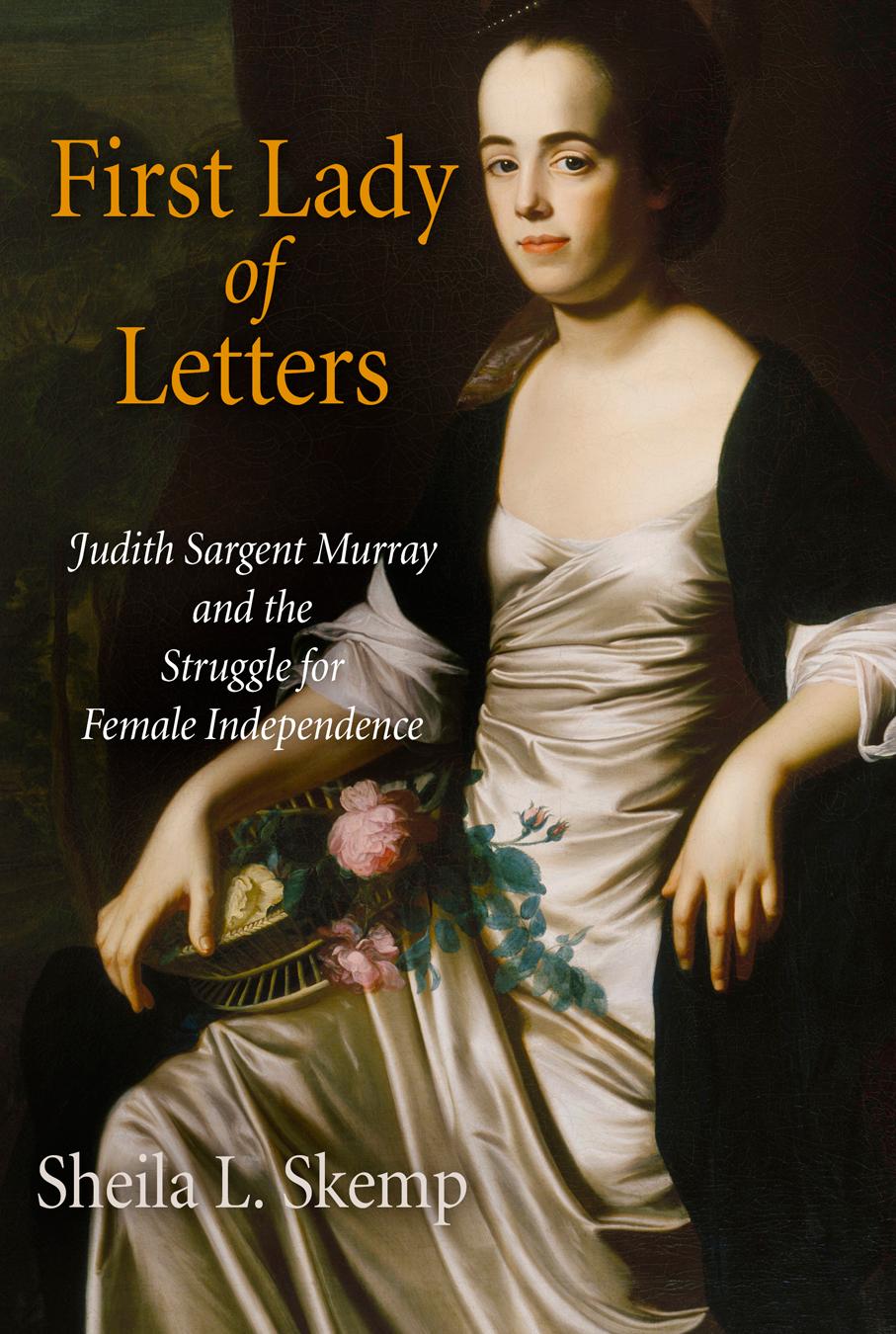
Judith Sargent Murray (1751-1820), poet, essayist, playwright, and one of the most thoroughgoing advocates of women's rights in early America, was as well known in her own day as Abigail Adams or Martha Washington. Her name, though, has virtually disappeared from the public consciousness. Thanks to the recent discovery of Murray's papers—including some 2,500 personal letters—historian Sheila L. Skemp has documented the compelling story of this talented and most unusual eighteenth-century woman.
Born in Gloucester, Massachussetts, Murray moved to Boston in 1793 with her second husband, Universalist minister John Murray. There she became part of the city's literary scene. Two of her plays were performed at Federal Street Theater, making her the first American woman to have a play produced in Boston. There as well she wrote and published her magnum opus, The Gleaner, a three-volume "miscellany" that included poems, essays, and the novel-like story "Margaretta." After 1800, Murray's output diminished and her hopes for literary renown faded. Suffering from the backlash against women's rights that had begun to permeate American society, struggling with economic difficulties, and concerned about providing the best possible education for her daughter, she devoted little time to writing. But while her efforts diminished, they never ceased.
Murray was determined to transcend the boundaries that limited women of her era and worked tirelessly to have women granted the same right to the "pursuit of happiness" immortalized in the Declaration of Independence. She questioned the meaning of gender itself, emphasizing the human qualities men and women shared, arguing that the apparent distinctions were the consequence of nurture, not nature. Although she was disappointed in the results of her efforts, Murray nevertheless left a rich intellectual and literary legacy, in which she challenged the new nation to fulfill its promise of equality to all citizens.
Before Memmo my notes were scattered across PDFs. Now a workspace pulls everything into one place — I see exactly what's still left to study.
Memmo's summaries are gold before exams. I don't have to re-read 800 pages two weeks before — just the important parts.
The AI chat has saved me the night before an exam more than once. I just keep asking until I get it — no waiting on a study group to reply.
The quizzes hit exactly what I need to know. Memmo tracks what I get stuck on — so I only practice what's worth it.
Flashcards with spaced repetition are magic. Memmo knows when I'm about to forget something and brings it back.
The AI podcasts are my favorite. I listen on my way to school and get a recap without sitting at a computer.

Handbok i kvalitativa metoder
281 kr

Hållbar utveckling: en introduktion för ingenjörer och andra problemlösare
334 kr

Brymans Samhällsvetenskapliga metoder
390 kr

Projektledning
491 kr

Den orättvisa hälsan: om socioekonomiska skillnader i hälsa och livslängd
326 kr

Vetenskapsteori för nybörjare
196 kr

Organizational Leadership
429 kr

På väg mot läraryrket
172 kr

Det sociala livet i skolan: Socialpsykologiska perspektiv
253 kr

Betygsättningens didaktik
151 kr

Personality
402 kr

Studying Leadership
404 kr

Managing Innovation
477 kr

Introduktion till samhällsvetenskaplig metod
347 kr

The Psychology of Sex and Gender
698 kr

Evidens och kunskap för socialt arbete
207 kr

Introduction to Leadership
605 kr