
Before Memmo my notes were scattered across PDFs. Now a workspace pulls everything into one place — I see exactly what's still left to study.
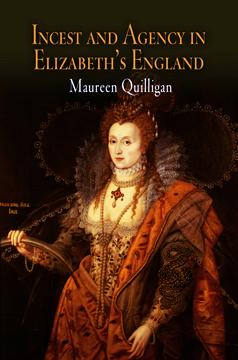
Maureen Quilligan explores the remarkable presence in the Renaissance of what she calls "incest schemes" in the books of a small number of influential women who claimed an active female authority by writing in high canonical genres and who, even more transgressively for the time, sought publication in print.
It is no accident for Quilligan that the first printed work of Elizabeth I was a translation done at age eleven of a poem by Marguerite de Navarre, in which the notion of "holy" incest is the prevailing trope. Nor is it coincidental that Mary Wroth, author of the first sonnet cycle and prose romance by a woman printed in English, described in these an endogamous, if not legally incestuous, illegitimate relationship with her first cousin. Sir Philip Sidney and his sister, the Countess of Pembroke, translated the psalms together, and after his death she finished his work by revising it for publication; the two were the subject of rumors of incest. Isabella Whitney cast one of her most important long poems as a fictive legacy to her brother, arguably because such a relationship resonated with the power of endogamous female agency. Elizabeth Carey's closet drama about Mariam, the wife of Herod, spends important energy on the tie between sister and brother. Quilligan also reads male-authored meditations on the relationship between incest and female agency and sees a far different Cordelia, Britomart, and Eve from what traditional scholarship has heretofore envisioned.
Incest and Agency in Elizabeth's England makes a signal contribution to the conversation about female agency in the early modern period. While contemporary anthropological theory deeply informs her understanding of why some Renaissance women writers wrote as they did, Quilligan offers an important corrective to modern theorizing that is grounded in the historical texts themselves.
Before Memmo my notes were scattered across PDFs. Now a workspace pulls everything into one place — I see exactly what's still left to study.
Memmo's summaries are gold before exams. I don't have to re-read 800 pages two weeks before — just the important parts.
The AI chat has saved me the night before an exam more than once. I just keep asking until I get it — no waiting on a study group to reply.
The quizzes hit exactly what I need to know. Memmo tracks what I get stuck on — so I only practice what's worth it.
Flashcards with spaced repetition are magic. Memmo knows when I'm about to forget something and brings it back.
The AI podcasts are my favorite. I listen on my way to school and get a recap without sitting at a computer.

Handbok i kvalitativa metoder
281 kr

Hållbar utveckling: en introduktion för ingenjörer och andra problemlösare
334 kr

Brymans Samhällsvetenskapliga metoder
390 kr

Projektledning
491 kr

Den orättvisa hälsan: om socioekonomiska skillnader i hälsa och livslängd
326 kr

Vetenskapsteori för nybörjare
196 kr

Organizational Leadership
429 kr

På väg mot läraryrket
172 kr

Det sociala livet i skolan: Socialpsykologiska perspektiv
253 kr

Betygsättningens didaktik
151 kr

Personality
402 kr

Studying Leadership
404 kr

Managing Innovation
477 kr

Introduktion till samhällsvetenskaplig metod
347 kr

The Psychology of Sex and Gender
698 kr

Evidens och kunskap för socialt arbete
207 kr

Introduction to Leadership
605 kr