
Before Memmo my notes were scattered across PDFs. Now a workspace pulls everything into one place — I see exactly what's still left to study.
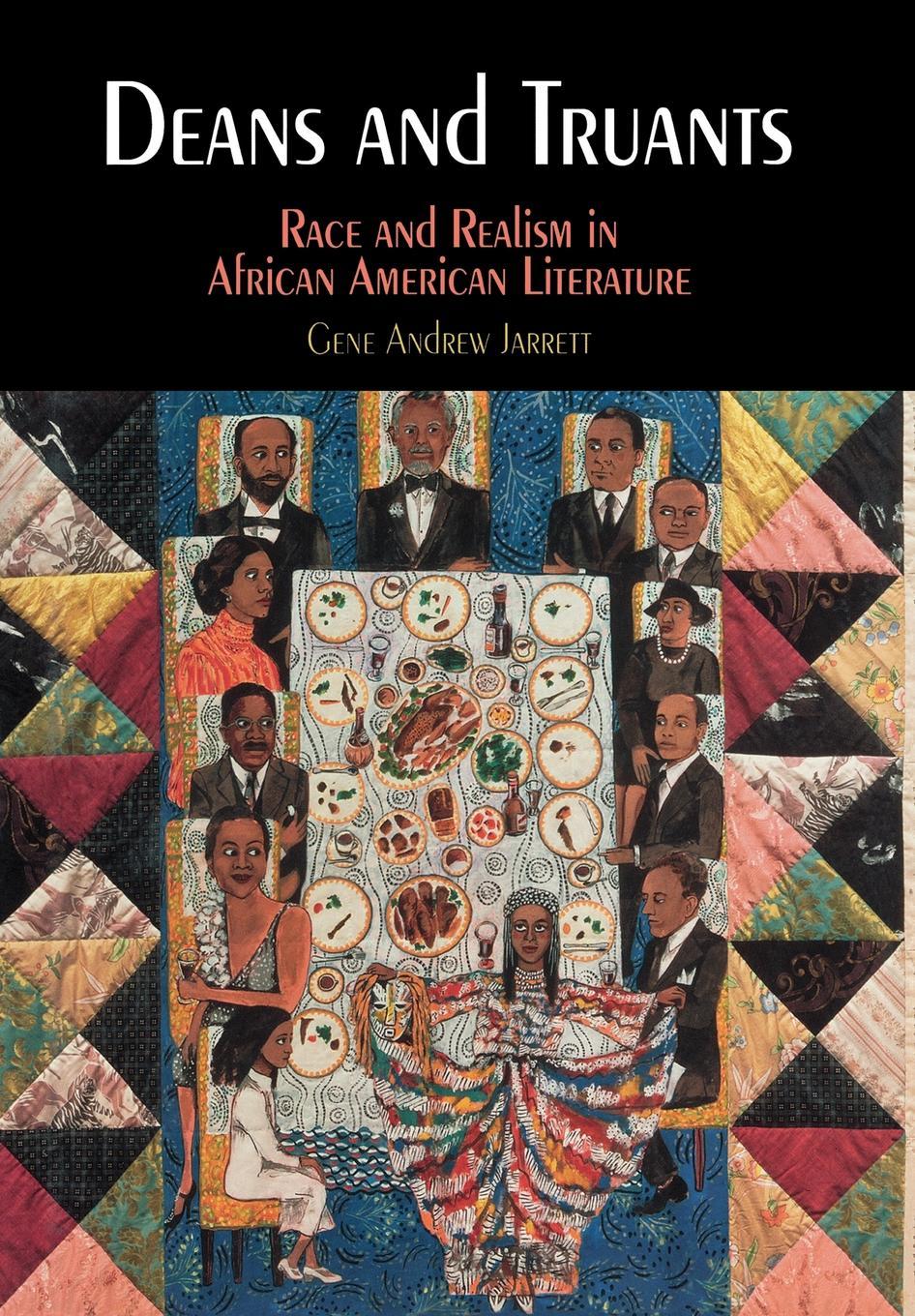
For a work to be considered African American literature, does it need to focus on black characters or political themes? Must it represent these within a specific stylistic range? Or is it enough for the author to be identified as African American? In Deans and Truants, Gene Andrew Jarrett traces the shifting definitions of African American literature and the authors who wrote beyond those boundaries at the cost of critical dismissal and, at times, obscurity. From the late nineteenth century to the end of the twentieth, de facto deans—critics and authors as different as William Howells, Alain Locke, Richard Wright, and Amiri Baraka—prescribed the shifting parameters of realism and racial subject matter appropriate to authentic African American literature, while truant authors such as Paul Laurence Dunbar, George S. Schuyler, Frank Yerby, and Toni Morrison—perhaps the most celebrated African American author of the twentieth century—wrote literature anomalous to those standards.
Jarrett explores the issues at stake when Howells, the "Dean of American Letters," argues in 1896 that only Dunbar's "entirely black verse," written in dialect, "would succeed." Three decades later, Locke, the cultural arbiter of the Harlem Renaissance, stands in contrast to Schuyler, a journalist and novelist who questions the existence of a peculiarly black or "New Negro" art. Next, Wright's 1937 blueprint for African American writing sets the terms of the Chicago Renaissance, but Yerby's version of historical romance approaches race and realism in alternative literary ways. Finally, Deans and Truants measures the gravitational pull of the late 1960s Black Aesthetic in Baraka's editorial silence on Toni Morrison's first and only short story, "Recitatif."
Drawing from a wealth of biographical, historical, and literary sources, Deans and Truants describes the changing notions of race, politics, and gender that framed and were framed by the authors and critics of African American culture for more than a century.
Before Memmo my notes were scattered across PDFs. Now a workspace pulls everything into one place — I see exactly what's still left to study.
Memmo's summaries are gold before exams. I don't have to re-read 800 pages two weeks before — just the important parts.
The AI chat has saved me the night before an exam more than once. I just keep asking until I get it — no waiting on a study group to reply.
The quizzes hit exactly what I need to know. Memmo tracks what I get stuck on — so I only practice what's worth it.
Flashcards with spaced repetition are magic. Memmo knows when I'm about to forget something and brings it back.
The AI podcasts are my favorite. I listen on my way to school and get a recap without sitting at a computer.

Handbok i kvalitativa metoder
281 kr

Hållbar utveckling: en introduktion för ingenjörer och andra problemlösare
334 kr

Brymans Samhällsvetenskapliga metoder
390 kr

Projektledning
491 kr

Den orättvisa hälsan: om socioekonomiska skillnader i hälsa och livslängd
326 kr

Organizational Leadership
429 kr

Vetenskapsteori för nybörjare
196 kr

På väg mot läraryrket
172 kr

Det sociala livet i skolan: Socialpsykologiska perspektiv
253 kr

Betygsättningens didaktik
151 kr

Personality
402 kr

Studying Leadership
404 kr

Managing Innovation
477 kr

Introduktion till samhällsvetenskaplig metod
347 kr

The Psychology of Sex and Gender
698 kr

Evidens och kunskap för socialt arbete
207 kr

Introduction to Leadership
605 kr