
Before Memmo my notes were scattered across PDFs. Now a workspace pulls everything into one place — I see exactly what's still left to study.
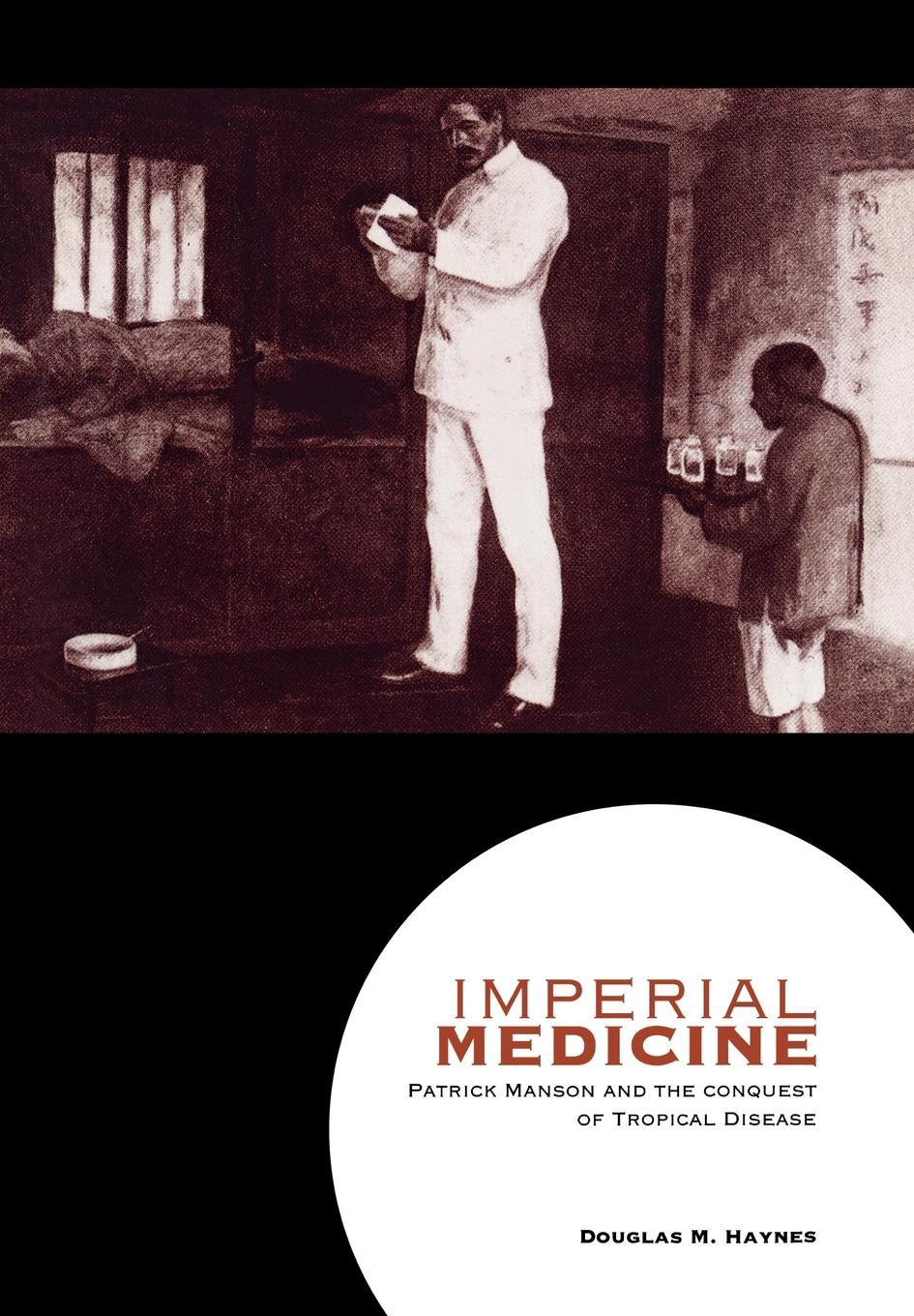
In 1866 Patrick Manson, a young Scottish doctor fresh from medical school, left London to launch his career in China as a port surgeon for the Imperial Chinese Customs Service. For the next two decades, he served in this outpost of British power in the Far East, and extended the frontiers of British medicine. In 1899, at the twilight of his career and as the British Empire approached its zenith, he founded the London School of Tropical Medicine. For these contributions Manson would later be called the "father of British tropical medicine."
In Imperial Medicine: Patrick Manson and the Conquest of Tropical Disease Douglas M. Haynes uses Manson's career to explore the role of British imperialism in the making of Victorian medicine and science. He challenges the categories of "home" and "empire" that have long informed accounts of British medicine and science, revealing a vastly more dynamic, dialectical relationship between the imperial metropole and periphery than has previously been recognized. Manson's decision to launch his career in China was no accident; the empire provided a critical source of career opportunities for a chronically overcrowded profession in Britain. And Manson used the London media's interest in the empire to advance his scientific agenda, including the discovery of the transmission of malaria in 1898, which he portrayed as British science.
The empire not only created a demand for practitioners but also enhanced the presence of British medicine throughout the world. Haynes documents how the empire subsidized research science at the London School of Tropical Medicine and elsewhere in Britain in the early twentieth century. By illuminating the historical enmeshment of Victorian medicine and science in Britain's imperial project, Imperial Medicine identifies the present-day privileged distribution of specialist knowledge about disease with the lingering consequences of European imperialism.
Before Memmo my notes were scattered across PDFs. Now a workspace pulls everything into one place — I see exactly what's still left to study.
Memmo's summaries are gold before exams. I don't have to re-read 800 pages two weeks before — just the important parts.
The AI chat has saved me the night before an exam more than once. I just keep asking until I get it — no waiting on a study group to reply.
The quizzes hit exactly what I need to know. Memmo tracks what I get stuck on — so I only practice what's worth it.
Flashcards with spaced repetition are magic. Memmo knows when I'm about to forget something and brings it back.
The AI podcasts are my favorite. I listen on my way to school and get a recap without sitting at a computer.

Handbok i kvalitativa metoder
281 kr

Hållbar utveckling: en introduktion för ingenjörer och andra problemlösare
334 kr

Brymans Samhällsvetenskapliga metoder
390 kr

Projektledning
491 kr

Den orättvisa hälsan: om socioekonomiska skillnader i hälsa och livslängd
326 kr

Vetenskapsteori för nybörjare
196 kr

Organizational Leadership
429 kr

På väg mot läraryrket
172 kr

Det sociala livet i skolan: Socialpsykologiska perspektiv
253 kr

Betygsättningens didaktik
151 kr

Personality
402 kr

Studying Leadership
404 kr

Managing Innovation
477 kr

Introduktion till samhällsvetenskaplig metod
347 kr

The Psychology of Sex and Gender
698 kr

Evidens och kunskap för socialt arbete
207 kr

Introduction to Leadership
605 kr