
Before Memmo my notes were scattered across PDFs. Now a workspace pulls everything into one place — I see exactly what's still left to study.
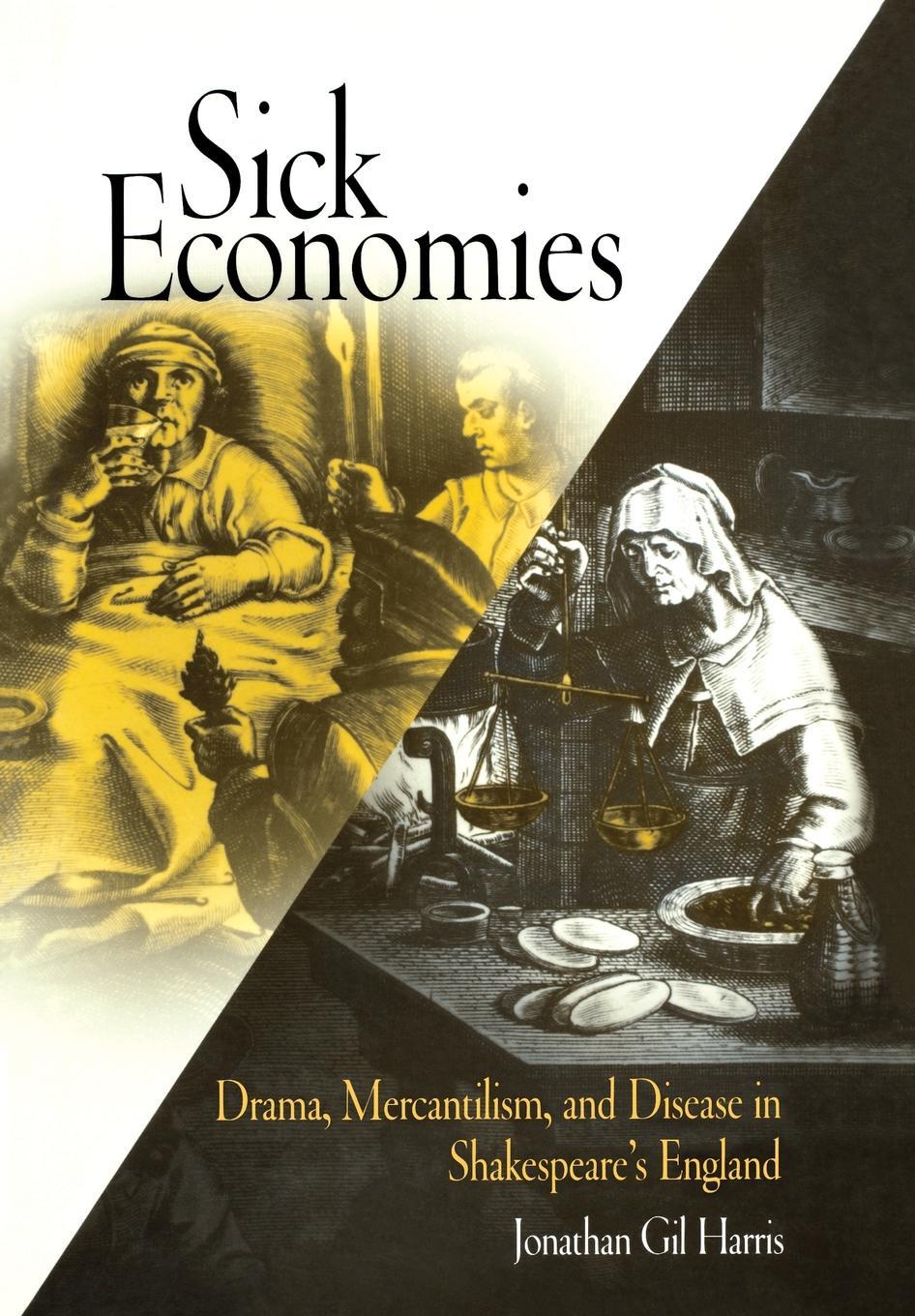
From French Physiocrat theories of the blood-like circulation of wealth to Adam Smith's "invisible hand" of the market, the body has played a crucial role in Western perceptions of the economic. In Renaissance culture, however, the dominant bodily metaphors for national wealth and economy were derived from the relatively new language of infectious disease. Whereas traditional Galenic medicine had understood illness as a state of imbalance within the body, early modern writers increasingly reimagined disease as an invasive foreign agent. The rapid rise of global trade in the sixteenth century, and the resulting migrations of people, money, and commodities across national borders, contributed to this growing pathologization of the foreign; conversely, the new trade-inflected vocabularies of disease helped writers to represent the contours of national and global economies.
Grounded in scrupulous analyses of cultural and economic history, Sick Economies: Drama, Mercantilism, and Disease in Shakespeare's England teases out the double helix of the pathological and the economic in two seemingly disparate spheres of early modern textual production: drama and mercantilist writing. Of particular interest to this study are the ways English playwrights, such as Shakespeare, Jonson, Heywood, Massinger, and Middleton, and mercantilists, such as Malynes, Milles, Misselden, and Mun, rooted their conceptions of national economy in the language of disease. Some of these diseases—syphilis, taint, canker, plague, hepatitis—have subsequently lost their economic connotations; others—most notably consumption—remain integral to the modern economic lexicon but have by and large shed their pathological senses.
Breaking new ground by analyzing English mercantilism primarily as a discursive rather than an ideological or economic system, Sick Economies provides a compelling history of how, even in our own time, defenses of transnational economy have paradoxically pathologized the foreign. In the process, Jonathan Gil Harris argues that what we now regard as the discrete sphere of the economic cannot be disentangled from seemingly unrelated domains of Renaissance culture, especially medicine and the theater.
Before Memmo my notes were scattered across PDFs. Now a workspace pulls everything into one place — I see exactly what's still left to study.
Memmo's summaries are gold before exams. I don't have to re-read 800 pages two weeks before — just the important parts.
The AI chat has saved me the night before an exam more than once. I just keep asking until I get it — no waiting on a study group to reply.
The quizzes hit exactly what I need to know. Memmo tracks what I get stuck on — so I only practice what's worth it.
Flashcards with spaced repetition are magic. Memmo knows when I'm about to forget something and brings it back.
The AI podcasts are my favorite. I listen on my way to school and get a recap without sitting at a computer.

Handbok i kvalitativa metoder
281 kr

Hållbar utveckling: en introduktion för ingenjörer och andra problemlösare
334 kr

Brymans Samhällsvetenskapliga metoder
390 kr

Projektledning
491 kr

Den orättvisa hälsan: om socioekonomiska skillnader i hälsa och livslängd
326 kr

Vetenskapsteori för nybörjare
196 kr

Organizational Leadership
429 kr

På väg mot läraryrket
172 kr

Det sociala livet i skolan: Socialpsykologiska perspektiv
253 kr

Betygsättningens didaktik
151 kr

Personality
402 kr

Studying Leadership
404 kr

Managing Innovation
477 kr

Introduktion till samhällsvetenskaplig metod
347 kr

The Psychology of Sex and Gender
698 kr

Evidens och kunskap för socialt arbete
207 kr

Introduction to Leadership
605 kr