
Before Memmo my notes were scattered across PDFs. Now a workspace pulls everything into one place — I see exactly what's still left to study.
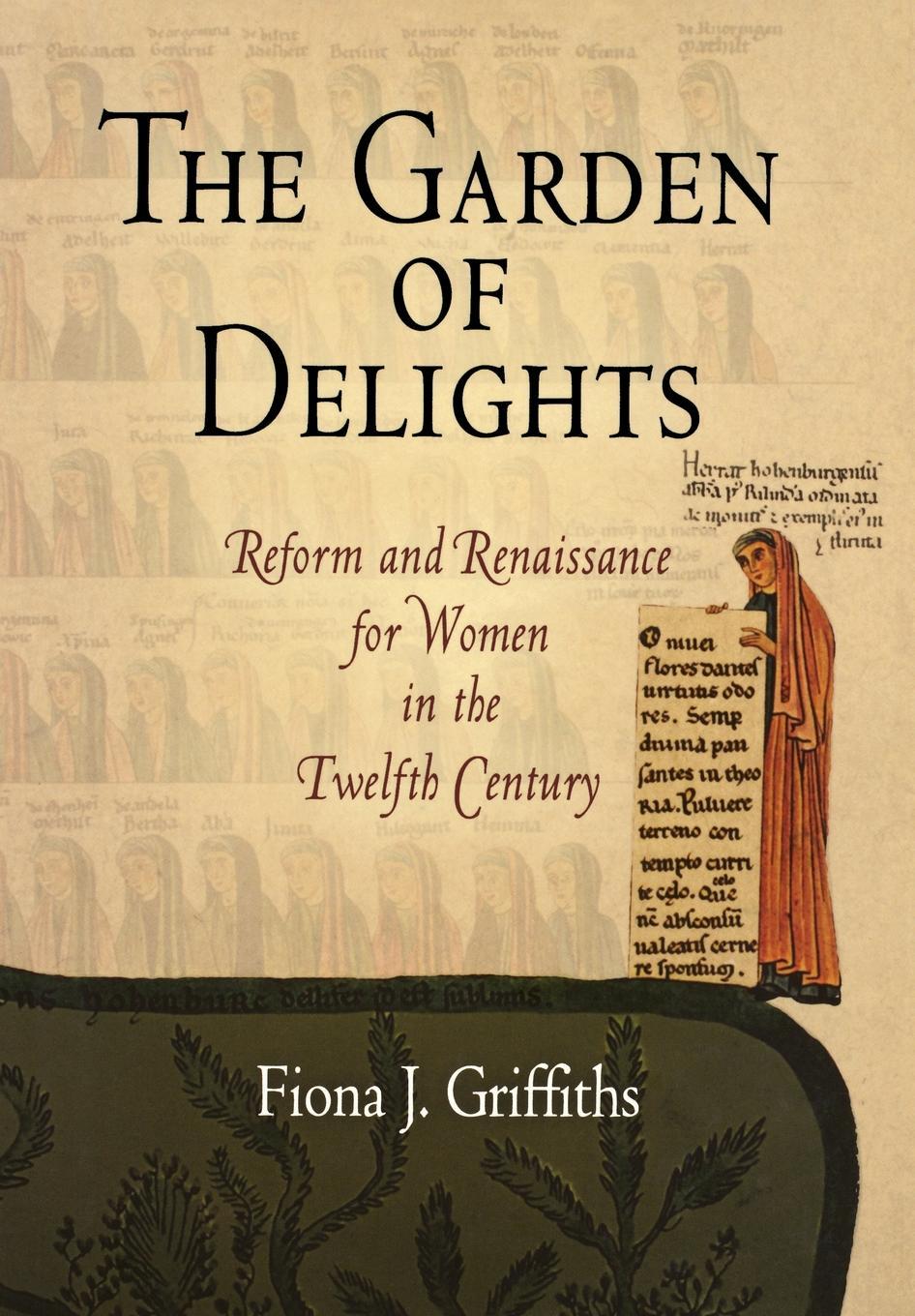
In The Garden of Delights, Fiona J. Griffiths offers the first major study of the Hortus deliciarum, a magnificently illuminated manuscript of theology, biblical history, and canon law written both by and explicitly for women at the end of the twelfth century. In so doing she provides a brilliantly persuasive new reading of female monastic culture. Through careful analysis of the contents, structure, and organization of the Hortus, Griffiths argues for women's profound engagement with the spiritual and intellectual vitality of the period on a level previously thought unimaginable, overturning the assumption that women were largely excluded from the "renaissance" and "reform" of this period. As a work of scholarship that drew from a wide range of sources, both monastic and scholastic, the Hortus provides a witness to the richness of women's reading practices within the cloister, demonstrating that it was possible, even late into the twelfth century, for communities of religious women to pursue an educational program that rivaled that available to men. At the same time, the manuscript's reformist agenda reveals how women engaged the pressing spiritual questions of the day, even going so far as to criticize priests and other churchmen who fell short of their reformist ideals.
Through her wide-ranging examination of the texts and images of the Hortus, their sources, composition, and function, Griffiths offers an integrated understanding of the whole manuscript, one which highlights women's Latin learning and orthodox spirituality. The Garden of Delights contributes to some of the most urgent questions concerning medieval religious women, the interplay of gender, spirituality, and intellectual engagement, to discussions concerning women scribes and writers, women readers, female authorship and authority, and the visual culture of female communities. It will be of interest to art historians, scholars of women's and gender studies, historians of medieval religion, education, and theology, and literary scholars studying questions of female authorship and models of women's reading.
Before Memmo my notes were scattered across PDFs. Now a workspace pulls everything into one place — I see exactly what's still left to study.
Memmo's summaries are gold before exams. I don't have to re-read 800 pages two weeks before — just the important parts.
The AI chat has saved me the night before an exam more than once. I just keep asking until I get it — no waiting on a study group to reply.
The quizzes hit exactly what I need to know. Memmo tracks what I get stuck on — so I only practice what's worth it.
Flashcards with spaced repetition are magic. Memmo knows when I'm about to forget something and brings it back.
The AI podcasts are my favorite. I listen on my way to school and get a recap without sitting at a computer.

Handbok i kvalitativa metoder
281 kr

Hållbar utveckling: en introduktion för ingenjörer och andra problemlösare
334 kr

Brymans Samhällsvetenskapliga metoder
390 kr

Projektledning
491 kr

Den orättvisa hälsan: om socioekonomiska skillnader i hälsa och livslängd
326 kr

Vetenskapsteori för nybörjare
196 kr

Organizational Leadership
429 kr

På väg mot läraryrket
172 kr

Det sociala livet i skolan: Socialpsykologiska perspektiv
253 kr

Betygsättningens didaktik
151 kr

Personality
402 kr

Studying Leadership
404 kr

Managing Innovation
477 kr

Introduktion till samhällsvetenskaplig metod
347 kr

The Psychology of Sex and Gender
698 kr

Evidens och kunskap för socialt arbete
207 kr

Introduction to Leadership
605 kr