
Before Memmo my notes were scattered across PDFs. Now a workspace pulls everything into one place — I see exactly what's still left to study.
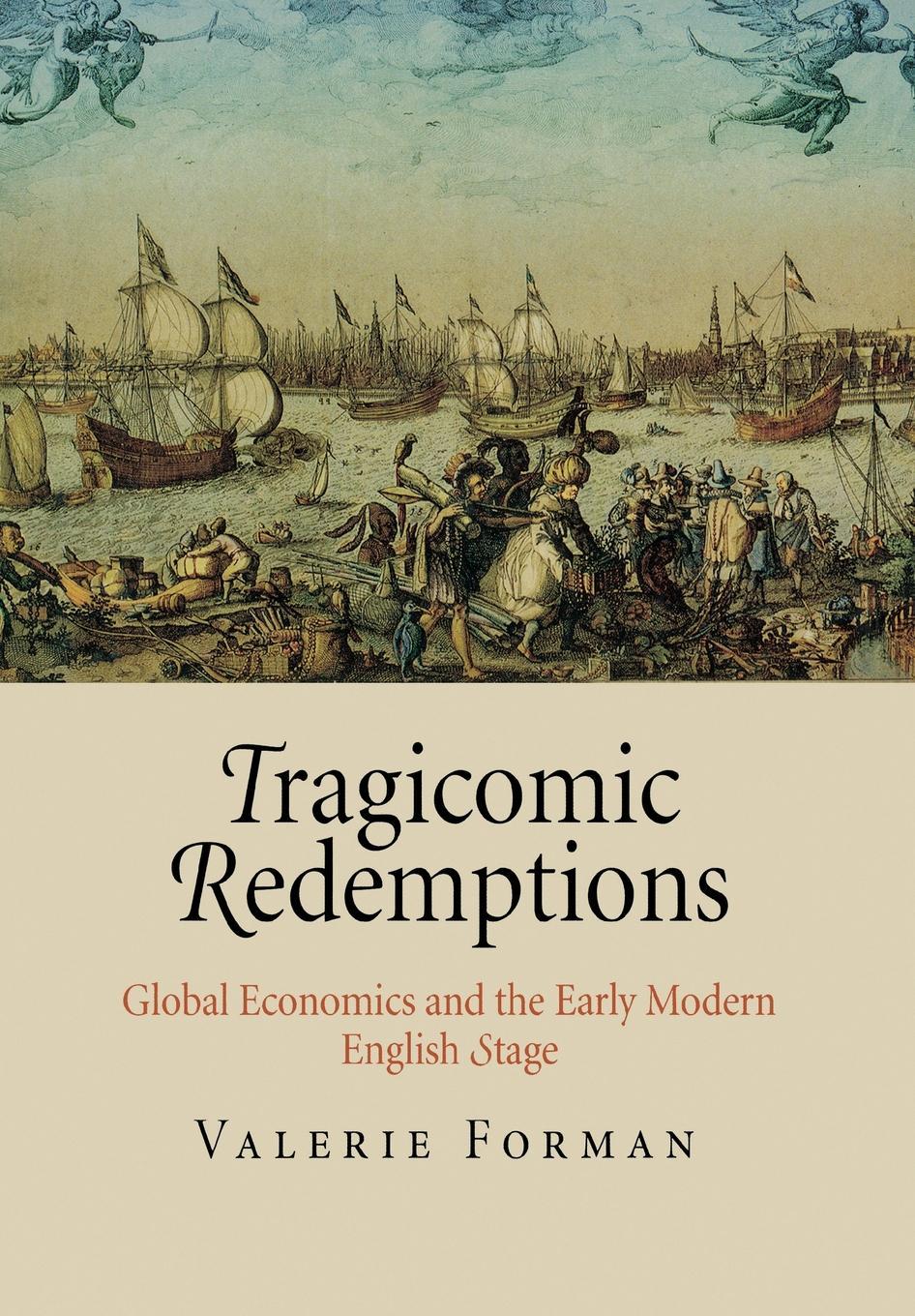
In the early modern period, England radically expanded its participation in an economy that itself was becoming increasingly global. Yet less than twenty years after the highly profitable English East India Company made its first voyage, England was suffering from an economic depression, blamed largely on the shortage of coin necessary to exploit those very same profitable routes. How could there be profit in the face of so much loss, and loss in the face of so much profit?
In Tragicomic Redemptions, Valerie Forman contends that three seemingly unrelated domains—the development of new economic theories and practices, especially those related to global trade; the discourses of Christian redemption; and the rise of tragicomedy as the stage's most popular genre—were together crucial to the formulation of a new and paradoxical way of thinking about loss and profit in relationship to one another.
Forman reads plays—including Shakespeare's Twelfth Night, The Merchant of Venice, Pericles, and The Winter's Tale, Fletcher's The Island Princess, Massinger's The Renegado, and Webster's The Devil's Law-Case—alongside a range of historical materials that provide a fuller picture of England's participation in a global economy: the writings of the country's earliest economic theorists, narrative accounts of merchants and captives in the Spice Islands and the Ottoman Empire, and documents that detail the development of the English East India Company, the Levant Company, and even the very idea of the joint-stock company. Unique in its dual focus on literary form and economic practices, Tragicomic Redemptions both shows how concepts fundamental to capitalism's existence, such as "free trade," and "investment," develop within a global context and reveals the exceptional place of dramatic form as a participant in the newly emerging, public discourse of economic theory.
Before Memmo my notes were scattered across PDFs. Now a workspace pulls everything into one place — I see exactly what's still left to study.
Memmo's summaries are gold before exams. I don't have to re-read 800 pages two weeks before — just the important parts.
The AI chat has saved me the night before an exam more than once. I just keep asking until I get it — no waiting on a study group to reply.
The quizzes hit exactly what I need to know. Memmo tracks what I get stuck on — so I only practice what's worth it.
Flashcards with spaced repetition are magic. Memmo knows when I'm about to forget something and brings it back.
The AI podcasts are my favorite. I listen on my way to school and get a recap without sitting at a computer.

Handbok i kvalitativa metoder
281 kr

Hållbar utveckling: en introduktion för ingenjörer och andra problemlösare
334 kr

Brymans Samhällsvetenskapliga metoder
390 kr

Projektledning
491 kr

Den orättvisa hälsan: om socioekonomiska skillnader i hälsa och livslängd
326 kr

Vetenskapsteori för nybörjare
196 kr

Organizational Leadership
429 kr

På väg mot läraryrket
172 kr

Det sociala livet i skolan: Socialpsykologiska perspektiv
253 kr

Betygsättningens didaktik
151 kr

Personality
402 kr

Studying Leadership
404 kr

Managing Innovation
477 kr

Introduktion till samhällsvetenskaplig metod
347 kr

The Psychology of Sex and Gender
698 kr

Evidens och kunskap för socialt arbete
207 kr

Introduction to Leadership
605 kr