
Before Memmo my notes were scattered across PDFs. Now a workspace pulls everything into one place — I see exactly what's still left to study.
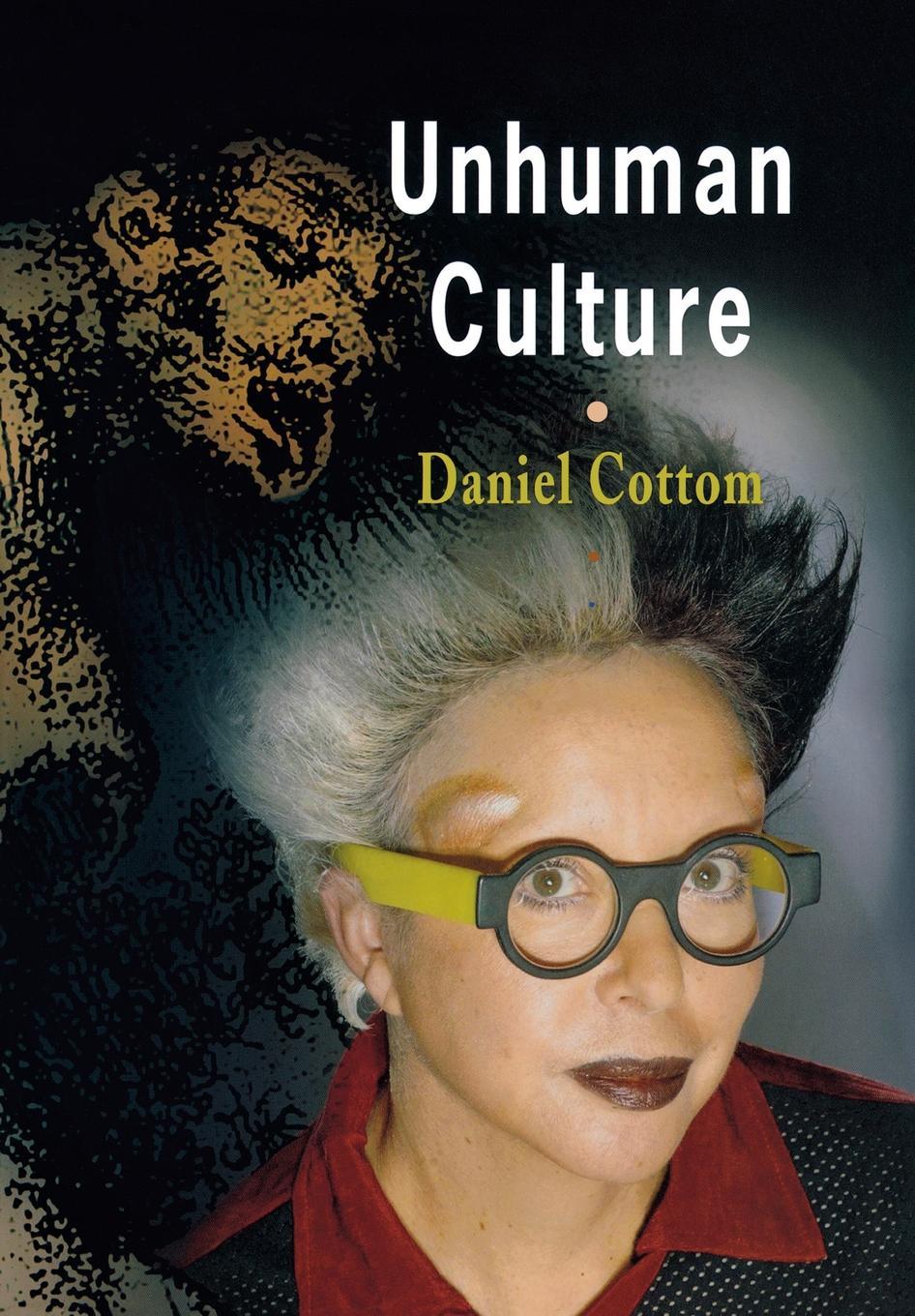
It is widely acknowledged that the unhuman plays a significant role in the definition of humanity in contemporary thought. It appears in the thematization of "the Other" in philosophical, psychoanalytic, anthropological, and postcolonial studies, and shows up in the "antihumanism" associated with figures such as Heidegger, Foucault, and Derrida. One might trace its genealogy, as Freud did, to the Copernican, Darwinian, and psychoanalytic revolutions that displaced humanity from the center of the universe. Or as Karl Marx and others suggested, one might lose human identity in the face of economic, technological, political, and ideological forces and structures.
With dazzling breadth, wit, and intelligence, Unhuman Culture ranges over literature, art, and theory, ancient to postmodern, to explore the ways in which contemporary culture defines humanity in terms of all that it is not. Daniel Cottom is equally at home reading medieval saints' lives and the fiction of Angela Carter, plumbing the implications of Napoleon's self-coronation and the attacks of 9/11, considering the paintings of Pieter Bruegel and the plastic-surgery-as-performance of the body artist Orlan.
For Cottom, the unhuman does not necessarily signify the inhuman, in the sense of conspicuous or extraordinary cruelty. It embraces, too, the superhuman, the supernatural, the demonic, and the subhuman; the supposedly disjunctive animal, vegetable, and mineral kingdoms; the realms of artifice, technology, and fantasy. It plays a role in theoretical discussions of the sublime, personal memoirs of the Holocaust, aesthetic reflections on technology, economic discourses on globalization, and popular accounts of terrorism. Whereas it once may have seemed that the concept of culture always, by definition, pertained to humanity, it now may seem impossible to avoid the realization that we must look at things differently. It is not only art, in the narrow sense of the word, that we must recognize as unhuman. For better or worse, ours is now an unhuman culture.
Before Memmo my notes were scattered across PDFs. Now a workspace pulls everything into one place — I see exactly what's still left to study.
Memmo's summaries are gold before exams. I don't have to re-read 800 pages two weeks before — just the important parts.
The AI chat has saved me the night before an exam more than once. I just keep asking until I get it — no waiting on a study group to reply.
The quizzes hit exactly what I need to know. Memmo tracks what I get stuck on — so I only practice what's worth it.
Flashcards with spaced repetition are magic. Memmo knows when I'm about to forget something and brings it back.
The AI podcasts are my favorite. I listen on my way to school and get a recap without sitting at a computer.

Handbok i kvalitativa metoder
281 kr

Hållbar utveckling: en introduktion för ingenjörer och andra problemlösare
334 kr

Brymans Samhällsvetenskapliga metoder
390 kr

Projektledning
491 kr

Den orättvisa hälsan: om socioekonomiska skillnader i hälsa och livslängd
326 kr

Organizational Leadership
429 kr

Vetenskapsteori för nybörjare
196 kr

På väg mot läraryrket
172 kr

Det sociala livet i skolan: Socialpsykologiska perspektiv
253 kr

Betygsättningens didaktik
151 kr

Personality
402 kr

Studying Leadership
404 kr

Managing Innovation
477 kr

Introduktion till samhällsvetenskaplig metod
347 kr

The Psychology of Sex and Gender
698 kr

Evidens och kunskap för socialt arbete
207 kr

Introduction to Leadership
605 kr