
Before Memmo my notes were scattered across PDFs. Now a workspace pulls everything into one place — I see exactly what's still left to study.
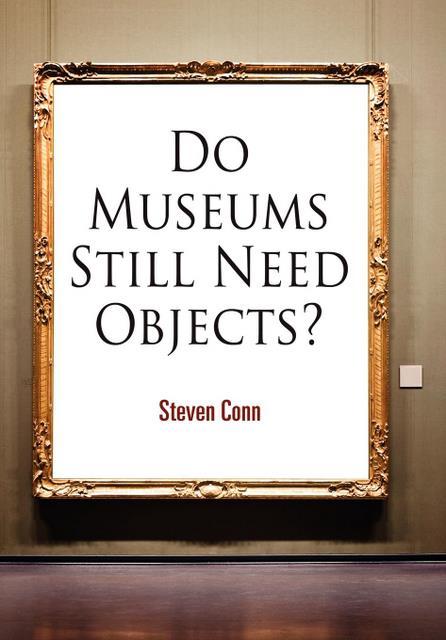
"We live in a museum age," writes Steven Conn in Do Museums Still Need Objects? And indeed, at the turn of the twenty-first century, more people are visiting museums than ever before. There are now over 17,500 accredited museums in the United States, averaging approximately 865 million visits a year, more than two million visits a day. New museums have proliferated across the cultural landscape even as older ones have undergone transformational additions: from the Museum of Modern Art and the Morgan in New York to the High in Atlanta and the Getty in Los Angeles. If the golden age of museum-building came a century ago, when the Metropolitan Museum of Art, the American Museum of Natural History, the Philadelphia Museum of Art, the Field Museum of Natural History, and others were created, then it is fair to say that in the last generation we have witnessed a second golden age.
By closely observing the cultural, intellectual, and political roles that museums play in contemporary society, while also delving deeply into their institutional histories, historian Steven Conn demonstrates that museums are no longer seen simply as houses for collections of objects. Conn ranges across a wide variety of museum types—from art and anthropology to science and commercial museums—asking questions about the relationship between museums and knowledge, about the connection between culture and politics, about the role of museums in representing non-Western societies, and about public institutions and the changing nature of their constituencies. Elegantly written and deeply researched, Do Museums Still Need Objects? is essential reading for historians, museum professionals, and those who love to visit museums.
Before Memmo my notes were scattered across PDFs. Now a workspace pulls everything into one place — I see exactly what's still left to study.
Memmo's summaries are gold before exams. I don't have to re-read 800 pages two weeks before — just the important parts.
The AI chat has saved me the night before an exam more than once. I just keep asking until I get it — no waiting on a study group to reply.
The quizzes hit exactly what I need to know. Memmo tracks what I get stuck on — so I only practice what's worth it.
Flashcards with spaced repetition are magic. Memmo knows when I'm about to forget something and brings it back.
The AI podcasts are my favorite. I listen on my way to school and get a recap without sitting at a computer.

Handbok i kvalitativa metoder
281 kr

Hållbar utveckling: en introduktion för ingenjörer och andra problemlösare
334 kr

Brymans Samhällsvetenskapliga metoder
390 kr

Projektledning
491 kr

Den orättvisa hälsan: om socioekonomiska skillnader i hälsa och livslängd
326 kr

Organizational Leadership
429 kr

Vetenskapsteori för nybörjare
196 kr

På väg mot läraryrket
172 kr

Det sociala livet i skolan: Socialpsykologiska perspektiv
253 kr

Betygsättningens didaktik
151 kr

Personality
402 kr

Studying Leadership
404 kr

Managing Innovation
477 kr

Introduktion till samhällsvetenskaplig metod
347 kr

The Psychology of Sex and Gender
698 kr

Evidens och kunskap för socialt arbete
207 kr

Introduction to Leadership
605 kr