
Before Memmo my notes were scattered across PDFs. Now a workspace pulls everything into one place — I see exactly what's still left to study.
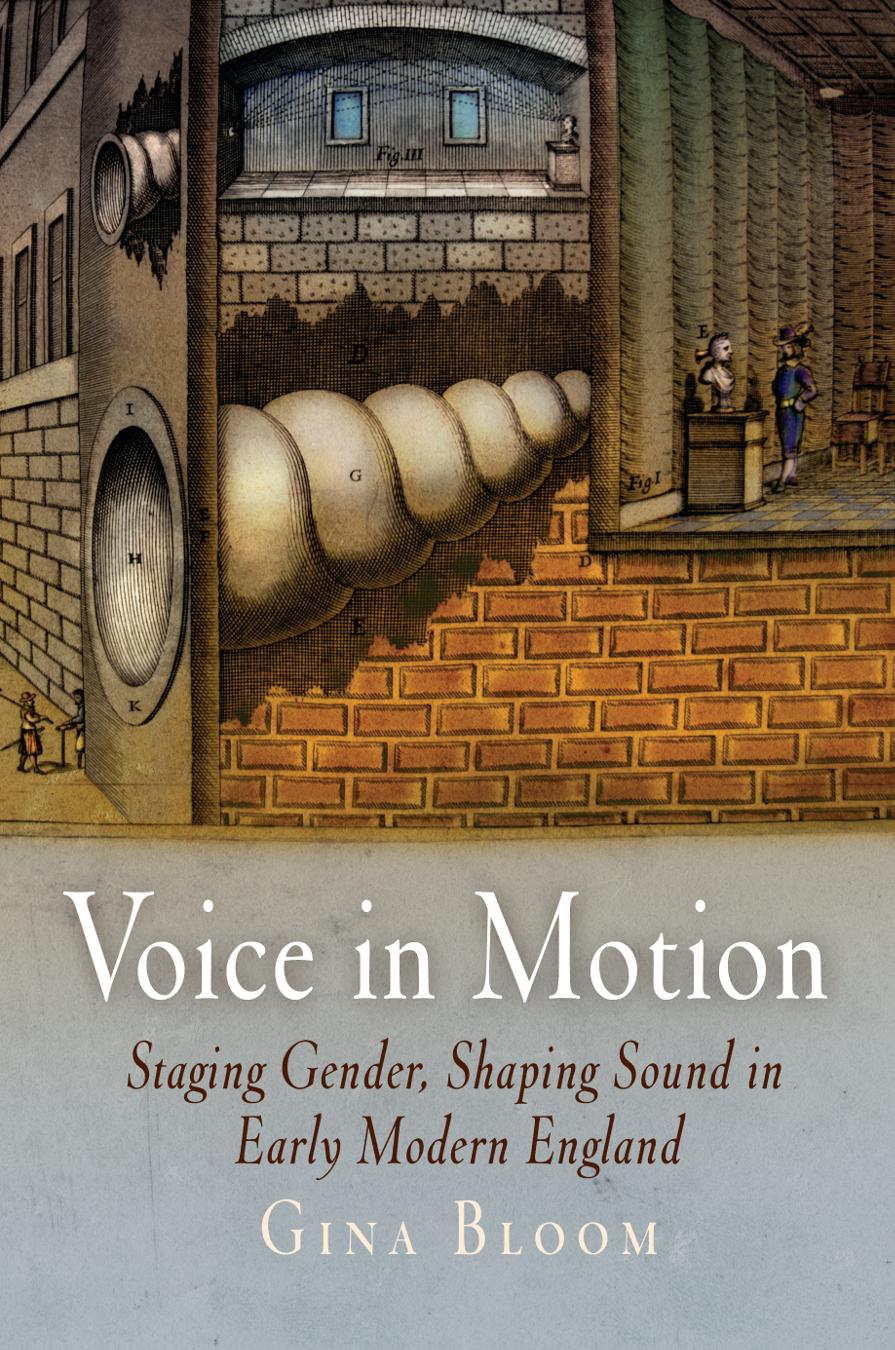
Voice in Motion explores the human voice as a literary, historical, and performative motif in early modern English drama and culture, where the voice was frequently represented as struggling, even failing, to work. In a compelling and original argument, Gina Bloom demonstrates that early modern ideas about the efficacy of spoken communication spring from an understanding of the voice's materiality. Voices can be cracked by the bodies that produce them, scattered by winds when transmitted as breath through their acoustic environment, stopped by clogged ears meant to receive them, and displaced by echoic resonances. The early modern theater underscored the voice's volatility through the use of pubescent boy actors, whose vocal organs were especially vulnerable to malfunction.
Reading plays by Shakespeare, Marston, and their contemporaries alongside a wide range of late sixteenth- and early seventeenth-century texts—including anatomy books, acoustic science treatises, Protestant sermons, music manuals, and even translations of Ovid—Bloom maintains that cultural representations and theatrical enactments of the voice as "unruly matter" undermined early modern hierarchies of gender. The uncontrollable physical voice creates anxiety for men, whose masculinity is contingent on their capacity to discipline their voices and the voices of their subordinates. By contrast, for women the voice is most effective not when it is owned and mastered but when it is relinquished to the environment beyond. There, the voice's fragile material form assumes its full destabilizing potential and becomes a surprising source of female power. Indeed, Bloom goes further to query the boundary between the production and reception of vocal sound, suggesting provocatively that it is through active listening, not just speaking, that women on and off the stage reshape their world.
Bringing together performance theory, theater history, theories of embodiment, and sound studies, this book makes a significant contribution to gender studies and feminist theory by challenging traditional conceptions of the links among voice, body, and self.
Before Memmo my notes were scattered across PDFs. Now a workspace pulls everything into one place — I see exactly what's still left to study.
Memmo's summaries are gold before exams. I don't have to re-read 800 pages two weeks before — just the important parts.
The AI chat has saved me the night before an exam more than once. I just keep asking until I get it — no waiting on a study group to reply.
The quizzes hit exactly what I need to know. Memmo tracks what I get stuck on — so I only practice what's worth it.
Flashcards with spaced repetition are magic. Memmo knows when I'm about to forget something and brings it back.
The AI podcasts are my favorite. I listen on my way to school and get a recap without sitting at a computer.

Handbok i kvalitativa metoder
281 kr

Hållbar utveckling: en introduktion för ingenjörer och andra problemlösare
334 kr

Brymans Samhällsvetenskapliga metoder
390 kr

Projektledning
491 kr

Den orättvisa hälsan: om socioekonomiska skillnader i hälsa och livslängd
326 kr

Vetenskapsteori för nybörjare
196 kr

Organizational Leadership
429 kr

På väg mot läraryrket
172 kr

Det sociala livet i skolan: Socialpsykologiska perspektiv
253 kr

Betygsättningens didaktik
151 kr

Personality
402 kr

Studying Leadership
404 kr

Managing Innovation
477 kr

Introduktion till samhällsvetenskaplig metod
347 kr

The Psychology of Sex and Gender
698 kr

Evidens och kunskap för socialt arbete
207 kr

Introduction to Leadership
605 kr