
Before Memmo my notes were scattered across PDFs. Now a workspace pulls everything into one place — I see exactly what's still left to study.
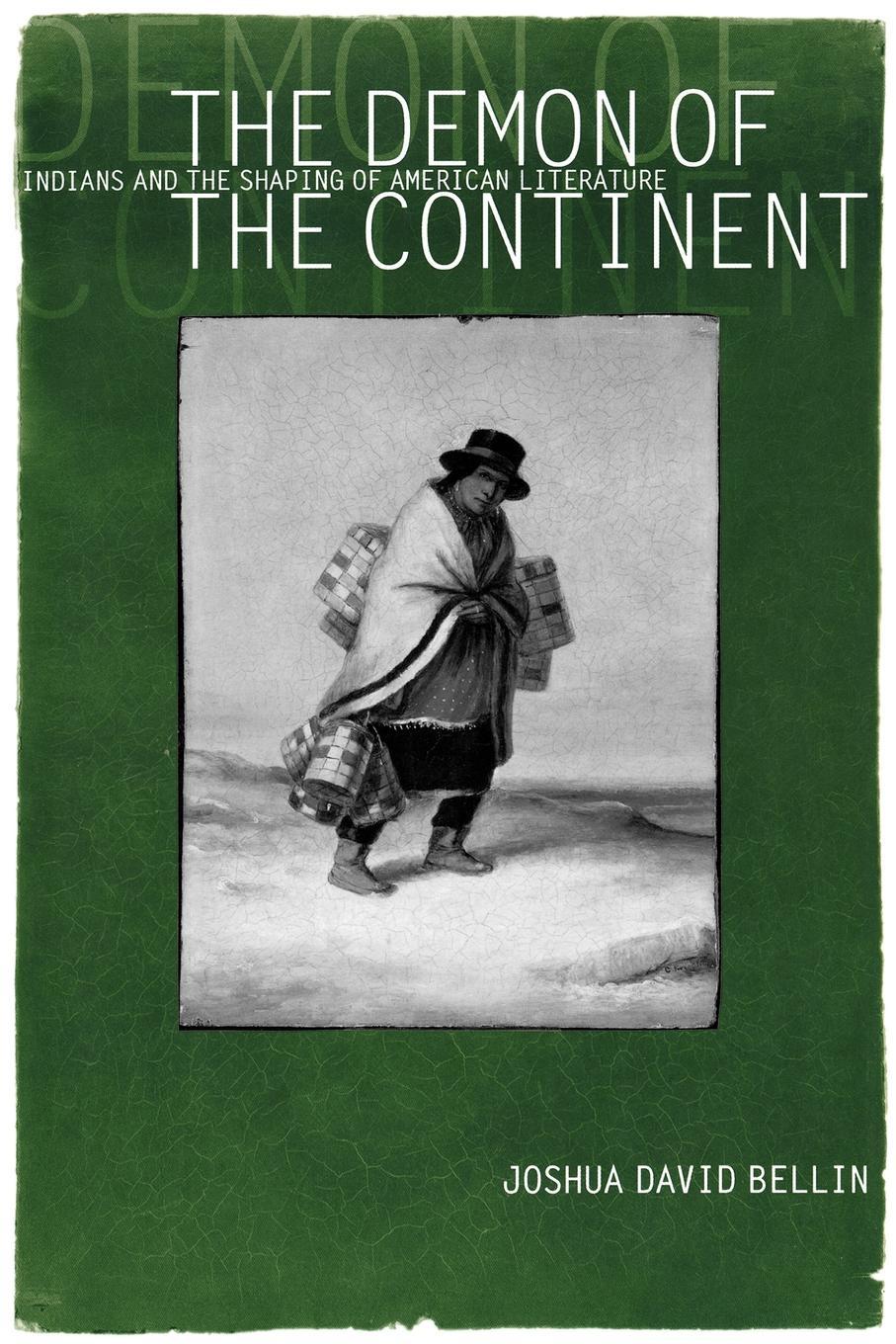
In recent years, the study and teaching of Native American oral and written art have flourished. During the same period, there has been a growing recognition among historians, anthropologists, and ethnohistorians that Indians must be seen not as the voiceless, nameless, faceless Other but as people who had a powerful impact on the historical development of the United States. Literary critics, however, have continued to overlook Indians as determinants of American—rather than specifically Native American—literature. The notion that the presence of Indian peoples shaped American literature as a whole remains unexplored.
In The Demon of the Continent, Joshua David Bellin probes the complex interrelationships among Native American and Euro-American cultures and literatures from the mid-seventeenth to the mid-nineteenth centuries. He asserts that cultural contact is at the heart of American literature. For Bellin, previous studies of Indians in American literature have focused largely on the images Euro-American writers constructed of indigenous peoples, and have thereby only perpetuated those images. Unlike authors of those earlier studies, Bellin refuses to reduce Indians to static antagonists or fodder for a Euro-American imagination.
Drawing on works such as Henry David Thoreau's Walden, William Apess' A Son of the Forest, and little known works such as colonial Indian conversion narratives, he explores the ways in which these texts reflect and shape the intercultural world from which they arose. In doing so, Bellin reaches surprising conclusions: that Walden addresses economic clashes and partnerships between Indians and whites; that William Bartram's Travels encodes competing and interpenetrating systems of Indian and white landholding; that Catherine Sedgwick's Hope Leslie enacts the antebellum drama of Indian conversion; that James Fenimore Cooper and Henry Wadsworth Longfellow struggled with Indian authors such as George Copway and David Cusick for physical, ideological, and literary control of the nation.
The Demon of the Continent proves Indians to be actors in the dynamic processes in which America and its literature are inescapably embedded. Shifting the focus from textual images to the sites of material, ideological, linguistic, and aesthetic interaction between peoples, Bellin reenvisions American literature as the product of contact, conflict, accommodation, and interchange.
Before Memmo my notes were scattered across PDFs. Now a workspace pulls everything into one place — I see exactly what's still left to study.
Memmo's summaries are gold before exams. I don't have to re-read 800 pages two weeks before — just the important parts.
The AI chat has saved me the night before an exam more than once. I just keep asking until I get it — no waiting on a study group to reply.
The quizzes hit exactly what I need to know. Memmo tracks what I get stuck on — so I only practice what's worth it.
Flashcards with spaced repetition are magic. Memmo knows when I'm about to forget something and brings it back.
The AI podcasts are my favorite. I listen on my way to school and get a recap without sitting at a computer.

Handbok i kvalitativa metoder
281 kr

Hållbar utveckling: en introduktion för ingenjörer och andra problemlösare
334 kr

Brymans Samhällsvetenskapliga metoder
390 kr

Projektledning
491 kr

Den orättvisa hälsan: om socioekonomiska skillnader i hälsa och livslängd
326 kr

Vetenskapsteori för nybörjare
196 kr

Organizational Leadership
429 kr

På väg mot läraryrket
172 kr

Det sociala livet i skolan: Socialpsykologiska perspektiv
253 kr

Betygsättningens didaktik
151 kr

Personality
402 kr

Studying Leadership
404 kr

Managing Innovation
477 kr

Introduktion till samhällsvetenskaplig metod
347 kr

The Psychology of Sex and Gender
698 kr

Evidens och kunskap för socialt arbete
207 kr

Introduction to Leadership
605 kr