
Before Memmo my notes were scattered across PDFs. Now a workspace pulls everything into one place — I see exactly what's still left to study.
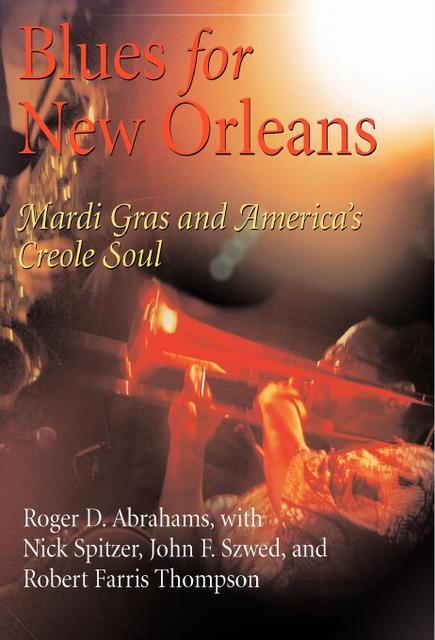
In the aftermath of Hurricane Katrina, as the citizens of New Orleans regroup and put down roots elsewhere, many wonder what will become of one of the nation's most complex creole cultures. New Orleans emerged like Atlantis from under the sea, as the city in which some of the most important American vernacular arts took shape. Creativity fostered jazz music, made of old parts and put together in utterly new ways; architecture that commingled Norman rooflines, West African floor plans, and native materials of mud and moss; food that simmered African ingredients in French sauces with Native American delicacies. There is no more powerful celebration of this happy gumbo of life in New Orleans than Mardi Gras. In Carnival, music is celebrated along the city's spiderweb grid of streets, as all classes and cultures gather for a festival that is organized and chaotic, individual and collective, accepted and licentious, sacred and profane.
The authors, distinguished writers who have long engaged with pluralized forms of American culture, begin and end in New Orleans—the city that was, the city that is, and the city that will be—but traverse geographically to Mardi Gras in the Louisiana Parishes, the Carnival in the West Indies and beyond, to Rio, Buenos Aires, even Philadelphia and Albany. Mardi Gras, they argue, must be understood in terms of the Black Atlantic complex, demonstrating how the music, dance, and festive displays of Carnival in the Greater Caribbean follow the same patterns of performance through conflict, resistance, as well as open celebration.
After the deluge and the finger pointing, how will Carnival be changed? Will the groups decamp to other Gulf Coast or Deep South locations? Or will they use the occasion to return to and express a revival of community life in New Orleans? Two things are certain: Katrina is sure to be satirized as villainess, bimbo, or symbol of mythological flood, and political leaders at all levels will undoubtedly be taken to task. The authors argue that the return of Mardi Gras will be a powerful symbol of the region's return to vitality and its ability to express and celebrate itself.
Before Memmo my notes were scattered across PDFs. Now a workspace pulls everything into one place — I see exactly what's still left to study.
Memmo's summaries are gold before exams. I don't have to re-read 800 pages two weeks before — just the important parts.
The AI chat has saved me the night before an exam more than once. I just keep asking until I get it — no waiting on a study group to reply.
The quizzes hit exactly what I need to know. Memmo tracks what I get stuck on — so I only practice what's worth it.
Flashcards with spaced repetition are magic. Memmo knows when I'm about to forget something and brings it back.
The AI podcasts are my favorite. I listen on my way to school and get a recap without sitting at a computer.

Handbok i kvalitativa metoder
281 kr

Hållbar utveckling: en introduktion för ingenjörer och andra problemlösare
334 kr

Brymans Samhällsvetenskapliga metoder
390 kr

Projektledning
491 kr

Den orättvisa hälsan: om socioekonomiska skillnader i hälsa och livslängd
326 kr

Vetenskapsteori för nybörjare
196 kr

Organizational Leadership
429 kr

På väg mot läraryrket
172 kr

Det sociala livet i skolan: Socialpsykologiska perspektiv
253 kr

Betygsättningens didaktik
151 kr

Personality
402 kr

Studying Leadership
404 kr

Managing Innovation
477 kr

Introduktion till samhällsvetenskaplig metod
347 kr

The Psychology of Sex and Gender
698 kr

Evidens och kunskap för socialt arbete
207 kr

Introduction to Leadership
605 kr