
Before Memmo my notes were scattered across PDFs. Now a workspace pulls everything into one place — I see exactly what's still left to study.
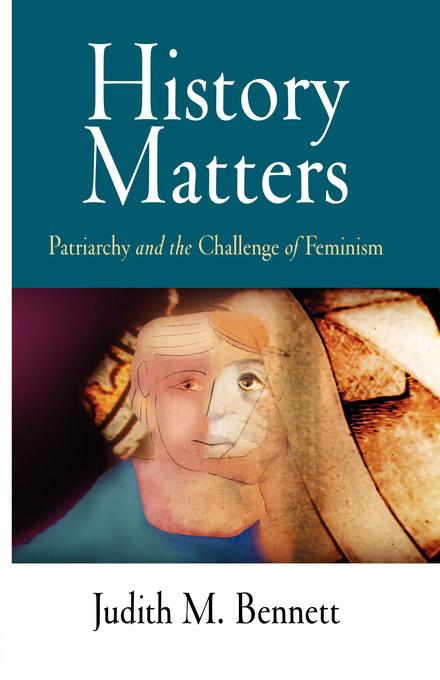
Written for everyone interested in women's and gender history, History Matters reaffirms the importance to feminist theory and activism of long-term historical perspectives. Judith M. Bennett, who has been commenting on developments in women's and gender history since the 1980s, argues that the achievement of a more feminist future relies on a rich, plausible, and well-informed knowledge of the past, and she asks her readers to consider what sorts of feminist history can best advance the struggles of the twenty-first century.
Bennett takes as her central problem the growing chasm between feminism and history. Closely allied in the 1970s, each has now moved away from the other. Seeking to narrow this gap, Bennett proposes that feminist historians turn their attention to the intellectual challenges posed by the persistence of patriarchy. She posits a "patriarchal equilibrium" whereby, despite many changes in women's experiences over past centuries, women's status vis-à-vis that of men has remained remarkably unchanged. Although, for example, women today find employment in occupations unimaginable to medieval women, medieval and modern women have both encountered the same wage gap, earning on average only three-fourths of the wages earned by men. Bennett argues that the theoretical challenge posed by this patriarchal equilibrium will be best met by long-term historical perspectives that reach back well before the modern era. In chapters focused on women's work and lesbian sexuality, Bennett demonstrates the contemporary relevance of the distant past to feminist theory and politics. She concludes with a chapter that adds a new twist—the challenges of textbooks and classrooms—to viewing women's history from a distance and with feminist intent.
A new manifesto, History Matters engages forthrightly with the challenges faced by feminist historians today. It argues for the radical potential of a history that is focused on feminist issues, aware of the distant past, attentive to continuities over time, and alert to the workings of patriarchal power.
Before Memmo my notes were scattered across PDFs. Now a workspace pulls everything into one place — I see exactly what's still left to study.
Memmo's summaries are gold before exams. I don't have to re-read 800 pages two weeks before — just the important parts.
The AI chat has saved me the night before an exam more than once. I just keep asking until I get it — no waiting on a study group to reply.
The quizzes hit exactly what I need to know. Memmo tracks what I get stuck on — so I only practice what's worth it.
Flashcards with spaced repetition are magic. Memmo knows when I'm about to forget something and brings it back.
The AI podcasts are my favorite. I listen on my way to school and get a recap without sitting at a computer.

Handbok i kvalitativa metoder
281 kr

Hållbar utveckling: en introduktion för ingenjörer och andra problemlösare
334 kr

Brymans Samhällsvetenskapliga metoder
390 kr

Projektledning
491 kr

Den orättvisa hälsan: om socioekonomiska skillnader i hälsa och livslängd
326 kr

Vetenskapsteori för nybörjare
196 kr

Organizational Leadership
429 kr

På väg mot läraryrket
172 kr

Det sociala livet i skolan: Socialpsykologiska perspektiv
253 kr

Betygsättningens didaktik
151 kr

Personality
402 kr

Studying Leadership
404 kr

Managing Innovation
477 kr

Introduktion till samhällsvetenskaplig metod
347 kr

The Psychology of Sex and Gender
698 kr

Evidens och kunskap för socialt arbete
207 kr

Introduction to Leadership
605 kr