
Before Memmo my notes were scattered across PDFs. Now a workspace pulls everything into one place — I see exactly what's still left to study.
"Yes, women are the greatest evil Zeus has made, and men are bound to them hand and foot with impossible knots by God."—Semonides, seventh century B.C.
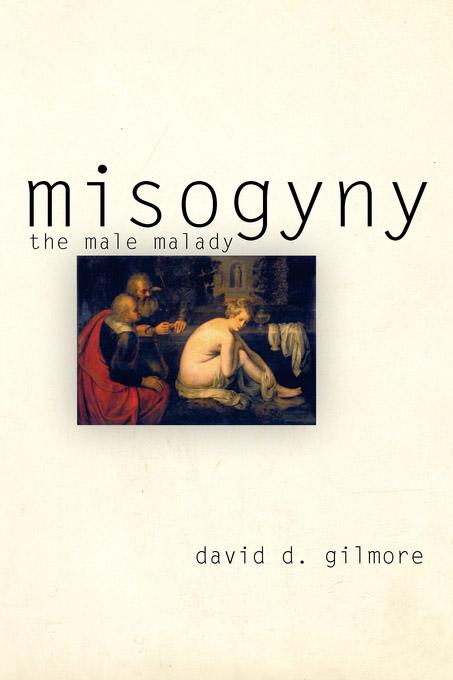
Men put women on a pedestal to worship them from afar—and to take better aim at them for the purpose of derision. Why is this paradoxical response to women so widespread, so far-reaching, so all-pervasive? Misogyny, David D. Gilmore suggests, is best described as a male malady, as it has always been a characteristic shared by human societies throughout the world.
Misogyny: The Male Malady is a comprehensive historical and anthropological survey of woman-hating that casts new light on this age-old bias. The turmoil of masculinity and the ugliness of misogyny have been well documented in different cultures, but Gilmore's synoptic approach identifies misogyny in a variety of human experiences outside of sex and marriage and makes a fresh and enlightening contribution toward understanding this phenomenon. Gilmore maintains that misogyny is so widespread and so pervasive among men that it must be at least partly psychogenic in origin, a result of identical experiences in the male developmental cycle, rather than caused by the environment alone.
Presenting a wealth of compelling examples—from the jungles of New Guinea to the boardrooms of corporate America—Gilmore shows that misogynistic practices occur in hauntingly identical forms. He asserts that these deep and abiding male anxieties stem from unresolved conflicts between men's intense need for and dependence upon women and their equally intense fear of that dependence. However, misogyny, according to Gilmore, is also often supported and intensified by certain cultural realities, such as patrilineal social organization; kinship ideologies that favor fraternal solidarity over conjugal unity; chronic warfare, feuding, or other forms of intergroup violence; and religious orthodoxy or asceticism. Gilmore is in the end able to offer steps toward the discovery of antidotes to this irrational but global prejudice, providing an opportunity for a lasting cure to misogyny and its manifestations.
Before Memmo my notes were scattered across PDFs. Now a workspace pulls everything into one place — I see exactly what's still left to study.
Memmo's summaries are gold before exams. I don't have to re-read 800 pages two weeks before — just the important parts.
The AI chat has saved me the night before an exam more than once. I just keep asking until I get it — no waiting on a study group to reply.
The quizzes hit exactly what I need to know. Memmo tracks what I get stuck on — so I only practice what's worth it.
Flashcards with spaced repetition are magic. Memmo knows when I'm about to forget something and brings it back.
The AI podcasts are my favorite. I listen on my way to school and get a recap without sitting at a computer.

Handbok i kvalitativa metoder
281 kr

Hållbar utveckling: en introduktion för ingenjörer och andra problemlösare
334 kr

Brymans Samhällsvetenskapliga metoder
390 kr

Projektledning
491 kr

Den orättvisa hälsan: om socioekonomiska skillnader i hälsa och livslängd
326 kr

Organizational Leadership
429 kr

Vetenskapsteori för nybörjare
196 kr

På väg mot läraryrket
172 kr

Det sociala livet i skolan: Socialpsykologiska perspektiv
253 kr

Betygsättningens didaktik
151 kr

Personality
402 kr

Studying Leadership
404 kr

Managing Innovation
477 kr

Introduktion till samhällsvetenskaplig metod
347 kr

The Psychology of Sex and Gender
698 kr

Evidens och kunskap för socialt arbete
207 kr

Introduction to Leadership
605 kr