
Before Memmo my notes were scattered across PDFs. Now a workspace pulls everything into one place — I see exactly what's still left to study.
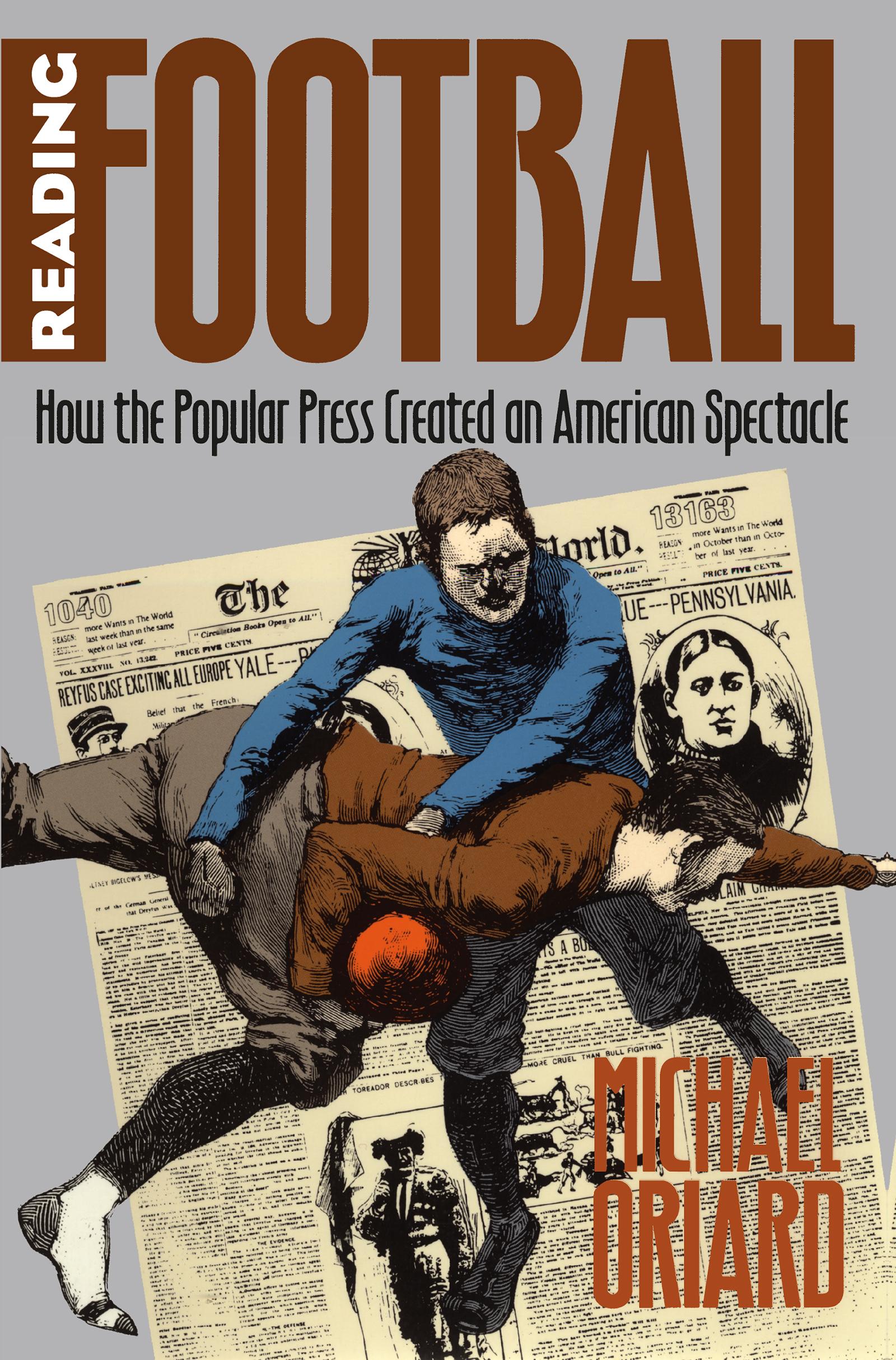
Is football an athletic contest or a social event? Is it a game of skill, a test of manhood, or merely an organized brawl? Michael Oriard, a former professional player, asks these and other intriguing questions in Reading Football, the first contemporary book about football’s formative years.
American football began in the 1870s as a game to be played, not watched. Within a brief ten years, it had become a great public spectacle with an immense following, a phenomenon caused primarily by the voluminous commentary about the game conducted in popular newspapers and magazines.
Oriard shows how this constant narrative in football’s early years developed many different stories about what the game meant: football as pastime, as the sport of gentlemen, as a science, as a game of rules and their infringements. He shows how football became a series of cultural stories about power, luck, strategy, and deception. These different interpretations have been magnified by football’s current omnipresence on television. According to Oriard, televised football now plays a cultural role of enormous importance for men, yet within the field of cultural studies the influence of football has been ignored until now.
From the book:
“A receiver sprints down the sideline, fast and graceful, then breaks toward the middle of the field where a safety waits for him. From forty yards upfield the quarterback releases the ball; it spirals in an elegant arc toward the goalposts as the receiver now for the first time looks back to pick up its flight. The pass is a little high; the receiver leaps, stretches, grasps the ball — barely, fingers clutching — at the very moment that the safety drives a helmet into his unprotected ribs. The force of the collision flings the receiver backward, slamming him to the turf. . . . This familiar tableau, this exemplary moment in a football game, epitomizes the appeal of the sport: the dramatic confrontation of artistry with violence, both equally necessary.”
Before Memmo my notes were scattered across PDFs. Now a workspace pulls everything into one place — I see exactly what's still left to study.
Memmo's summaries are gold before exams. I don't have to re-read 800 pages two weeks before — just the important parts.
The AI chat has saved me the night before an exam more than once. I just keep asking until I get it — no waiting on a study group to reply.
The quizzes hit exactly what I need to know. Memmo tracks what I get stuck on — so I only practice what's worth it.
Flashcards with spaced repetition are magic. Memmo knows when I'm about to forget something and brings it back.
The AI podcasts are my favorite. I listen on my way to school and get a recap without sitting at a computer.

Handbok i kvalitativa metoder
281 kr

Hållbar utveckling: en introduktion för ingenjörer och andra problemlösare
334 kr

Brymans Samhällsvetenskapliga metoder
390 kr

Projektledning
491 kr

Den orättvisa hälsan: om socioekonomiska skillnader i hälsa och livslängd
326 kr

Vetenskapsteori för nybörjare
196 kr

Organizational Leadership
429 kr

På väg mot läraryrket
172 kr

Det sociala livet i skolan: Socialpsykologiska perspektiv
253 kr

Betygsättningens didaktik
151 kr

Personality
402 kr

Studying Leadership
404 kr

Managing Innovation
477 kr

Introduktion till samhällsvetenskaplig metod
347 kr

The Psychology of Sex and Gender
698 kr

Evidens och kunskap för socialt arbete
207 kr

Introduction to Leadership
605 kr