
Before Memmo my notes were scattered across PDFs. Now a workspace pulls everything into one place — I see exactly what's still left to study.
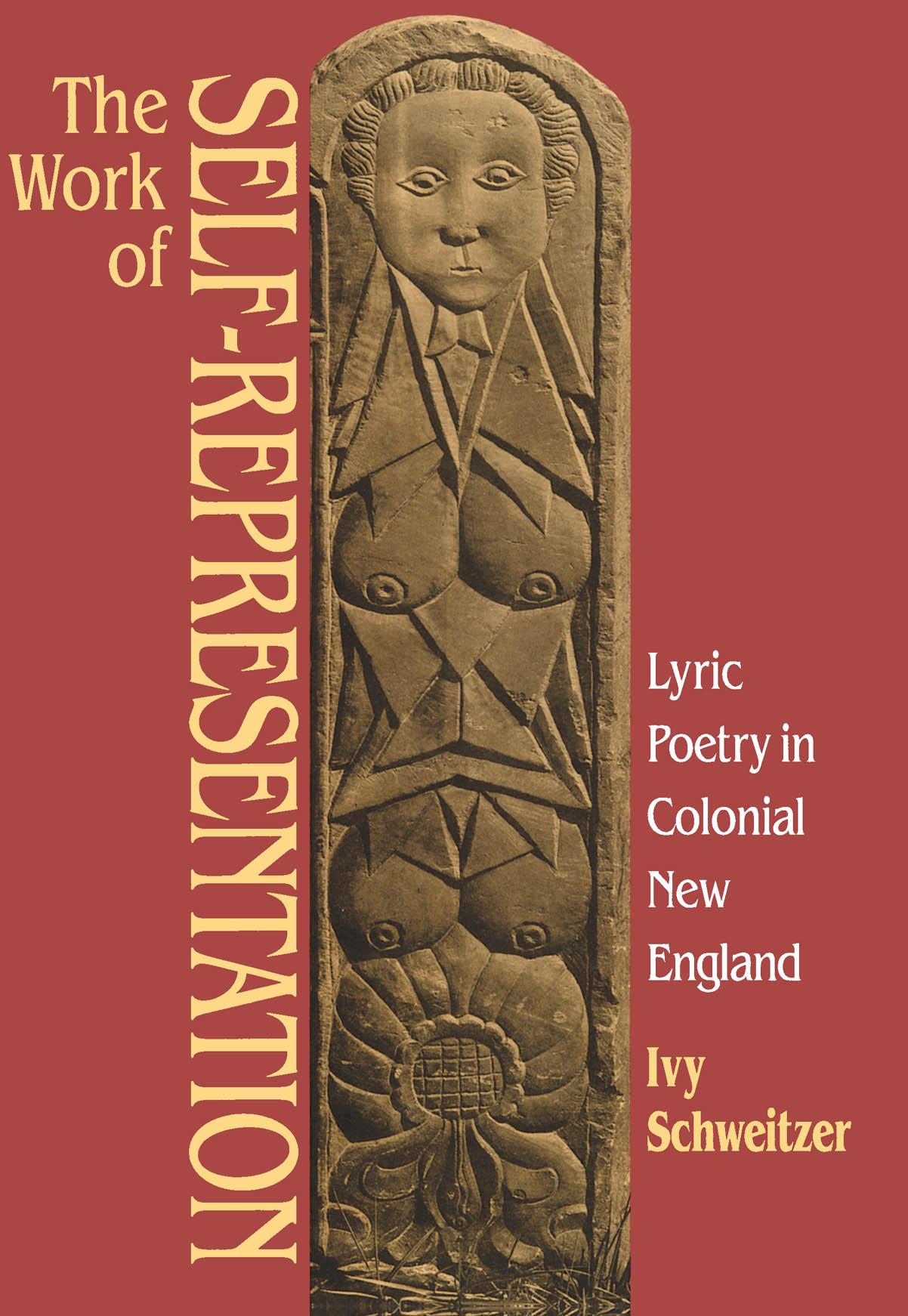
In The Work of Self–Representation Ivy Schweitzer examines early American poetry through the critical lens of gender. Her concern is not the inclusion of female writers into the canon; rather, she analyzes how the metaphors of “woman” and “feminine” function in Puritan religious and literary discourse to represent both the “otherness” of spiritual experience and the ways in which race and class function to keep the “other” in marginalized positions.
Schwetizer argues that gender was for seventeenth–century new England — and still is today — a basic and most politically charged metaphor for the differences that shape identity and determine cultural position. To glimpse the struggle between gender ideology and experience, Schweitzer provides close readings of the poetry of four New Englanders writing between the Great Migration and the first wave of the Great Awakening: John Fiske, Edward Taylor, Anne Bradstreet, and Roger Williams.
Schweitzer focuses exclusively on lyric poetry, she says, because a first–person speaker wrestling with the intricacies of individual consciousness provides fruitful ground for exploring the politics of voice and identity and especially problems of authority, intertextuality, and positionality. Fiske and Taylor define the orthodox tradition, and Bradstreet and Williams in different ways challenge it. Her treatment of the familiar poetry of Bradstreet and Taylor is solidly grounded in historical and literary scholarship yet suggestive of the new insights gained from a gender analysis, while discussions of Fiske and Williams bring their little–known lyric work to light.
Taken together, these poets' texts illustrate the cultural construction of a troubled masculinity and an idealized, effaced femininity implicit in the Puritan notion of redeemed subjectivity, and constitute a profoundly disturbing and resilient part of our Puritan legacy.
Before Memmo my notes were scattered across PDFs. Now a workspace pulls everything into one place — I see exactly what's still left to study.
Memmo's summaries are gold before exams. I don't have to re-read 800 pages two weeks before — just the important parts.
The AI chat has saved me the night before an exam more than once. I just keep asking until I get it — no waiting on a study group to reply.
The quizzes hit exactly what I need to know. Memmo tracks what I get stuck on — so I only practice what's worth it.
Flashcards with spaced repetition are magic. Memmo knows when I'm about to forget something and brings it back.
The AI podcasts are my favorite. I listen on my way to school and get a recap without sitting at a computer.

Handbok i kvalitativa metoder
281 kr

Hållbar utveckling: en introduktion för ingenjörer och andra problemlösare
334 kr

Brymans Samhällsvetenskapliga metoder
390 kr

Projektledning
491 kr

Den orättvisa hälsan: om socioekonomiska skillnader i hälsa och livslängd
326 kr

Organizational Leadership
429 kr

Vetenskapsteori för nybörjare
196 kr

På väg mot läraryrket
172 kr

Det sociala livet i skolan: Socialpsykologiska perspektiv
253 kr

Betygsättningens didaktik
151 kr

Personality
402 kr

Studying Leadership
404 kr

Managing Innovation
477 kr

Introduktion till samhällsvetenskaplig metod
347 kr

The Psychology of Sex and Gender
698 kr

Evidens och kunskap för socialt arbete
207 kr

Introduction to Leadership
605 kr