
Before Memmo my notes were scattered across PDFs. Now a workspace pulls everything into one place — I see exactly what's still left to study.
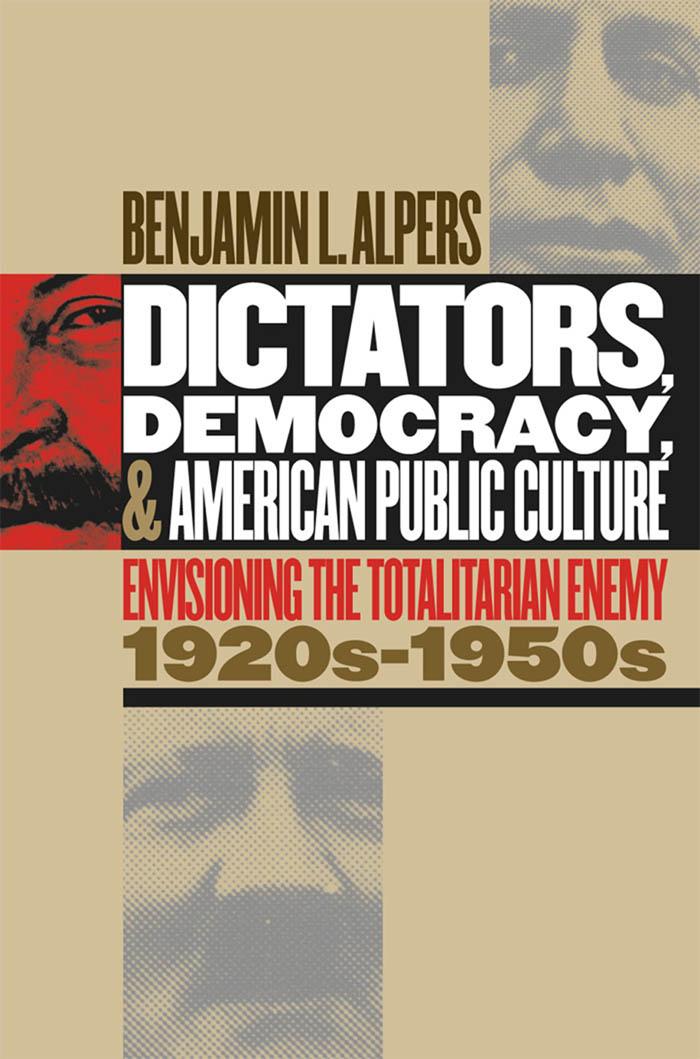
Focusing on portrayals of Mussolini’s Italy, Hitler’s Germany, and Stalin’s Russia in U.S. films, magazine and newspaper articles, books, plays, speeches, and other texts, Benjamin Alpers traces changing American understandings of dictatorship from the late 1920s through the early years of the Cold War.
During the early 1930s, most Americans' conception of dictatorship focused on the dictator. Whether viewed as heroic or horrific, the dictator was represented as a figure of great, masculine power and effectiveness. As the Great Depression gripped the United States, a few people — including conservative members of the press and some Hollywood filmmakers — even dared to suggest that dictatorship might be the answer to America’s social problems.
In the late 1930s, American explanations of dictatorship shifted focus from individual leaders to the movements that empowered them. Totalitarianism became the image against which a view of democracy emphasizing tolerance and pluralism and disparaging mass movements developed. First used to describe dictatorships of both right and left, the term “totalitarianism” fell out of use upon the U.S. entry into World War II. With the war’s end and the collapse of the U.S.-Soviet alliance, however, concerns about totalitarianism lay the foundation for the emerging Cold War.
Before Memmo my notes were scattered across PDFs. Now a workspace pulls everything into one place — I see exactly what's still left to study.
Memmo's summaries are gold before exams. I don't have to re-read 800 pages two weeks before — just the important parts.
The AI chat has saved me the night before an exam more than once. I just keep asking until I get it — no waiting on a study group to reply.
The quizzes hit exactly what I need to know. Memmo tracks what I get stuck on — so I only practice what's worth it.
Flashcards with spaced repetition are magic. Memmo knows when I'm about to forget something and brings it back.
The AI podcasts are my favorite. I listen on my way to school and get a recap without sitting at a computer.

Handbok i kvalitativa metoder
281 kr

Hållbar utveckling: en introduktion för ingenjörer och andra problemlösare
334 kr

Brymans Samhällsvetenskapliga metoder
390 kr

Projektledning
491 kr

Den orättvisa hälsan: om socioekonomiska skillnader i hälsa och livslängd
326 kr

Vetenskapsteori för nybörjare
196 kr

Organizational Leadership
429 kr

På väg mot läraryrket
172 kr

Det sociala livet i skolan: Socialpsykologiska perspektiv
253 kr

Betygsättningens didaktik
151 kr

Personality
402 kr

Studying Leadership
404 kr

Managing Innovation
477 kr

Introduktion till samhällsvetenskaplig metod
347 kr

The Psychology of Sex and Gender
698 kr

Evidens och kunskap för socialt arbete
207 kr

Introduction to Leadership
605 kr