
Before Memmo my notes were scattered across PDFs. Now a workspace pulls everything into one place — I see exactly what's still left to study.
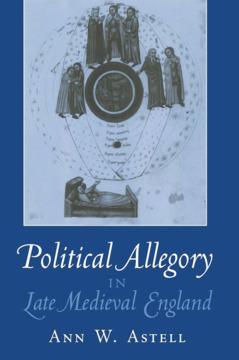
Ann W. Astell here affords a radically new understanding of the rhetorical nature of allegorical poetry in the late Middle Ages. She shows that major English writers of that era—among them, William Langland, John Gower, Geoffrey Chaucer, and the Gawain-poet—offered in their works of fiction timely commentary on current events and public issues. Poems previously regarded as only vaguely political in their subject matter are seen by Astell to be highly detailed and specific in their veiled historical references, implied audiences, and admonitions.
Astell begins by describing the Augustinian and Boethian rhetorical principles involved in the invention of allegory. She then compares literary and historical treatments of key events in fourteenth- and fifteenth-century England, finding an astonishing match of allusions and code words, especially those deriving from puns, titles, heraldic devices, and personal cognizances, as well as repeated proverbs, prophecies, and exempla. Among the works she discusses are John Ball's Letters and parts of Piers Plowman, which she presents as two examples of allegorical literature associated with the Peasants' Revolution of 1381; Gower's allegorical representation of the Merciless Parliament of 1388 in Confessio Amantis; and Chaucer's brilliant literary handling of key events in the reign of Richard II. In addition Astell argues for a precise dating of Sir Gawain and the Green Knight between 1397 and 1399 and decodes the work as a political allegory.
Before Memmo my notes were scattered across PDFs. Now a workspace pulls everything into one place — I see exactly what's still left to study.
Memmo's summaries are gold before exams. I don't have to re-read 800 pages two weeks before — just the important parts.
The AI chat has saved me the night before an exam more than once. I just keep asking until I get it — no waiting on a study group to reply.
The quizzes hit exactly what I need to know. Memmo tracks what I get stuck on — so I only practice what's worth it.
Flashcards with spaced repetition are magic. Memmo knows when I'm about to forget something and brings it back.
The AI podcasts are my favorite. I listen on my way to school and get a recap without sitting at a computer.

Handbok i kvalitativa metoder
281 kr

Hållbar utveckling: en introduktion för ingenjörer och andra problemlösare
334 kr

Brymans Samhällsvetenskapliga metoder
390 kr

Projektledning
491 kr

Den orättvisa hälsan: om socioekonomiska skillnader i hälsa och livslängd
326 kr

Vetenskapsteori för nybörjare
196 kr

Organizational Leadership
429 kr

På väg mot läraryrket
172 kr

Det sociala livet i skolan: Socialpsykologiska perspektiv
253 kr

Betygsättningens didaktik
151 kr

Personality
402 kr

Studying Leadership
404 kr

Managing Innovation
477 kr

Introduktion till samhällsvetenskaplig metod
347 kr

The Psychology of Sex and Gender
698 kr

Evidens och kunskap för socialt arbete
207 kr

Introduction to Leadership
605 kr