
Before Memmo my notes were scattered across PDFs. Now a workspace pulls everything into one place — I see exactly what's still left to study.
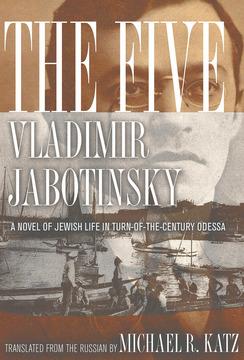
"The beginning of this tale of bygone days in Odessa dates to the dawn of the twentieth century. At that time we used to refer to the first years of this period as the 'springtime,' meaning a social and political awakening. For my generation, these years also coincided with our own personal springtime, in the sense that we were all in our youthful twenties. And both of these springtimes, as well as the image of our carefree Black Sea capital with acacias growing along its steep banks, are interwoven in my memory with the story of one family in which there were five children: Marusya, Marko, Lika, Serezha, and Torik."—from The Five
The Five is an captivating novel of the decadent fin-de-siècle written by Vladimir Jabotinsky (1880–1940), a controversial leader in the Zionist movement whose literary talents, until now, have largely gone unrecognized by Western readers. The author deftly paints a picture of Russia's decay and decline—a world permeated with sexuality, mystery, and intrigue. Michael R. Katz has crafted the first English-language translation of this important novel, which was written in Russian in 1935 and published a year later in Paris under the title Pyatero.
The book is Jabotinsky's elegaic paean to the Odessa of his youth, a place that no longer exists. It tells the story of an upper-middle-class Jewish family, the Milgroms, at the turn of the century. It follows five siblings as they change, mature, and come to accept their places in a rapidly evolving world. With flashes of humor, Jabotinsky captures the ferment of the time as reflected in political, social, artistic, and spiritual developments. He depicts with nostalgia the excitement of life in old Odessa and comments poignantly on the failure of the dream of Jewish assimilation within the Russian empire.
Before Memmo my notes were scattered across PDFs. Now a workspace pulls everything into one place — I see exactly what's still left to study.
Memmo's summaries are gold before exams. I don't have to re-read 800 pages two weeks before — just the important parts.
The AI chat has saved me the night before an exam more than once. I just keep asking until I get it — no waiting on a study group to reply.
The quizzes hit exactly what I need to know. Memmo tracks what I get stuck on — so I only practice what's worth it.
Flashcards with spaced repetition are magic. Memmo knows when I'm about to forget something and brings it back.
The AI podcasts are my favorite. I listen on my way to school and get a recap without sitting at a computer.

Handbok i kvalitativa metoder
281 kr

Hållbar utveckling: en introduktion för ingenjörer och andra problemlösare
334 kr

Brymans Samhällsvetenskapliga metoder
390 kr

Projektledning
491 kr

Den orättvisa hälsan: om socioekonomiska skillnader i hälsa och livslängd
326 kr

Vetenskapsteori för nybörjare
196 kr

Organizational Leadership
429 kr

På väg mot läraryrket
172 kr

Det sociala livet i skolan: Socialpsykologiska perspektiv
253 kr

Betygsättningens didaktik
151 kr

Personality
402 kr

Studying Leadership
404 kr

Managing Innovation
477 kr

Introduktion till samhällsvetenskaplig metod
347 kr

The Psychology of Sex and Gender
698 kr

Evidens och kunskap för socialt arbete
207 kr

Introduction to Leadership
605 kr