
Before Memmo my notes were scattered across PDFs. Now a workspace pulls everything into one place — I see exactly what's still left to study.
"Monumental...Its learning and range of references are exceeded only be the imperial embrace of its complex argument, whose elaboration never imposes a sacrifice of clarity...Indispensable for all university and college libraries."—Choice
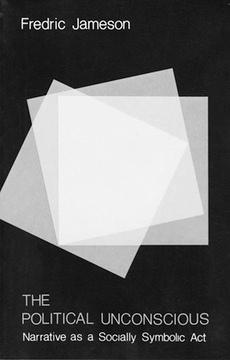
Fredric Jameson, in The Political Unconscious, opposes the view that literary creation can take place in isolation from its political context. He asserts the priority of the political interpretation of literary texts, claiming it to be at the center of all reading and understanding, not just a supplement or auxiliary to other methods current today.
Jameson supports his thesis by looking closely at the nature of interpretation. Our understanding, he says, is colored by the concepts and categories that we inherit from our culture's interpretive tradition and that we use to comprehend what we read. How then can the literature of other ages be understood by readers from a present that is culturally so different from the past? Marxism lies at the foundation of Jameson's answer, because it conceives of history as a single collective narrative that links past and present; Marxist literary criticism reveals the unity of that uninterrupted narrative.
Jameson applies his interpretive theory to nineteenth- and twentieth-century texts, including the works of Balzac, Gissing, and Conrad. Throughout, he considers other interpretive approaches to the works he discusses, assessing the importance and limitations of methods as different as Lacanian psychoanalysis, semiotics, dialectical analysis, and allegorical readings. The book as a whole raises directly issues that have been only implicit in Jameson's earlier work, namely the relationship between dialectics and structuralism, and the tension between the German and the French aesthetic traditions.
The Political Unconscious is a masterly introduction to both the method and the practice of Marxist criticism. Defining a mode of criticism and applying it successfully to individual works, it bridges the gap between theoretical speculation and textual analysis.
Before Memmo my notes were scattered across PDFs. Now a workspace pulls everything into one place — I see exactly what's still left to study.
Memmo's summaries are gold before exams. I don't have to re-read 800 pages two weeks before — just the important parts.
The AI chat has saved me the night before an exam more than once. I just keep asking until I get it — no waiting on a study group to reply.
The quizzes hit exactly what I need to know. Memmo tracks what I get stuck on — so I only practice what's worth it.
Flashcards with spaced repetition are magic. Memmo knows when I'm about to forget something and brings it back.
The AI podcasts are my favorite. I listen on my way to school and get a recap without sitting at a computer.

Handbok i kvalitativa metoder
281 kr

Hållbar utveckling: en introduktion för ingenjörer och andra problemlösare
334 kr

Brymans Samhällsvetenskapliga metoder
390 kr

Projektledning
491 kr

Den orättvisa hälsan: om socioekonomiska skillnader i hälsa och livslängd
326 kr

Vetenskapsteori för nybörjare
196 kr

Organizational Leadership
429 kr

På väg mot läraryrket
172 kr

Det sociala livet i skolan: Socialpsykologiska perspektiv
253 kr

Betygsättningens didaktik
151 kr

Personality
402 kr

Studying Leadership
404 kr

Managing Innovation
477 kr

Introduktion till samhällsvetenskaplig metod
347 kr

The Psychology of Sex and Gender
698 kr

Evidens och kunskap för socialt arbete
207 kr

Introduction to Leadership
605 kr