
Before Memmo my notes were scattered across PDFs. Now a workspace pulls everything into one place — I see exactly what's still left to study.
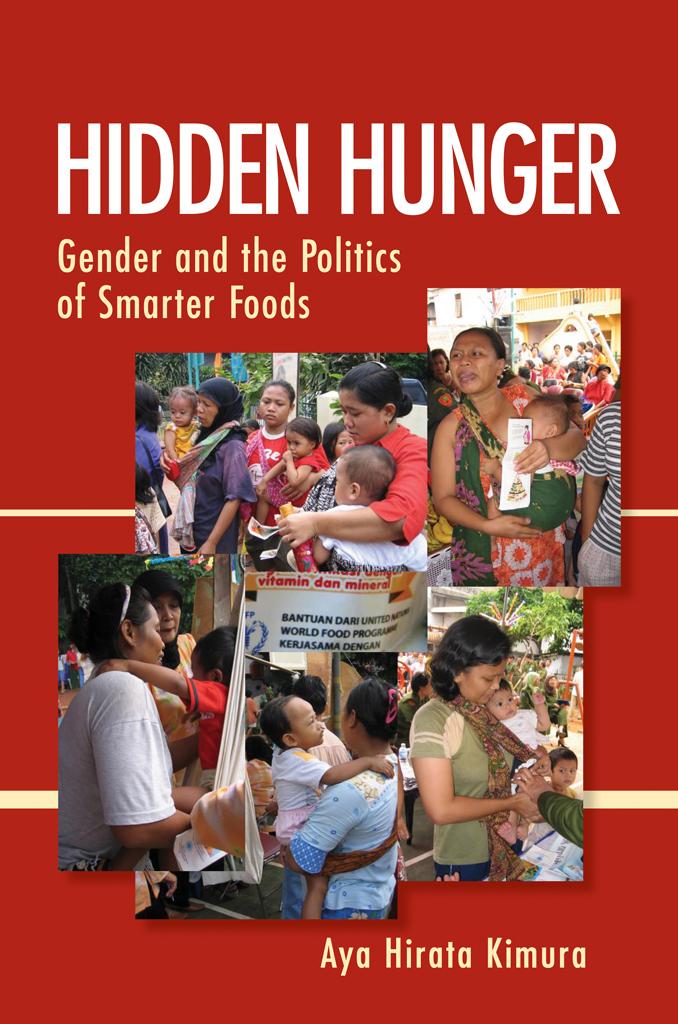
For decades, NGOs targeting world hunger focused on ensuring that adequate quantities of food were being sent to those in need. In the 1990s, the international food policy community turned its focus to the "hidden hunger" of micronutrient deficiencies, a problem that resulted in two scientific solutions: fortification, the addition of nutrients to processed foods, and biofortification, the modification of crops to produce more nutritious yields. This hidden hunger was presented as a scientific problem to be solved by "experts" and scientifically engineered smart foods rather than through local knowledge, which was deemed unscientific and, hence, irrelevant.
In Hidden Hunger, Aya Hirata Kimura explores this recent emphasis on micronutrients and smart foods within the international development community and, in particular, how the voices of women were silenced despite their expertise in food purchasing and preparation. Kimura grounds her analysis in case studies of attempts to enrich and market three basic foods—rice, wheat flour, and baby food—in Indonesia. She shows the power of nutritionism and how its technical focus enhanced the power of corporations as a government partner while restricting public participation in the making of policy for public health and food. She also analyzes the role of advertising to promote fortified foodstuffs and traces the history of Golden Rice, a crop genetically engineered to alleviate vitamin A deficiencies. Situating the recent turn to smart food in Indonesia and elsewhere as part of a long history of technical attempts to solve the Third World food problem, Kimura deftly analyzes the intersection of scientific expertise, market forces, and gendered knowledge to illuminate how hidden hunger ultimately defined women as victims rather than as active agents.
Before Memmo my notes were scattered across PDFs. Now a workspace pulls everything into one place — I see exactly what's still left to study.
Memmo's summaries are gold before exams. I don't have to re-read 800 pages two weeks before — just the important parts.
The AI chat has saved me the night before an exam more than once. I just keep asking until I get it — no waiting on a study group to reply.
The quizzes hit exactly what I need to know. Memmo tracks what I get stuck on — so I only practice what's worth it.
Flashcards with spaced repetition are magic. Memmo knows when I'm about to forget something and brings it back.
The AI podcasts are my favorite. I listen on my way to school and get a recap without sitting at a computer.

Handbok i kvalitativa metoder
281 kr

Hållbar utveckling: en introduktion för ingenjörer och andra problemlösare
334 kr

Brymans Samhällsvetenskapliga metoder
390 kr

Projektledning
491 kr

Den orättvisa hälsan: om socioekonomiska skillnader i hälsa och livslängd
326 kr

Vetenskapsteori för nybörjare
196 kr

Organizational Leadership
429 kr

På väg mot läraryrket
172 kr

Det sociala livet i skolan: Socialpsykologiska perspektiv
253 kr

Betygsättningens didaktik
151 kr

Personality
402 kr

Studying Leadership
404 kr

Managing Innovation
477 kr

Introduktion till samhällsvetenskaplig metod
347 kr

The Psychology of Sex and Gender
698 kr

Evidens och kunskap för socialt arbete
207 kr

Introduction to Leadership
605 kr