
Before Memmo my notes were scattered across PDFs. Now a workspace pulls everything into one place — I see exactly what's still left to study.
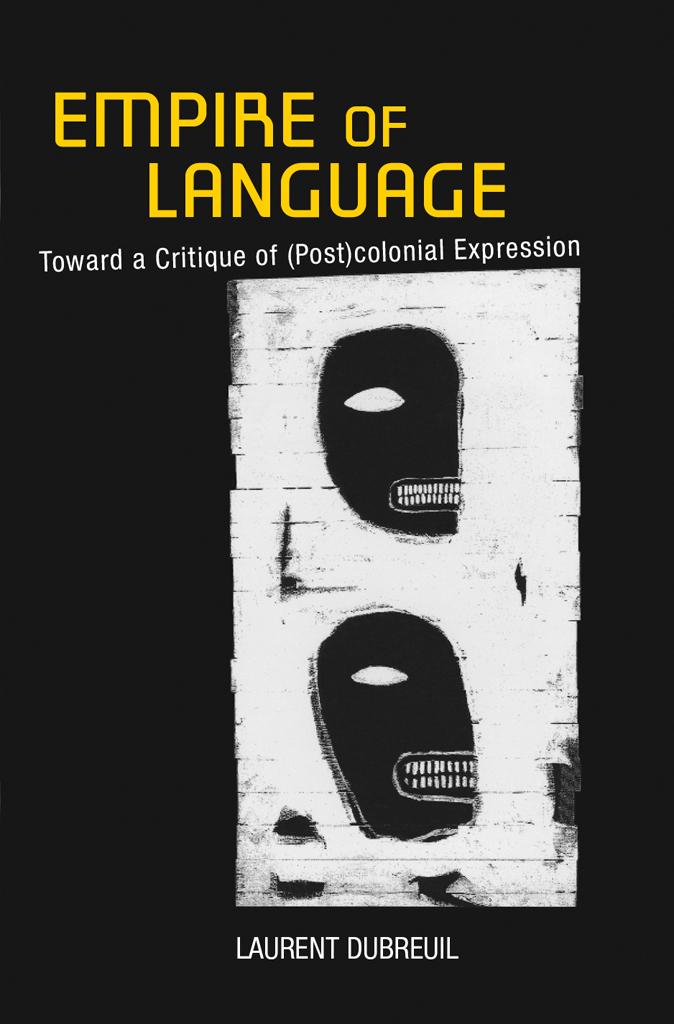
The relationship between power and language has been a central theme in critical theory for decades now, yet there is still much to be learned about the sheer force of language in the world in which we live. In Empire of Language, Laurent Dubreuil explores the power-language phenomenon in the context of European and, particularly, French colonialism and its aftermath. Through readings of the colonial experience, he isolates a phraseology based on possession, in terms of both appropriation and haunting, that has persisted throughout the centuries. Not only is this phraseology a legacy of the past, it is still active today, especially in literary renderings of the colonial experience—but also, and more paradoxically, in anticolonial discourse. This phrase shaped the teaching of European languages in the (former) empires, and it tried to configure the usage of those idioms by the "Indigenes." Then, scholarly disciplines have to completely reconsider their discursive strategies about the colonial, if, at least, they attempt to speak up.
Dubreuil ranges widely in terms of time and space, from the ancien régime through the twentieth century, from Paris to Haiti to Quebec, from the Renaissance to the riots in the banlieues. He examines diverse texts, from political speeches, legal documents, and colonial treatises to anthropological essays, poems of the Négritude, and contemporary rap, ever attuned to the linguistic strategies that undergird colonial power. Equally conversant in both postcolonial criticism and poststructuralist scholarship on language, but also deeply grounded in the sociohistorical context of the colonies, Dubreuil sets forth the conditions for an authentically postcolonial scholarship, one that acknowledges the difficulty of getting beyond a colonialism—and still maintains the need for an afterward.
Before Memmo my notes were scattered across PDFs. Now a workspace pulls everything into one place — I see exactly what's still left to study.
Memmo's summaries are gold before exams. I don't have to re-read 800 pages two weeks before — just the important parts.
The AI chat has saved me the night before an exam more than once. I just keep asking until I get it — no waiting on a study group to reply.
The quizzes hit exactly what I need to know. Memmo tracks what I get stuck on — so I only practice what's worth it.
Flashcards with spaced repetition are magic. Memmo knows when I'm about to forget something and brings it back.
The AI podcasts are my favorite. I listen on my way to school and get a recap without sitting at a computer.

Handbok i kvalitativa metoder
281 kr

Hållbar utveckling: en introduktion för ingenjörer och andra problemlösare
334 kr

Brymans Samhällsvetenskapliga metoder
390 kr

Projektledning
491 kr

Den orättvisa hälsan: om socioekonomiska skillnader i hälsa och livslängd
326 kr

Vetenskapsteori för nybörjare
196 kr

Organizational Leadership
429 kr

På väg mot läraryrket
172 kr

Det sociala livet i skolan: Socialpsykologiska perspektiv
253 kr

Betygsättningens didaktik
151 kr

Personality
402 kr

Studying Leadership
404 kr

Managing Innovation
477 kr

Introduktion till samhällsvetenskaplig metod
347 kr

The Psychology of Sex and Gender
698 kr

Evidens och kunskap för socialt arbete
207 kr

Introduction to Leadership
605 kr