
Before Memmo my notes were scattered across PDFs. Now a workspace pulls everything into one place — I see exactly what's still left to study.
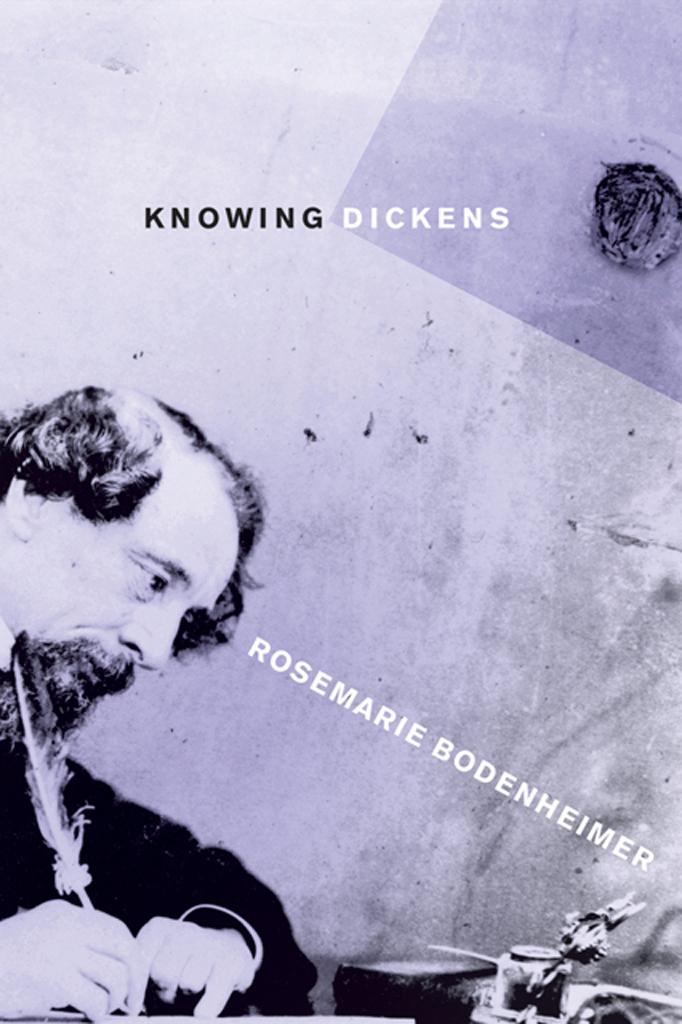
"A revealing and concealing intelligence lurks somewhere—but where, exactly?—in Dickens's writing. To capture something of that knowing Dickens who eludes us, I follow some representative clusters of thought and feeling that link Dickens's ways of talking in letters with his concerns in fiction and journalism. What are the internal plots this writer carried around throughout his life, his characteristic patterns of experience, response, and counterresponse? What shapes recur in the various forms of writing and acting that make up this life?"—from Knowing Dickens
In this compelling and accessible book Rosemarie Bodenheimer explores the thoughtworld of the Victorian novelist who was most deeply intrigued by nineteenth-century ideas about the unconscious mind. Dickens found many ways to dramatize in his characters both unconscious processes and acts of self-projection—notions that are sometimes applied to him as if he were an unwitting patient. Bodenheimer explains how the novelist used such techniques to negotiate the ground between knowing and telling, revealing and concealing. She asks how well Dickens knew himself—the extent to which he understood his own nature and the ways he projected himself in his fictions—and how well we can know him.
Knowing Dickens is the first book to systematically explore Dickens's abundant correspondence in relation to his published writings. Gathering evidence from letters, journalistic essays, stories, and novels that bear on a major issue or pattern of response in Dickens's life and work, Bodenheimer cuts across familiar storylines in Dickens biography and criticism in chapters that take up topics including self-defensive language, models of memory, relations of identification and rivalry among men, houses and household management, and walking and writing.
Before Memmo my notes were scattered across PDFs. Now a workspace pulls everything into one place — I see exactly what's still left to study.
Memmo's summaries are gold before exams. I don't have to re-read 800 pages two weeks before — just the important parts.
The AI chat has saved me the night before an exam more than once. I just keep asking until I get it — no waiting on a study group to reply.
The quizzes hit exactly what I need to know. Memmo tracks what I get stuck on — so I only practice what's worth it.
Flashcards with spaced repetition are magic. Memmo knows when I'm about to forget something and brings it back.
The AI podcasts are my favorite. I listen on my way to school and get a recap without sitting at a computer.

Handbok i kvalitativa metoder
281 kr

Hållbar utveckling: en introduktion för ingenjörer och andra problemlösare
334 kr

Brymans Samhällsvetenskapliga metoder
390 kr

Projektledning
491 kr

Den orättvisa hälsan: om socioekonomiska skillnader i hälsa och livslängd
326 kr

Vetenskapsteori för nybörjare
196 kr

Organizational Leadership
429 kr

På väg mot läraryrket
172 kr

Det sociala livet i skolan: Socialpsykologiska perspektiv
253 kr

Betygsättningens didaktik
151 kr

Personality
402 kr

Studying Leadership
404 kr

Managing Innovation
477 kr

Introduktion till samhällsvetenskaplig metod
347 kr

The Psychology of Sex and Gender
698 kr

Evidens och kunskap för socialt arbete
207 kr

Introduction to Leadership
605 kr