
Before Memmo my notes were scattered across PDFs. Now a workspace pulls everything into one place — I see exactly what's still left to study.
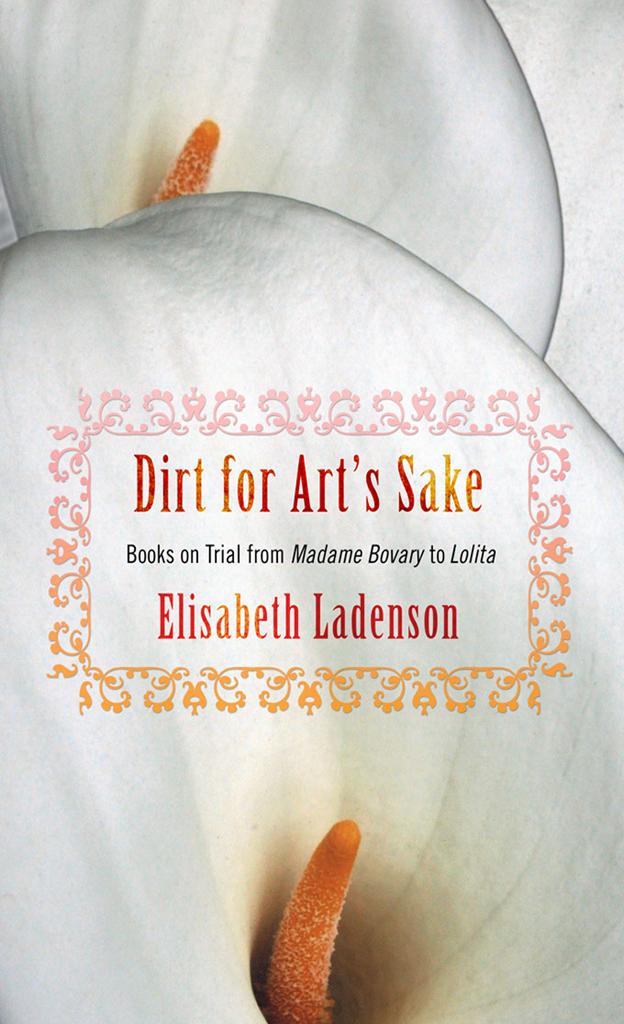
In Dirt for Art's Sake, Elisabeth Ladenson recounts the most visible of modern obscenity trials involving scandalous books and their authors. What, she asks, do these often-colorful legal histories have to tell us about the works themselves and about a changing cultural climate that first treated them as filth and later celebrated them as masterpieces? Ladenson's narrative starts with Madame Bovary (Flaubert was tried in France in 1857) and finishes with Fanny Hill (written in the eighteenth century, put on trial in the United States in 1966); she considers, along the way, Les Fleurs du Mal, Ulysses, The Well of Loneliness, Lady Chatterley's Lover, Tropic of Cancer, Lolita, and the works of the Marquis de Sade.
Over the course of roughly a century, Ladenson finds, two ideas that had been circulating in the form of avant-garde heresy gradually became accepted as truisms, and eventually as grounds for legal defense. The first is captured in the formula ?art for art's sake??the notion that a work of art exists in a realm independent of conventional morality. The second is realism, vilified by its critics as ?dirt for dirt's sake.? In Ladenson's view, the truth of the matter is closer to ?dirt for art's sake??the idea that the work of art may legitimately include the representation of all aspects of life, including the unpleasant and the sordid.
Ladenson also considers cinematic adaptations of these novels, among them Vincente Minnelli's Madame Bovary, Stanley Kubrick's Lolita and the 1997 remake directed by Adrian Lyne, and various attempts to translate de Sade's works and life into film, which faced similar censorship travails. Written with a keen awareness of ongoing debates about free speech, Dirt for Art's Sake traces the legal and social acceptance of controversial works with critical acumen and delightful wit.
Before Memmo my notes were scattered across PDFs. Now a workspace pulls everything into one place — I see exactly what's still left to study.
Memmo's summaries are gold before exams. I don't have to re-read 800 pages two weeks before — just the important parts.
The AI chat has saved me the night before an exam more than once. I just keep asking until I get it — no waiting on a study group to reply.
The quizzes hit exactly what I need to know. Memmo tracks what I get stuck on — so I only practice what's worth it.
Flashcards with spaced repetition are magic. Memmo knows when I'm about to forget something and brings it back.
The AI podcasts are my favorite. I listen on my way to school and get a recap without sitting at a computer.

Handbok i kvalitativa metoder
281 kr

Hållbar utveckling: en introduktion för ingenjörer och andra problemlösare
334 kr

Brymans Samhällsvetenskapliga metoder
390 kr

Projektledning
491 kr

Den orättvisa hälsan: om socioekonomiska skillnader i hälsa och livslängd
326 kr

Vetenskapsteori för nybörjare
196 kr

Organizational Leadership
429 kr

På väg mot läraryrket
172 kr

Det sociala livet i skolan: Socialpsykologiska perspektiv
253 kr

Betygsättningens didaktik
151 kr

Personality
402 kr

Studying Leadership
404 kr

Managing Innovation
477 kr

Introduktion till samhällsvetenskaplig metod
347 kr

The Psychology of Sex and Gender
698 kr

Evidens och kunskap för socialt arbete
207 kr

Introduction to Leadership
605 kr