
Before Memmo my notes were scattered across PDFs. Now a workspace pulls everything into one place — I see exactly what's still left to study.
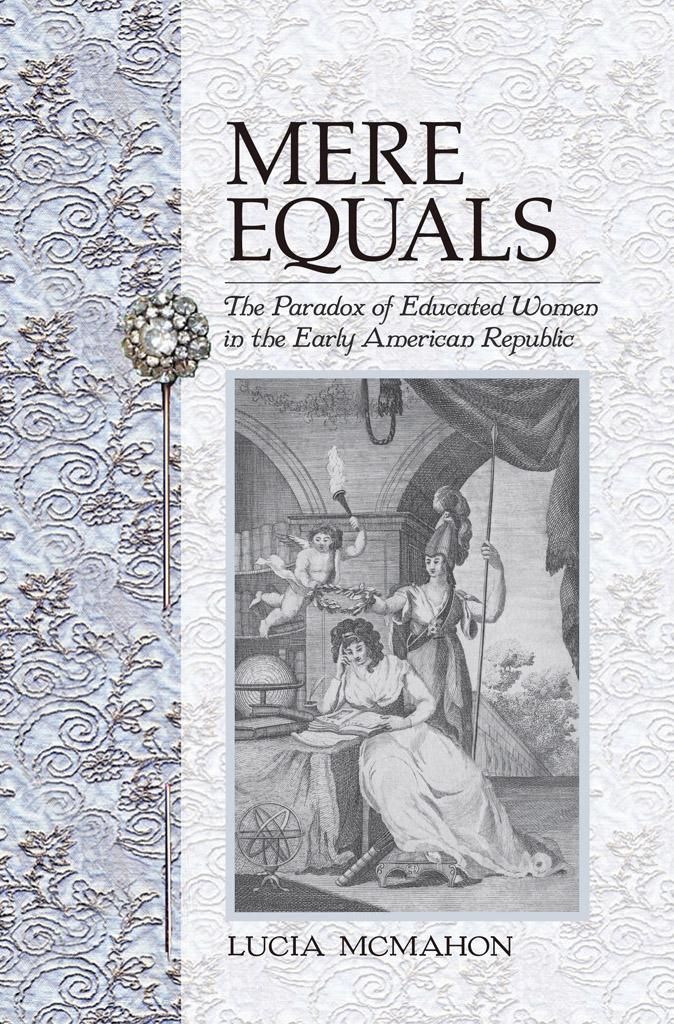
In Mere Equals, Lucia McMahon narrates a story about how a generation of young women who enjoyed access to new educational opportunities made sense of their individual and social identities in an American nation marked by stark political inequality between the sexes. McMahon's archival research into the private documents of middling and well-to-do Americans in northern states illuminates educated women's experiences with particular life stages and relationship arcs: friendship, family, courtship, marriage, and motherhood. In their personal and social relationships, educated women attempted to live as the "mere equals" of men. Their often frustrated efforts reveal how early national Americans grappled with the competing issues of women's intellectual equality and sexual difference.
In the new nation, a pioneering society, pushing westward and unmooring itself from established institutions, often enlisted women's labor outside the home and in areas that we would deem public. Yet, as a matter of law, women lacked most rights of citizenship and this subordination was authorized by an ideology of sexual difference. What women and men said about education, how they valued it, and how they used it to place themselves and others within social hierarchies is a highly useful way to understand the ongoing negotiation between equality and difference. In public documents, "difference" overwhelmed "equality," because the formal exclusion of women from political activity and from economic parity required justification. McMahon tracks the ways in which this public disparity took hold in private communications. By the 1830s, separate and gendered spheres were firmly in place. This was the social and political heritage with which women's rights activists would contend for the rest of the century.
Before Memmo my notes were scattered across PDFs. Now a workspace pulls everything into one place — I see exactly what's still left to study.
Memmo's summaries are gold before exams. I don't have to re-read 800 pages two weeks before — just the important parts.
The AI chat has saved me the night before an exam more than once. I just keep asking until I get it — no waiting on a study group to reply.
The quizzes hit exactly what I need to know. Memmo tracks what I get stuck on — so I only practice what's worth it.
Flashcards with spaced repetition are magic. Memmo knows when I'm about to forget something and brings it back.
The AI podcasts are my favorite. I listen on my way to school and get a recap without sitting at a computer.

Handbok i kvalitativa metoder
281 kr

Hållbar utveckling: en introduktion för ingenjörer och andra problemlösare
334 kr

Brymans Samhällsvetenskapliga metoder
390 kr

Projektledning
491 kr

Den orättvisa hälsan: om socioekonomiska skillnader i hälsa och livslängd
326 kr

Organizational Leadership
429 kr

Vetenskapsteori för nybörjare
196 kr

På väg mot läraryrket
172 kr

Det sociala livet i skolan: Socialpsykologiska perspektiv
253 kr

Betygsättningens didaktik
151 kr

Personality
402 kr

Studying Leadership
404 kr

Managing Innovation
477 kr

Introduktion till samhällsvetenskaplig metod
347 kr

The Psychology of Sex and Gender
698 kr

Evidens och kunskap för socialt arbete
207 kr

Introduction to Leadership
605 kr