
Before Memmo my notes were scattered across PDFs. Now a workspace pulls everything into one place — I see exactly what's still left to study.
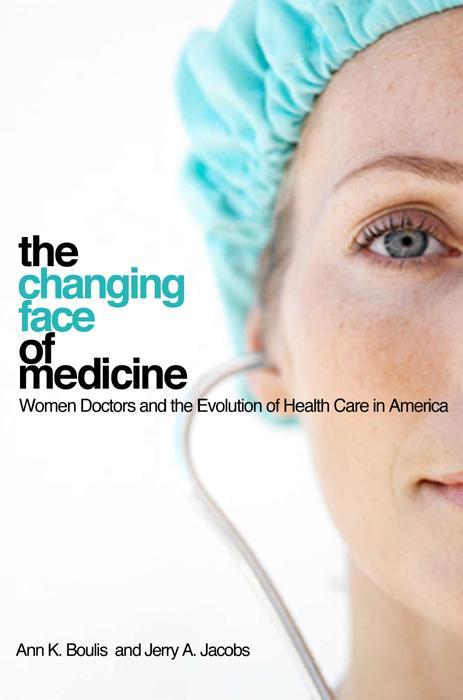
The number of women practicing medicine in the United States has grown steadily since the late 1960s, with women now roughly at parity with men among entering medical students. Why did so many women enter American medicine? How are women faring, professionally and personally, once they become physicians? Are women transforming the way medicine is practiced? To answer these questions, The Changing Face of Medicine draws on a wide array of sources, including interviews with women physicians and surveys of medical students and practitioners. The analysis is set in the twin contexts of a rapidly evolving medical system and profound shifts in gender roles in American society.
Throughout the book, Ann K. Boulis and Jerry A. Jacobs critically examine common assumptions about women in medicine. For example, they find that women's entry into medicine has less to do with the decline in status of the profession and more to do with changes in women's roles in contemporary society. Women physicians' families are becoming more and more like those of other working women. Still, disparities in terms of specialty, practice ownership, academic rank, and leadership roles endure, and barriers to opportunity persist. Along the way, Boulis and Jacobs address a host of issues, among them dual-physician marriages, specialty choice, time spent with patients, altruism versus materialism, and how physicians combine work and family.
Women's presence in American medicine will continue to grow beyond the 50 percent mark, but the authors question whether this change by itself will make American medicine more caring and more patient centered. The future direction of the profession will depend on whether women doctors will lead the effort to chart a new course for health care delivery in the United States.
Before Memmo my notes were scattered across PDFs. Now a workspace pulls everything into one place — I see exactly what's still left to study.
Memmo's summaries are gold before exams. I don't have to re-read 800 pages two weeks before — just the important parts.
The AI chat has saved me the night before an exam more than once. I just keep asking until I get it — no waiting on a study group to reply.
The quizzes hit exactly what I need to know. Memmo tracks what I get stuck on — so I only practice what's worth it.
Flashcards with spaced repetition are magic. Memmo knows when I'm about to forget something and brings it back.
The AI podcasts are my favorite. I listen on my way to school and get a recap without sitting at a computer.

Handbok i kvalitativa metoder
281 kr

Hållbar utveckling: en introduktion för ingenjörer och andra problemlösare
334 kr

Brymans Samhällsvetenskapliga metoder
390 kr

Projektledning
491 kr

Den orättvisa hälsan: om socioekonomiska skillnader i hälsa och livslängd
326 kr

Organizational Leadership
429 kr

Vetenskapsteori för nybörjare
196 kr

På väg mot läraryrket
172 kr

Det sociala livet i skolan: Socialpsykologiska perspektiv
253 kr

Betygsättningens didaktik
151 kr

Personality
402 kr

Studying Leadership
404 kr

Managing Innovation
477 kr

Introduktion till samhällsvetenskaplig metod
347 kr

The Psychology of Sex and Gender
698 kr

Evidens och kunskap för socialt arbete
207 kr

Introduction to Leadership
605 kr