
Before Memmo my notes were scattered across PDFs. Now a workspace pulls everything into one place — I see exactly what's still left to study.
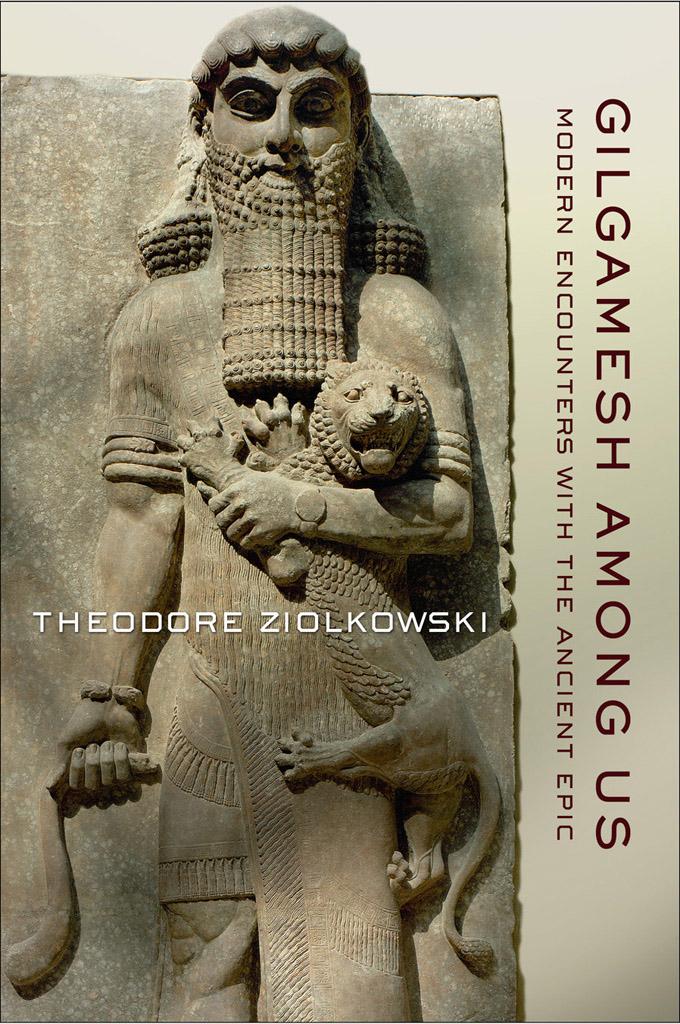
The world's oldest work of literature, the Epic of Gilgamesh recounts the adventures of the semimythical Sumerian king of Uruk and his ultimately futile quest for immortality after the death of his friend and companion, Enkidu, a wildman sent by the gods. Gilgamesh was deified by the Sumerians around 2500 BCE, and his tale as we know it today was codified in cuneiform tablets around 1750 BCE and continued to influence ancient cultures—whether in specific incidents like a world-consuming flood or in its quest structure—into Roman times. The epic was, however, largely forgotten, until the cuneiform tablets were rediscovered in 1872 in the British Museum's collection of recently unearthed Mesopotamian artifacts. In the decades that followed its translation into modern languages, the Epic of Gilgamesh has become a point of reference throughout Western culture.
In Gilgamesh among Us, Theodore Ziolkowski explores the surprising legacy of the poem and its hero, as well as the epic's continuing influence in modern letters and arts. This influence extends from Carl Gustav Jung and Rainer Maria Rilke's early embrace of the epic's significance—"Gilgamesh is tremendous!" Rilke wrote to his publisher's wife after reading it—to its appropriation since World War II in contexts as disparate as operas and paintings, the poetry of Charles Olson and Louis Zukofsky, novels by John Gardner and Philip Roth, and episodes of Star Trek: The Next Generation and Xena: Warrior Princess.
Ziolkowski sees fascination with Gilgamesh as a reflection of eternal spiritual values—love, friendship, courage, and the fear and acceptance of death. Noted writers, musicians, and artists from Sweden to Spain, from the United States to Australia, have adapted the story in ways that meet the social and artistic trends of the times. The spirit of this capacious hero has absorbed the losses felt in the immediate postwar period and been infused with the excitement and optimism of movements for gay rights, feminism, and environmental consciousness. Gilgamesh is at once a seismograph of shifts in Western history and culture and a testament to the verities and values of the ancient epic.
Before Memmo my notes were scattered across PDFs. Now a workspace pulls everything into one place — I see exactly what's still left to study.
Memmo's summaries are gold before exams. I don't have to re-read 800 pages two weeks before — just the important parts.
The AI chat has saved me the night before an exam more than once. I just keep asking until I get it — no waiting on a study group to reply.
The quizzes hit exactly what I need to know. Memmo tracks what I get stuck on — so I only practice what's worth it.
Flashcards with spaced repetition are magic. Memmo knows when I'm about to forget something and brings it back.
The AI podcasts are my favorite. I listen on my way to school and get a recap without sitting at a computer.

Handbok i kvalitativa metoder
281 kr

Hållbar utveckling: en introduktion för ingenjörer och andra problemlösare
334 kr

Brymans Samhällsvetenskapliga metoder
390 kr

Projektledning
491 kr

Den orättvisa hälsan: om socioekonomiska skillnader i hälsa och livslängd
326 kr

Organizational Leadership
429 kr

Vetenskapsteori för nybörjare
196 kr

På väg mot läraryrket
172 kr

Det sociala livet i skolan: Socialpsykologiska perspektiv
253 kr

Betygsättningens didaktik
151 kr

Personality
402 kr

Studying Leadership
404 kr

Managing Innovation
477 kr

Introduktion till samhällsvetenskaplig metod
347 kr

The Psychology of Sex and Gender
698 kr

Evidens och kunskap för socialt arbete
207 kr

Introduction to Leadership
605 kr