
Before Memmo my notes were scattered across PDFs. Now a workspace pulls everything into one place — I see exactly what's still left to study.
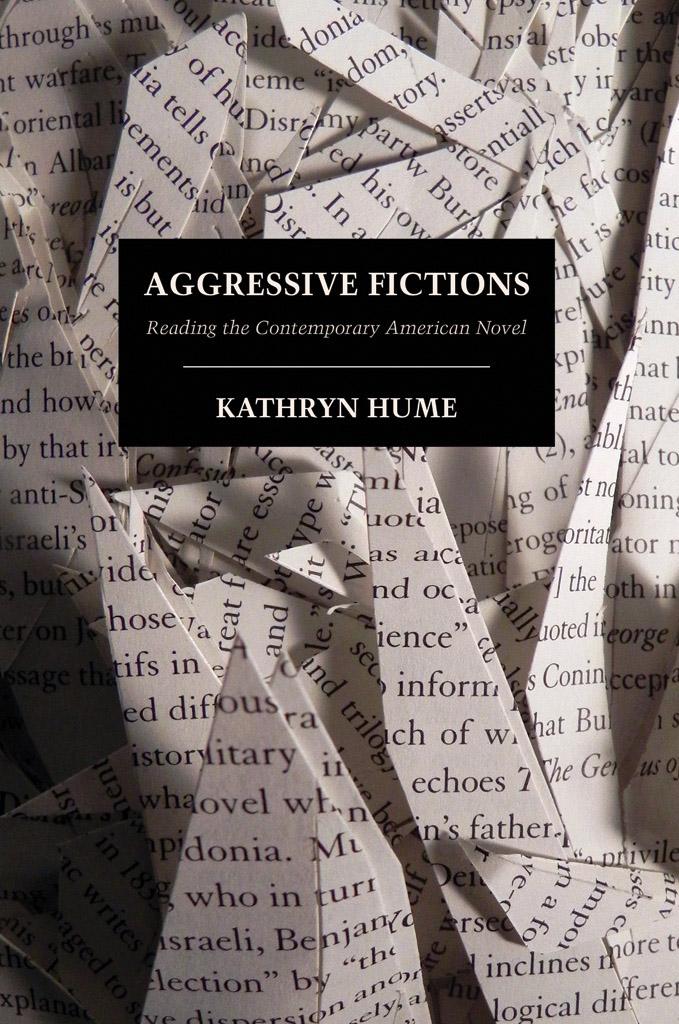
A frequent complaint against contemporary American fiction is that too often it puts off readers in ways they find difficult to fathom. Books such as Bret Easton Ellis's American Psycho, Katherine Dunn's Geek Love, and Don DeLillo's Underworld seem determined to upset, disgust, or annoy their readers—or to disorient them by shunning traditional plot patterns and character development. Kathryn Hume calls such works "aggressive fiction." Why would authors risk alienating their readers—and why should readers persevere? Looking beyond the theory-based justifications that critics often provide for such fiction, Hume offers a commonsense guide for the average reader who wants to better understand and appreciate books that might otherwise seem difficult to enjoy.
In her reliable and sympathetic guide, Hume considers roughly forty works of recent American fiction, including books by William Burroughs, Kathy Acker, Chuck Palahniuk, and Cormac McCarthy. Hume gathers "attacks" on the reader into categories based on narrative structure and content. Writers of some aggressive fictions may wish to frustrate easy interpretation or criticism. Others may try to induce certain responses in readers. Extreme content deployed as a tactic for distancing and alienating can actually produce a contradictory effect: for readers who learn to relax and go with the flow, the result may well be exhilaration rather than revulsion.
Before Memmo my notes were scattered across PDFs. Now a workspace pulls everything into one place — I see exactly what's still left to study.
Memmo's summaries are gold before exams. I don't have to re-read 800 pages two weeks before — just the important parts.
The AI chat has saved me the night before an exam more than once. I just keep asking until I get it — no waiting on a study group to reply.
The quizzes hit exactly what I need to know. Memmo tracks what I get stuck on — so I only practice what's worth it.
Flashcards with spaced repetition are magic. Memmo knows when I'm about to forget something and brings it back.
The AI podcasts are my favorite. I listen on my way to school and get a recap without sitting at a computer.

Handbok i kvalitativa metoder
281 kr

Hållbar utveckling: en introduktion för ingenjörer och andra problemlösare
334 kr

Brymans Samhällsvetenskapliga metoder
390 kr

Projektledning
491 kr

Den orättvisa hälsan: om socioekonomiska skillnader i hälsa och livslängd
326 kr

Vetenskapsteori för nybörjare
196 kr

Organizational Leadership
429 kr

På väg mot läraryrket
172 kr

Det sociala livet i skolan: Socialpsykologiska perspektiv
253 kr

Betygsättningens didaktik
151 kr

Personality
402 kr

Studying Leadership
404 kr

Managing Innovation
477 kr

Introduktion till samhällsvetenskaplig metod
347 kr

The Psychology of Sex and Gender
698 kr

Evidens och kunskap för socialt arbete
207 kr

Introduction to Leadership
605 kr