
Before Memmo my notes were scattered across PDFs. Now a workspace pulls everything into one place — I see exactly what's still left to study.
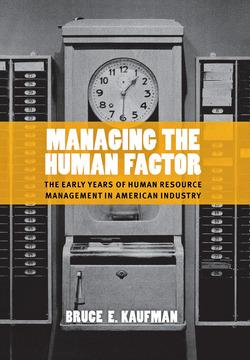
Human resource departments are key components in the people management system of nearly every medium-to-large organization in the industrial world. They provide a wide range of essential services relating to employees, including recruitment, compensation, benefits, training, and labor relations. A century ago, however, before the concept of human resource management had been invented, the supervision and care of employees at even the largest companies were conducted without written policies or formal planning, and often in harsh, arbitrary, and counterproductive ways. How did companies such as United States Steel manage a workforce of 160,000 employees at dozens of plants without a specialized personnel or industrial relations department? What led some of these organizations to introduce human resources practices at the end of the nineteenth century? How were the earliest personnel departments structured and what were their responsibilities? And how did the theory and implementation of human resources management evolve, both within industry and as an academic field of research and teaching?
In Managing the Human Factor, Bruce E. Kaufman chronicles the origins and early development of human resource management (HRM) in the United States from the 1870s, when the Labor Problem emerged as the nation's primary domestic policy concern, to 1933 and the start of the New Deal. Through new archival research, an extensive review and synthesis of the historical and contemporary literatures, and case studies illustrating best (and worst) practices during this period, Kaufman identifies the fourteen ideas, events, and movements that led to the creation of specialized HRM departments in the late 1910s, as well as their further growth and development into strategic business units in the welfare capitalism period of the 1920s. The research presented in this book not only uncovers many new aspects of the early development of personnel and industrial relations but also challenges central parts of the contemporary interpretation of the concept and evolution of HRM. Rich with insights on both the present and past of human resource management, Managing the Human Factor will be widely regarded as the definitive account of the early history of employee management in American companies and a must-read for all those interested in the indispensable function of managing people in organizations.
Before Memmo my notes were scattered across PDFs. Now a workspace pulls everything into one place — I see exactly what's still left to study.
Memmo's summaries are gold before exams. I don't have to re-read 800 pages two weeks before — just the important parts.
The AI chat has saved me the night before an exam more than once. I just keep asking until I get it — no waiting on a study group to reply.
The quizzes hit exactly what I need to know. Memmo tracks what I get stuck on — so I only practice what's worth it.
Flashcards with spaced repetition are magic. Memmo knows when I'm about to forget something and brings it back.
The AI podcasts are my favorite. I listen on my way to school and get a recap without sitting at a computer.

Handbok i kvalitativa metoder
281 kr

Hållbar utveckling: en introduktion för ingenjörer och andra problemlösare
334 kr

Brymans Samhällsvetenskapliga metoder
390 kr

Projektledning
491 kr

Den orättvisa hälsan: om socioekonomiska skillnader i hälsa och livslängd
326 kr

Organizational Leadership
429 kr

Vetenskapsteori för nybörjare
196 kr

På väg mot läraryrket
172 kr

Det sociala livet i skolan: Socialpsykologiska perspektiv
253 kr

Betygsättningens didaktik
151 kr

Personality
402 kr

Studying Leadership
404 kr

Managing Innovation
477 kr

Introduktion till samhällsvetenskaplig metod
347 kr

The Psychology of Sex and Gender
698 kr

Evidens och kunskap för socialt arbete
207 kr

Introduction to Leadership
605 kr