
Before Memmo my notes were scattered across PDFs. Now a workspace pulls everything into one place — I see exactly what's still left to study.
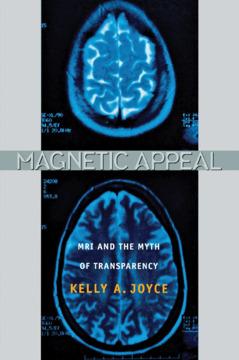
Magnetic Resonance Imaging, not so long ago a diagnostic tool of last resort, has become pervasive in the landscape of consumer medicine; images of the forbidding tubes, with their promises of revelation, surround us in commercials and on billboards. Magnetic Appeal offers an in-depth exploration of the science and culture of MRI, examining its development and emergence as an imaging technology, its popular appeal and acceptance, and its current use in health care. Understood as modern and uncontroversial by health care professionals and in public discourse, the importance of MRI—or its supposed infallibility—has rarely been questioned.
In Magnetic Appeal, Kelly A. Joyce shows how MRI technology grew out of serendipitous circumstances and was adopted for reasons having little to do with patient safety or evidence of efficacy. Drawing on interviews with physicians and MRI technologists, as well as ethnographic research conducted at imaging sites and radiology conferences, Joyce demonstrates that current beliefs about MRI draw on cultural ideas about sight and technology and are reinforced by health care policies and insurance reimbursement practices. Moreover, her unsettling analysis of physicians' and technologists' work practices lets readers consider that MRI scans do not reveal the truth about the body as is popularly believed, nor do they always lead to better outcomes for patients. Although clearly a valuable medical technique, MRI technology cannot necessarily deliver the health outcomes ascribed to it.
Magnetic Appeal also addresses broader questions about the importance of medical imaging technologies in American culture and medicine. These technologies, which include ultrasound, X-ray, and MRI, are part of a larger trend in which visual representations have become central to American health, identity, and social relations.
Before Memmo my notes were scattered across PDFs. Now a workspace pulls everything into one place — I see exactly what's still left to study.
Memmo's summaries are gold before exams. I don't have to re-read 800 pages two weeks before — just the important parts.
The AI chat has saved me the night before an exam more than once. I just keep asking until I get it — no waiting on a study group to reply.
The quizzes hit exactly what I need to know. Memmo tracks what I get stuck on — so I only practice what's worth it.
Flashcards with spaced repetition are magic. Memmo knows when I'm about to forget something and brings it back.
The AI podcasts are my favorite. I listen on my way to school and get a recap without sitting at a computer.

Handbok i kvalitativa metoder
281 kr

Hållbar utveckling: en introduktion för ingenjörer och andra problemlösare
334 kr

Brymans Samhällsvetenskapliga metoder
390 kr

Projektledning
491 kr

Den orättvisa hälsan: om socioekonomiska skillnader i hälsa och livslängd
326 kr

Vetenskapsteori för nybörjare
196 kr

Organizational Leadership
429 kr

På väg mot läraryrket
172 kr

Det sociala livet i skolan: Socialpsykologiska perspektiv
253 kr

Betygsättningens didaktik
151 kr

Personality
402 kr

Studying Leadership
404 kr

Managing Innovation
477 kr

Introduktion till samhällsvetenskaplig metod
347 kr

The Psychology of Sex and Gender
698 kr

Evidens och kunskap för socialt arbete
207 kr

Introduction to Leadership
605 kr