
Before Memmo my notes were scattered across PDFs. Now a workspace pulls everything into one place — I see exactly what's still left to study.
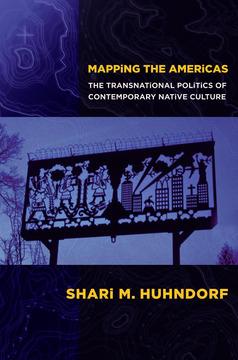
In Mapping the Americas, Shari M. Huhndorf tracks changing conceptions of Native culture as it increasingly transcends national boundaries and takes up vital concerns such as patriarchy, labor and environmental exploitation, the emergence of pan-Native urban communities, global imperialism, and the commodification of indigenous cultures. While nationalism remains a dominant anticolonial strategy in indigenous contexts, Huhndorf examines the ways in which transnational indigenous politics have reshaped Native culture (especially novels, films, photography, and performance) in the United States and Canada since the 1980s. Mapping the Americas thus broadens the political paradigms that have dominated recent critical work in Native studies as well as the geographies that provide its focus, particularly through its engagement with the Arctic. Among the manifestations of these new tendencies in Native culture that Huhndorf presents are Igloolik Isuma Productions, the Inuit company that has produced nearly forty films, including Atanarjuat, The Fast Runner; indigenous feminist playwrights; Leslie Marmon Silko's Almanac of the Dead; and the multimedia artist Shelley Niro.
Huhndorf also addresses the neglect of Native America by champions of "postnationalist" American studies, which shifts attention away from ongoing colonial relationships between the United States and indigenous communities within its borders to U.S. imperial relations overseas. This is a dangerous oversight, Huhndorf argues, because this neglect risks repeating the disavowal of imperialism that the new American studies takes to task. Parallel transnational tendencies in American studies and Native American studies have thus worked at cross-purposes: as pan-tribal alliances draw attention to U.S. internal colonialism and its connections to global imperialism, American studies deflects attention from these ongoing processes of conquest. Mapping the Americas addresses this neglect by considering what happens to American studies when you put Native studies at the center.
Before Memmo my notes were scattered across PDFs. Now a workspace pulls everything into one place — I see exactly what's still left to study.
Memmo's summaries are gold before exams. I don't have to re-read 800 pages two weeks before — just the important parts.
The AI chat has saved me the night before an exam more than once. I just keep asking until I get it — no waiting on a study group to reply.
The quizzes hit exactly what I need to know. Memmo tracks what I get stuck on — so I only practice what's worth it.
Flashcards with spaced repetition are magic. Memmo knows when I'm about to forget something and brings it back.
The AI podcasts are my favorite. I listen on my way to school and get a recap without sitting at a computer.

Handbok i kvalitativa metoder
281 kr

Hållbar utveckling: en introduktion för ingenjörer och andra problemlösare
334 kr

Brymans Samhällsvetenskapliga metoder
390 kr

Projektledning
491 kr

Den orättvisa hälsan: om socioekonomiska skillnader i hälsa och livslängd
326 kr

Vetenskapsteori för nybörjare
196 kr

Organizational Leadership
429 kr

På väg mot läraryrket
172 kr

Det sociala livet i skolan: Socialpsykologiska perspektiv
253 kr

Betygsättningens didaktik
151 kr

Personality
402 kr

Studying Leadership
404 kr

Managing Innovation
477 kr

Introduktion till samhällsvetenskaplig metod
347 kr

The Psychology of Sex and Gender
698 kr

Evidens och kunskap för socialt arbete
207 kr

Introduction to Leadership
605 kr