
Before Memmo my notes were scattered across PDFs. Now a workspace pulls everything into one place — I see exactly what's still left to study.
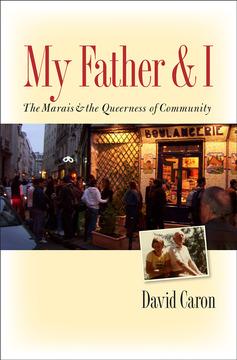
"It is a living museum of a long-gone Jewish life and, supposedly, a testimony to the success of the French model of social integration. It is a communal home where gay men and women are said to stand in defiance of the French model of social integration. It is a place of freedom and tolerance where people of color and lesbians nevertheless feel unwanted and where young Zionists from the suburbs gather every Sunday and sometimes harass Arabs. It is a hot topic in the press and on television. It is open to the world and open for business. It is a place to be seen and a place of invisibility. It is like a home to me, a place where I feel both safe and out of place and where my father felt comfortable and alienated at the same time. It is a place of nostalgia, innovation, shame, pride, and anxiety, where the local and the global intersect for better and for worse. And for better and for worse, it is a French neighborhood."—from My Father and I
Mixing personal memoir, urban studies, cultural history, and literary criticism, as well as a generous selection of photographs, My Father and I focuses on the Marais, the oldest surviving neighborhood of Paris. It also beautifully reveals the intricacies of the relationship between a Jewish father and a gay son, each claiming the same neighborhood as his own. Beginning with the history of the Marais and its significance in the construction of a French national identity, David Caron proposes a rethinking of community and looks at how Jews, Chinese immigrants, and gays have made the Marais theirs. These communities embody, in their engagement of urban space, a daily challenge to the French concept of universal citizenship that denies them all political legitimacy.
Caron moves from the strictly French context to more theoretical issues such as social and political archaism, immigration and diaspora, survival and haunting, the public/private divide, and group friendship as metaphor for unruly and dynamic forms of community, and founding disasters such as AIDS and the Holocaust. Caron also tells the story of his father, a Hungarian Jew and Holocaust survivor who immigrated to France and once called the Marais home.
Before Memmo my notes were scattered across PDFs. Now a workspace pulls everything into one place — I see exactly what's still left to study.
Memmo's summaries are gold before exams. I don't have to re-read 800 pages two weeks before — just the important parts.
The AI chat has saved me the night before an exam more than once. I just keep asking until I get it — no waiting on a study group to reply.
The quizzes hit exactly what I need to know. Memmo tracks what I get stuck on — so I only practice what's worth it.
Flashcards with spaced repetition are magic. Memmo knows when I'm about to forget something and brings it back.
The AI podcasts are my favorite. I listen on my way to school and get a recap without sitting at a computer.

Handbok i kvalitativa metoder
281 kr

Hållbar utveckling: en introduktion för ingenjörer och andra problemlösare
334 kr

Brymans Samhällsvetenskapliga metoder
390 kr

Projektledning
491 kr

Den orättvisa hälsan: om socioekonomiska skillnader i hälsa och livslängd
326 kr

Organizational Leadership
429 kr

Vetenskapsteori för nybörjare
196 kr

På väg mot läraryrket
172 kr

Det sociala livet i skolan: Socialpsykologiska perspektiv
253 kr

Betygsättningens didaktik
151 kr

Personality
402 kr

Studying Leadership
404 kr

Managing Innovation
477 kr

Introduktion till samhällsvetenskaplig metod
347 kr

The Psychology of Sex and Gender
698 kr

Evidens och kunskap för socialt arbete
207 kr

Introduction to Leadership
605 kr