
Before Memmo my notes were scattered across PDFs. Now a workspace pulls everything into one place — I see exactly what's still left to study.
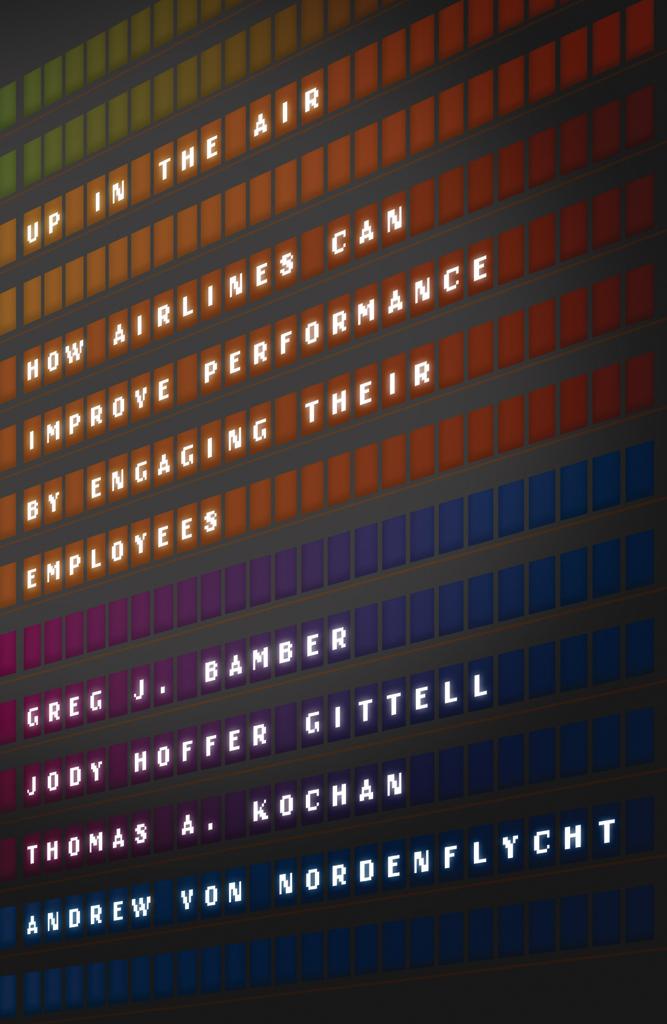
"And you thought the passengers were mad. Airline employees are fed up, too-with pay cuts, increased workloads and management's miserly ways, which leave workers to explain to often-enraged passengers why flying has become such a miserable experience."—The New York Times, December 22, 2007
When both an industry's workers and its customers report high and rising frustration with the way they are being treated, something is fundamentally wrong. In response to these conditions, many of the world's airlines have made ever-deeper cuts in services and their workforces. Is it too much to expect airlines, or any other enterprise, to provide a fair return to investors, high-quality reliable service to their customers, and good jobs for their employees? Measured against these three expectations, the airline industry is failing. In the first five years of the twenty-first century alone, U.S. airlines lost a total of $30 billion while shedding 100,000 jobs, forcing the remaining workers to give up over $15 billion in wages and benefits. Combined with plummeting employee morale, shortages of air traffic controllers, and increased congestion and flight delays, a total collapse of the industry may be coming.
Is this state of affairs inevitable? Or is it possible to design a more sustainable, less volatile industry that better balances the objectives of customers, investors, employees, and the wider society? Does deregulation imply total abrogation of government's responsibility to oversee an industry showing the clear signs of deterioration and increasing risk of a pending crisis?
Greg J. Bamber, Jody Hoffer Gittell, Thomas A. Kochan, and Andrew von Nordenflycht explore such questions in a well-informed and engaging way, using a mix of quantitative evidence and qualitative studies of airlines from North America, Asia, Australia, and Europe. Up in the Air provides clear and realistic strategies for achieving a better, more equitable balance among the interests of customers, employees, and shareholders. Specifically, the authors recommend that firms learn from the innovations of companies like Southwest and Continental Airlines in order to build a positive workplace culture that fosters coordination and commitment to high-quality service, labor relations policies that avoid long drawn-out conflicts in negotiating new agreements, and business strategies that can sustain investor, employee, and customer support through the ups and downs of business cycles.
Before Memmo my notes were scattered across PDFs. Now a workspace pulls everything into one place — I see exactly what's still left to study.
Memmo's summaries are gold before exams. I don't have to re-read 800 pages two weeks before — just the important parts.
The AI chat has saved me the night before an exam more than once. I just keep asking until I get it — no waiting on a study group to reply.
The quizzes hit exactly what I need to know. Memmo tracks what I get stuck on — so I only practice what's worth it.
Flashcards with spaced repetition are magic. Memmo knows when I'm about to forget something and brings it back.
The AI podcasts are my favorite. I listen on my way to school and get a recap without sitting at a computer.

Handbok i kvalitativa metoder
281 kr

Hållbar utveckling: en introduktion för ingenjörer och andra problemlösare
334 kr

Brymans Samhällsvetenskapliga metoder
390 kr

Projektledning
491 kr

Den orättvisa hälsan: om socioekonomiska skillnader i hälsa och livslängd
326 kr

Organizational Leadership
429 kr

Vetenskapsteori för nybörjare
196 kr

På väg mot läraryrket
172 kr

Det sociala livet i skolan: Socialpsykologiska perspektiv
253 kr

Betygsättningens didaktik
151 kr

Personality
402 kr

Studying Leadership
404 kr

Managing Innovation
477 kr

Introduktion till samhällsvetenskaplig metod
347 kr

The Psychology of Sex and Gender
698 kr

Evidens och kunskap för socialt arbete
207 kr

Introduction to Leadership
605 kr