
Before Memmo my notes were scattered across PDFs. Now a workspace pulls everything into one place — I see exactly what's still left to study.
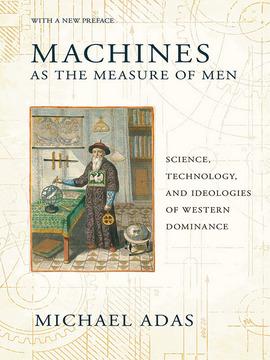
Over the past five centuries, advances in Western understanding of and control over the material world have strongly influenced European responses to non-Western peoples and cultures. In Machines as the Measure of Men, Michael Adas explores the ways in which European perceptions of their scientific and technological superiority shaped their interactions with people overseas. Adopting a broad, comparative perspective, he analyzes European responses to the cultures of sub-Saharan Africa, India, and China, cultures that they judged to represent lower levels of material mastery and social organization.
Beginning with the early decades of overseas expansion in the sixteenth century, Adas traces the impact of scientific and technological advances on European attitudes toward Asians and Africans and on their policies for dealing with colonized societies. He concentrates on British and French thinking in the nineteenth century, when, he maintains, scientific and technological measures of human worth played a critical role in shaping arguments for the notion of racial supremacy and the "civilizing mission" ideology which were used to justify Europe's domination of the globe. Finally, he examines the reasons why many Europeans grew dissatisfied with and even rejected this gauge of human worth after World War I, and explains why it has remained important to Americans.
Showing how the scientific and industrial revolutions contributed to the development of European imperialist ideologies, Machines as the Measure of Men highlights the cultural factors that have nurtured disdain for non-Western accomplishments and value systems. It also indicates how these attitudes, in shaping policies that restricted the diffusion of scientific knowledge, have perpetuated themselves, and contributed significantly to chronic underdevelopment throughout the developing world. Adas's far-reaching and provocative book will be compelling reading for all who are concerned about the history of Western imperialism and its legacies.
First published to wide acclaim in 1989, Machines as the Measure of Men is now available in a new edition that features a preface by the author that discusses how subsequent developments in gender and race studies, as well as global technology and politics, enter into conversation with his original arguments.
Before Memmo my notes were scattered across PDFs. Now a workspace pulls everything into one place — I see exactly what's still left to study.
Memmo's summaries are gold before exams. I don't have to re-read 800 pages two weeks before — just the important parts.
The AI chat has saved me the night before an exam more than once. I just keep asking until I get it — no waiting on a study group to reply.
The quizzes hit exactly what I need to know. Memmo tracks what I get stuck on — so I only practice what's worth it.
Flashcards with spaced repetition are magic. Memmo knows when I'm about to forget something and brings it back.
The AI podcasts are my favorite. I listen on my way to school and get a recap without sitting at a computer.

Handbok i kvalitativa metoder
281 kr

Hållbar utveckling: en introduktion för ingenjörer och andra problemlösare
334 kr

Brymans Samhällsvetenskapliga metoder
390 kr

Projektledning
491 kr

Den orättvisa hälsan: om socioekonomiska skillnader i hälsa och livslängd
326 kr

Vetenskapsteori för nybörjare
196 kr

Organizational Leadership
429 kr

På väg mot läraryrket
172 kr

Det sociala livet i skolan: Socialpsykologiska perspektiv
253 kr

Betygsättningens didaktik
151 kr

Personality
402 kr

Studying Leadership
404 kr

Managing Innovation
477 kr

Introduktion till samhällsvetenskaplig metod
347 kr

The Psychology of Sex and Gender
698 kr

Evidens och kunskap för socialt arbete
207 kr

Introduction to Leadership
605 kr