
Before Memmo my notes were scattered across PDFs. Now a workspace pulls everything into one place — I see exactly what's still left to study.
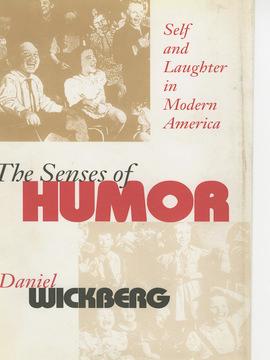
Why do modern Americans believe in something called a sense of humor, and how did they come to that belief? Daniel Wickberg traces the relatively short cultural history of the concept to its British origins as a way to explore new conceptions of the self and social order in modern America. More than simply the history of an idea, Wickberg's study provides new insights into a peculiarly modern cultural sensibility.
The expression "sense of humor" was first coined in the 1840s, and the idea that such a sense was a personality trait to be valued developed only in the 1870s. What is the relationship between medieval humoral medicine and this distinctively modern idea of the sense of humor? What has it meant in the past 125 years to declare that someone lacks a sense of humor? Why do modern Americans say it is a good thing not to take oneself seriously? How is the joke, as a twentieth-century quasi-literary form, different from the traditional folktale? Wickberg addresses these questions among others and in the process uses the history of ideas to throw new light on the way contemporary Americans think and speak about humor and laughter.
The context of Wickberg's analysis is Anglo-American; the specifically British meanings of humor and laughter from the sixteenth century forward provide the framework for understanding American cultural values in the nineteenth and twentieth centuries. The genealogy of the sense of humor is, like the study of keywords, an avenue into a significant aspect of the cultural history of modernity. Drawing on a wide range of sources and disciplinary perspectives, Wickberg's analysis challenges many of the prevailing views of modern American culture and suggests a new model for cultural historians.
Before Memmo my notes were scattered across PDFs. Now a workspace pulls everything into one place — I see exactly what's still left to study.
Memmo's summaries are gold before exams. I don't have to re-read 800 pages two weeks before — just the important parts.
The AI chat has saved me the night before an exam more than once. I just keep asking until I get it — no waiting on a study group to reply.
The quizzes hit exactly what I need to know. Memmo tracks what I get stuck on — so I only practice what's worth it.
Flashcards with spaced repetition are magic. Memmo knows when I'm about to forget something and brings it back.
The AI podcasts are my favorite. I listen on my way to school and get a recap without sitting at a computer.

Handbok i kvalitativa metoder
281 kr

Hållbar utveckling: en introduktion för ingenjörer och andra problemlösare
334 kr

Brymans Samhällsvetenskapliga metoder
390 kr

Projektledning
491 kr

Den orättvisa hälsan: om socioekonomiska skillnader i hälsa och livslängd
326 kr

Vetenskapsteori för nybörjare
196 kr

Organizational Leadership
429 kr

På väg mot läraryrket
172 kr

Det sociala livet i skolan: Socialpsykologiska perspektiv
253 kr

Betygsättningens didaktik
151 kr

Personality
402 kr

Studying Leadership
404 kr

Managing Innovation
477 kr

Introduktion till samhällsvetenskaplig metod
347 kr

The Psychology of Sex and Gender
698 kr

Evidens och kunskap för socialt arbete
207 kr

Introduction to Leadership
605 kr